

By Nina Moske and Lizzy Alspach
Tampa Bay Times
(TNS)
Hours after Florida voters approved a sweeping property tax ballot amendment, Treasure Island City Manager Charlie Van Zant penned a letter to residents outlining the consequences of lower tax revenues.
“I won’t pretend these choices will be easy,” Van Zant wrote in the Wednesday letter. “Some will require us to say no to things we value.”
Voters passed Amendment 3 with 62%, rewarding residents who live in the homes they own by cutting their property tax bills.
Residents will still pay property taxes that fund schools. But the amendment otherwise triples the roughly $50,000 exemption on primary residences next year and raises it to $250,000 in 2028.
The change is projected to save resident homeowners thousands while reshaping how cities and counties collect the property tax dollars they use to provide public services. For months, local leaders warned that the changes could spell budget cuts and reduced services, hiring freezes and higher fees.
That means a hard calculus ahead—and lots of questions, some of them existential. As local officials prepare for the rollout of Amendment 3, here’s what we’ll be watching.
Recommended Articles
Could the amendment face legal challenges?
If you move to Florida on or after Jan. 1, 2027, you won’t see an increase in your property tax exemption until your fifth year of residency.
But that requirement could be unconstitutional.
In the 1980s, the Florida Supreme Court struck down a similar five-year waiting period for new residents to benefit from an increased exemption. The court found the waiting period unconstitutional under the equal protection clause of the state constitution. There was no rational basis, justices said, for distinguishing between “two classes of permanent residents” for the purpose of raising the homestead exemption.
“It is constitutionally prohibited for this state to impose different taxes on its citizens based solely on their length of permanent residence in the state,” the justices wrote.
So it could be a matter of time before Amendment 3’s residency requirement is challenged in court, Hillsborough County Property Appraiser Bob Henriquez told the Tampa Bay Times last month. Mike Twitty, Pinellas’ property appraiser, agreed.
If the residency requirement is upheld, it could mean a slower loss of property tax dollars for local governments as exemptions are rolled out.
What will it mean for smaller cities?
Smaller cities, like Treasure Island and Largo, use property taxes to pay for most of their operating costs. And for a county like Pinellas, which is dense with small municipalities, addressing Amendment 3 could become complicated.
Former state Sen. Jeff Brandes, a vocal opponent of the amendment, said in September that several Pinellas communities could be forced to dissolve. That could mean more strain on the county to provide basic services like public safety.
“I don’t think Kenneth City survives it. I don’t think Gulfport survives it. I think most of your beach communities are going to have some really tough conversations,” he said at a town hall forum in Largo. “If a city is contracting out its police department to the sheriffs, and has contracted out its fire department, what are we really running?”
“No mayor wants to be the mayor that dissolves the city,” Brandes continued. “But some mayors are going to have that conversation.”
What could the state Legislature do?
Before property tax bills can be cut, the state Legislature must pass laws to implement Amendment 3.
Florida Gov. Ron DeSantis said this week that he would let the Legislature pick dates for a special session, but it’s still unclear when lawmakers will meet. If DeSantis wants to oversee the process, the session would need to come before he leaves office due to term limits in January.
DeSantis also said he wants to prevent local governments from increasing other taxes to make up for lost revenue. That could come in the form of a taxpayer’s bill of rights.
State economists have projected that local governments could lose nearly $12 billion annually by 2031, resulting in new or increased fees and reduced services.
St. Petersburg is weighing whether to impose a special fee for all property owners to help pay for fire services. Pinellas County already adopted a tighter budget this year in anticipation of Amendment 3, which included higher parking rates at some beaches. Hillsborough County says it could lose up to $367 million annually by 2028, potentially triggering layoffs and a hiring freeze. County services for kids, parks, pets and aging residents could be cut or reduced.
Small cities and rural communities with little industry could be particularly hard-hit by the loss of tax dollars. DeSantis previously floated creating a trust fund that could provide grants for local governments, but provided no information on where that money would come from. Lawmakers ended up removing mentions of the trust fund from the bill that put Amendment 3 on the ballot.
If lawmakers do create restrictions on how local governments can respond to the amendment, that could mean heavier cuts to services and amenities.
What does it mean for renters?
People who own the homes they live in are projected to save thousands on their annual property tax bills, though a Times mockup last month showed that some stand to benefit proportionally more than others.
The effect on renters is less clear.
Landlords and others who own properties that are not their primary residences will see a lower limit on how much their assessed home value, used for determining tax bills, can increase each year. The amendment reduces the cap from the current 10% to 5%. Proponents of the amendment say landlords could pass those savings down to renters. Others say the measure could push renters toward homeownership sooner by making it less expensive.
But a recent study from tax policy expert Jared Walczak, which assumed that local governments will increase property rates to offset reductions in revenue, found that renters could face higher costs as a result.
Walczak’s analysis—commissioned by the Florida Housing Coalition, the Florida Apartment Association and Miami Homes For All—showed that the average tax bill on an apartment building could increase by more than $400 per unit annually by 2028. For single-family rental homes, that number could jump to more than $1,000.
“To the extent that Florida localities cut spending in response to Amendment 3, renters and others ineligible for homestead exemptions will experience service reductions without obtaining any tax relief,” Walczak wrote.
Walczak’s analysis doesn’t show his formula for calculating the projected burden on renters.
Ultimately, renters across the state will feel different effects depending on how their local governments and landlords respond.
What about the Tampa Bay Rays stadium?
As voters decided on Amendment 3, the Tampa Bay Rays continued their quest to erect a $2.3 billion baseball stadium at the Dale Mabry Campus of Hillsborough College.
Hillsborough and Tampa officials inked a funding deal with the Rays in August. The county committed $796 million toward the cost of the project and the city agreed to contribute $80 million.
The property tax initiative doesn’t change that deal. But the project is now taking place within a dramatically different financial landscape for both local governments.
The county’s slice of the stadium agreement will come from the Tourist Development Tax and the Community Investment Tax, a half-cent sales levy that typically pays for roads, public buildings and upgrades to existing stadiums. The city’s contribution is a loan that would be paid off with property tax revenues generated from the team’s proposed mixed-use district of restaurants, residences and retail surrounding the stadium.
Meanwhile, both governments say they will lose millions under Amendment 3. Tampa is projected to lose $40 million in the 2028 fiscal year and more than $60 million the following year, according to Chief Financial Officer Dennis Rogero.
“If Amendment 3 wasn’t on the ballot and I didn’t have concerns about what happens in November, I would have really no issues supporting something like this,” council member Guido Maniscalco, who opposed the stadium, said in August. “I’m worried for what’s going to happen, because the financial hit is going to be huge if Amendment 3 passes.”
Still, local leaders who favor the stadium say it will generate money for the region. DeSantis has said the same in backing the stadium project.
In a recent city podcast, Tampa communications director Adam Smith asked Mayor Jane Castor, “Well, if you’re so tight for money, how come you just agreed to spend $80 million for the Rays?”
Castor said the site of the proposed stadium development currently generates no property tax dollars.
“We’re going to create an entire community there,” she said, “that is going to generate property taxes for generations to come.”
— Times/Herald Tallahassee bureau writer Romy Ellenbogen contributed to this report.
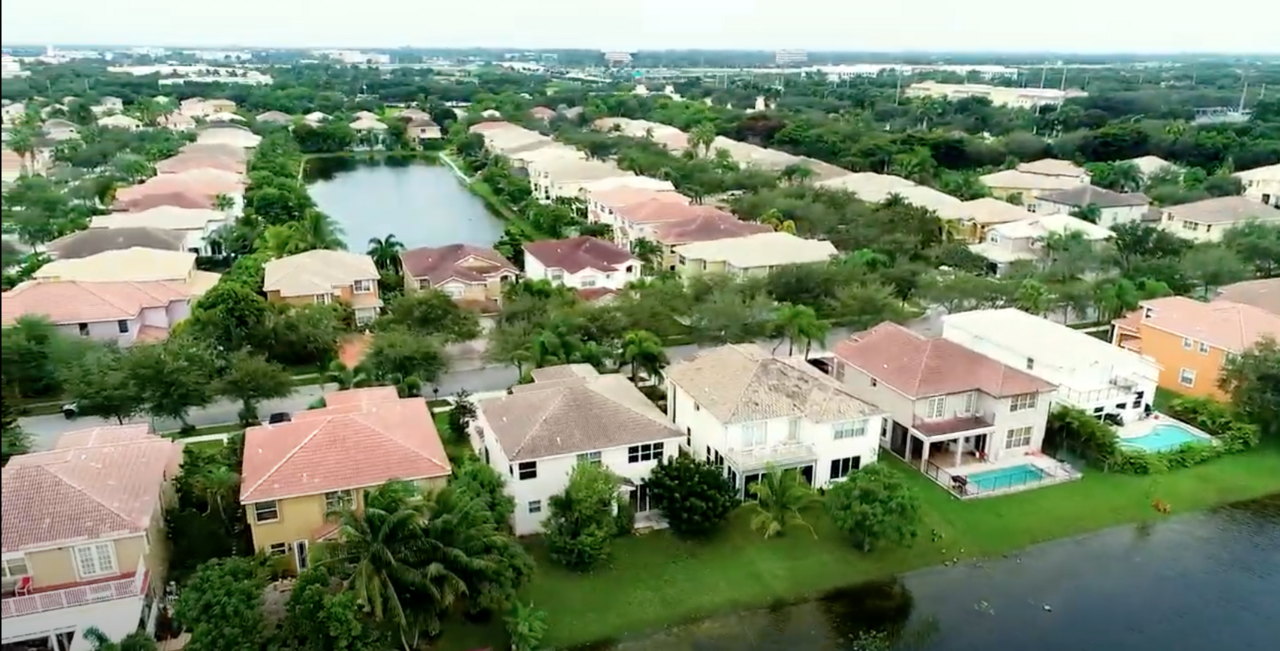
Photo caption: A neighborhood in Miramar, FL. (AccuTour Digital Media Solutions/Wikimedia Commons)
_______
©2026 Tampa Bay Times. Visit tampabay.com. Distributed by Tribune Content Agency LLC.
Sign in to get access to this free resource, and all of our whitepapers and reports.

Download this content today!
Register Now Already registered? Click here to Log In