By Karen Brooks Harper
The Dallas Morning News
(TNS)
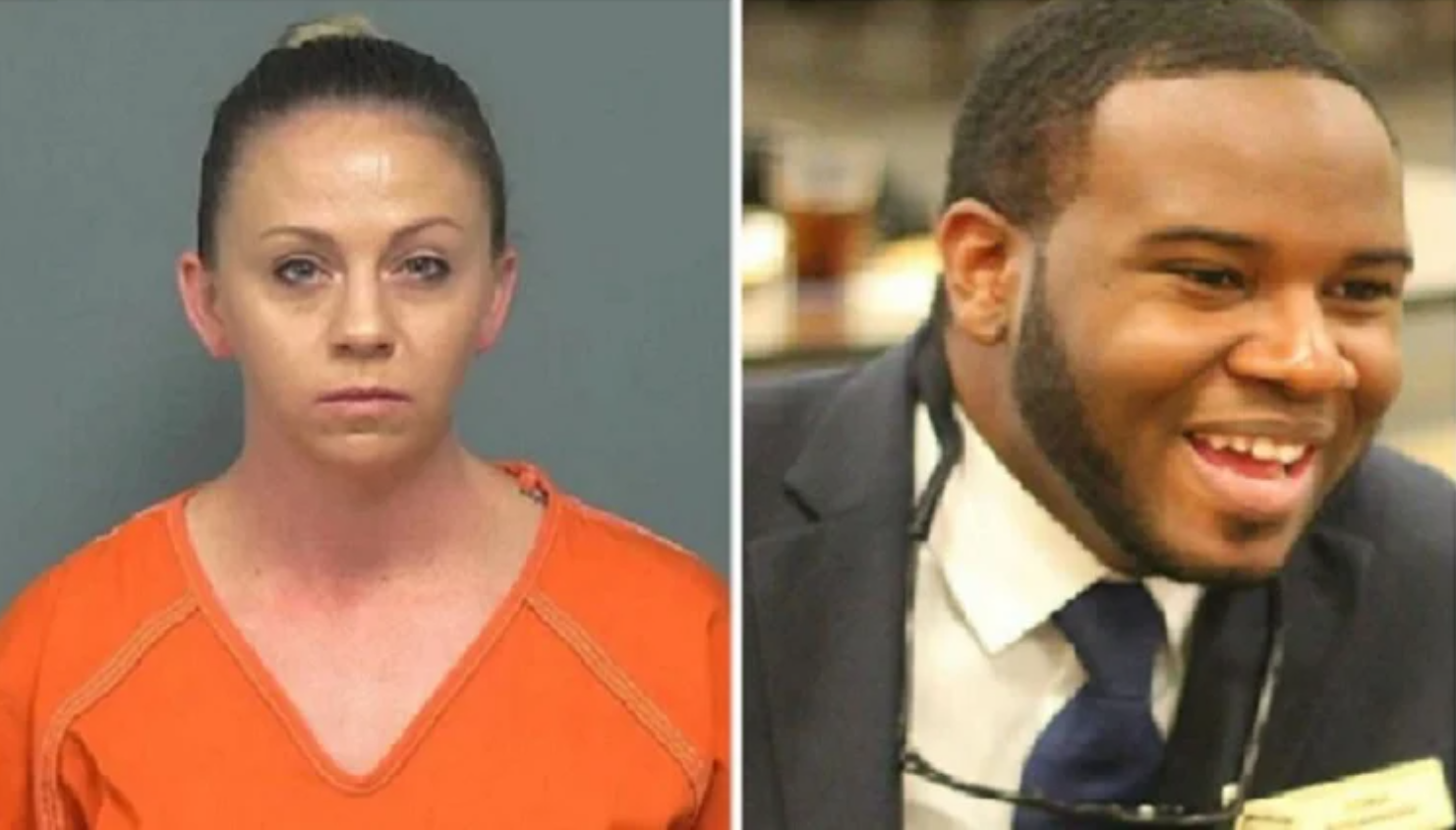
Former Dallas police Officer Amber Guyger walked free from prison Friday morning after serving seven years behind bars for the murder of Botham Jean, who worked as an accountant for PwC.
Guyger, 38, shot 26-year-old Jean inside his apartment in September 2018. He had been sitting on his couch eating ice cream when Guyger, who was off-duty but still in uniform, opened the door. She said she mistook Jean’s apartment for her own and believed he was a burglar. He lived on the fourth floor; she lived on the third.
She was convicted of murder and sentenced to 10 years in prison in 2019, but was granted parole earlier this month. Guyger was released after 10 a.m. from the Christina Melton Crain Unit in Gatesville. CBS reported live from the unit, but news cameras didn’t capture her release.
Texas Department of Criminal Justice officials said Guyger was released into community supervision.
Guyger was required to travel directly to her new residence and check in immediately with her parole officer, according to Texas parole requirements.
She was allowed to take home personal items accumulated while in prison and will either wear state-issued civilian clothes or clothes brought to her by visitors or the people picking her up. Guyger walked out with her parole papers, a temporary ID and a prepaid debit card or check for money left in her inmate trust account.
Guyger was denied parole in 2024 after the state parole board said she was not rehabilitated or ready for release.
Recommended Articles

Her request was granted this time after a review found her record showed no documented pattern of violence, that she maintained a “satisfactory institutional adjustment” and that she completed a treatment plan that “should enhance” her chances of obtaining—and keeping—a full-time job, a Texas Board of Pardons and Paroles spokesperson said in early October.
The board has several options for what type of parole to grant an inmate, a vote that depends on individual circumstances and the inmate’s behavior during time served.
Guyger was granted direct release with no additional restrictions beyond her parole conditions, the least restrictive form of parole approval a Texas inmate can receive.
The decision to release her sparked a new wave of interest and emotion around the case, which drew international attention, sparked protests and led Texas lawmakers to pass the Botham Jean Act.
Also known as Bo’s Law, the statute requires officers to keep their body cameras on for the entirety of their participation in an investigation. That same year, Dallas renamed part of South Lamar Street for Jean.
“The past eight years have been an incredibly traumatic and painful experience for Botham Jean’s family,” the family said in an official statement released in early October. “The loss of Botham has left our family forever dismembered, and that is something we continue to live with every day.”
Guyger’s parole conditions were not released, but her trial attorney, who no longer represents her, told The Dallas Morning News after the parole vote that she has a job that will keep her out of the public life and a living arrangement that will stay private.
“She’s hopeful, optimistic, tremendously remorseful,” attorney Robert Rogers said. “That’s probably something she’ll always live with.”
Parole conditions
Most parolees must follow the same basic set of rules, alongside any special conditions decided by the parole board, which are typically kept confidential.
Guyger will have to follow her parole conditions until September 2029.
Failure to follow the conditions can result in parole revocation, which sends the inmate back to prison for the remainder of their sentence, or lesser sanctions such as curfew adjustments or brief incarceration in a facility designed for parolees.
State law requires all parolees to get permission from their parole officer if they want to change residences or leave the state. They must be working or in school, and they have to check in regularly with their parole officer, submit monthly education or work reports, and submit to random alcohol and drug testing and unannounced searches.
They’re forbidden from breaking the law, owning or being around firearms and ammunition, and from contacting the victim directly or indirectly. They must make restitution payments and reimburse the prison for some educational programs.
Guyger still faces a judgment of nearly $100 million from a federal civil suit connected to Jean’s murder.
______
© 2026 The Dallas Morning News. Visit www.dallasnews.com. Distributed by Tribune Content Agency LLC.
Sign in to get access to this free resource, and all of our whitepapers and reports.

Download this content today!
Register Now Already registered? Click here to Log In
Tags: accountant, Accounting, Amber Guyger, Botham Jean, Dallas, murder, parole, PwC