



A national tax fraud enforcement surge resulted in the prosecutions of 76 defendants whose actions caused an estimated loss of revenue to the federal government of more than $490 million, the Justice Department and the IRS Criminal Investigation Unit said on Oct. 14.
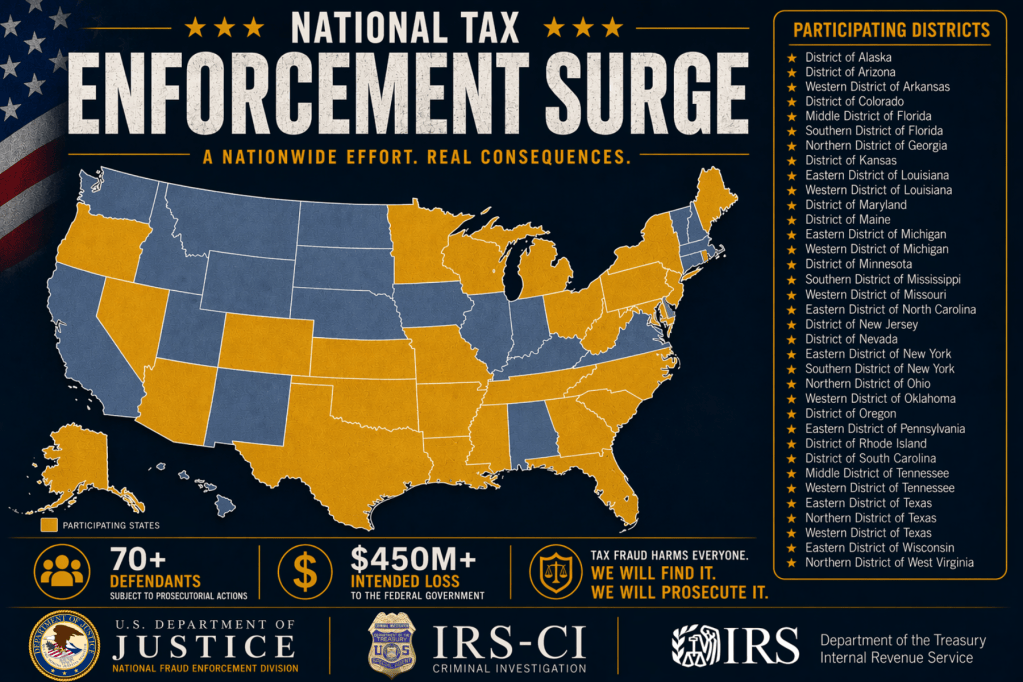
Between early September and yesterday, the Justice Department’s National Fraud Enforcement Division’s Tax Section and 35 U.S. attorneys’ offices across the country participated in the DOJ’s first-ever National Tax Enforcement Surge.
DOJ prosecutors returned 23 actions with new charges against 31 defendants involving more than $350 million in alleged intended tax losses, while another 45 defendants were involved in trials, guilty pleas, and sentencings. Their crimes resulted in an estimated intended loss of $140 million, officials said.
“We are not looking for the person who clicked the wrong button on an online filing form. We are not looking for the family that misread a line on their tax return, or the small business owner who inadvertently claimed a deduction but turned out not to qualify,” Assistant Attorney General Colin McDonald of the Justice Department’s National Fraud Enforcement Division said during a press conference on Wednesday. “We are looking for people who lied on purpose to take money that they knew did not belong to them. People who intentionally violated a known legal duty. People who invented refunds they were not entitled to; who stole other people’s names and filed returns, using them thousands of times over; who built abusive and illegal sham trusts to bury income they knew perfectly well was taxable; who took Social Security and Medicare money out of their employees’ paychecks and kept it for themselves. These are not errors. These are criminal schemes built deliberately, run for years, designed to be hard to find, and paid for every single time by the Americans who filed taxes honestly and pay what they owe.”
He said the “bread and butter” cases in the enforcement operation involved tax return preparers.
“Dirty return preparer crimes are particularly corrosive to public trust because they undermine ordinary American citizens trust in our tax system,” McDonald added.
As an example, he cited Nejlai Mitchell, the owner of a North Carolina tax return preparation business, who was recently sentenced to 60 months in prison for conspiring to prepare false returns claiming fraudulent refunds based on COVID-19 tax credits.
According to the DOJ, from approximately April 2022 through May 2023, Mitchell and seven employees filed false tax returns seeking fraudulent refunds based on the paid sick and family leave credit, a credit passed by Congress to aid struggling businesses during the COVID-19 global pandemic. The conspiracy resulted in a total of approximately $23.9 million in fraudulent tax refund claims. The IRS paid out approximately $13,890,697 of that amount.
Five other return preparers were sentenced for their roles in the scheme. Tiffany Moody was sentenced to 26 months in prison, Shaneen Ray and Eyoubo McBurney received 18-month sentences, Sylvia Swindell was sentenced to 16 months in prison, and Katrena Stanback was given a six-month sentence.
“This enforcement surge delivered results for taxpayers,” IRS CEO Frank Bisignano said. “Under President Trump’s leadership, we are working across government to go after fraud, hold bad actors accountable, and protect the integrity of our nation’s tax system.”
“If there was ever any question whether criminal tax enforcement remains a priority, today’s actions should dispel all doubt. These cases send an unmistakable message that individuals and businesses who deliberately cheat the tax system will be held accountable,” added Jarod Koopman, chief of IRS Criminal Investigation and IRS chief tax compliance officer. “The investigations announced today involve hundreds of millions in identified tax losses to the United States, funds that should have supported the programs and services Americans depend on every day. When taxpayers evade their legal obligations, the burden does not disappear, it is shifted to law-abiding Americans.”
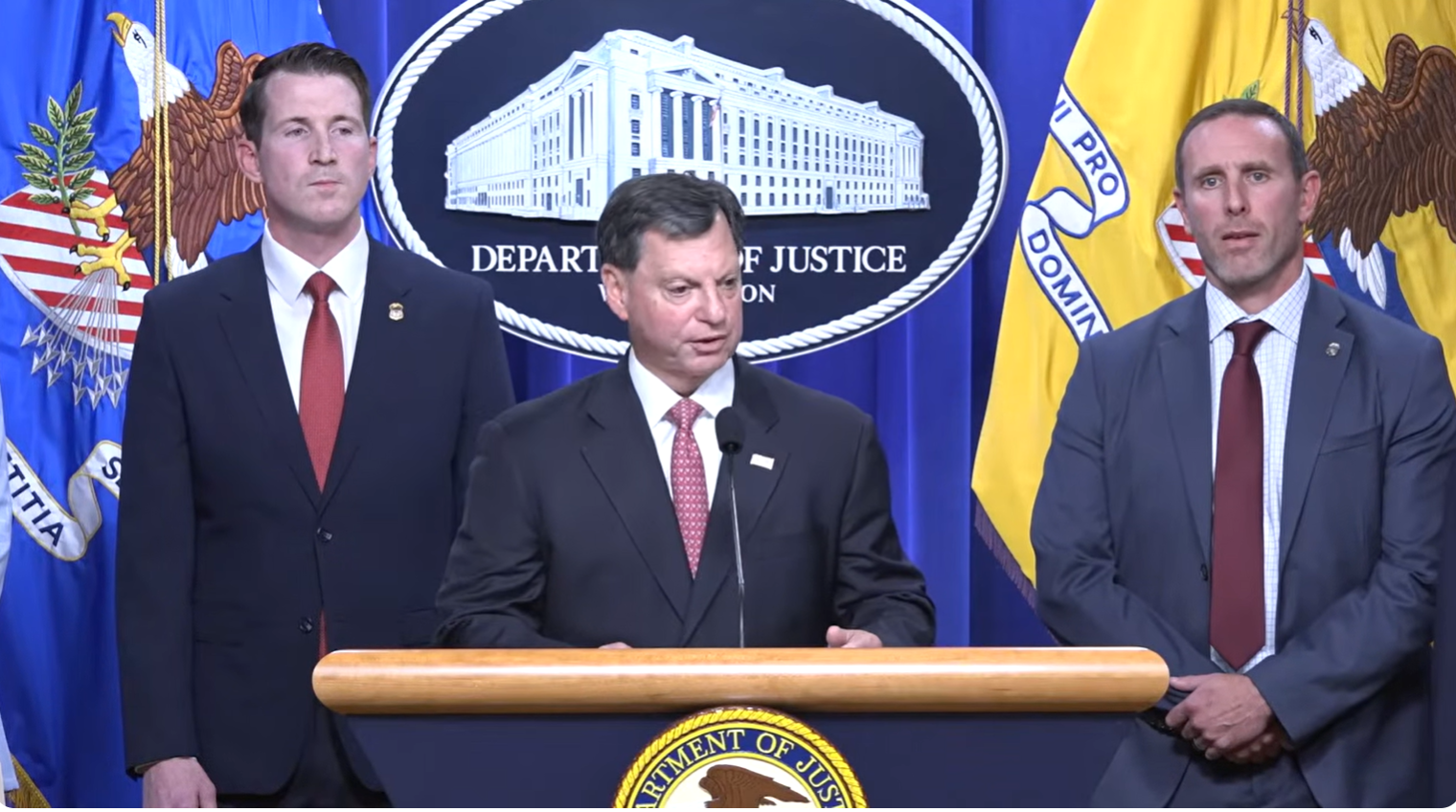
Photo caption: IRS CEO Frank Bisignano speaks during a press conference on Oct. 14 about the national tax fraud enforcement surge as Assistant Attorney General Colin McDonald of the Justice Department’s National Fraud Enforcement Division (left) and Jarod Koopman, chief of IRS Criminal Investigation, look on (Justice Department/YouTube)
Sign in to get access to this free resource, and all of our whitepapers and reports.

Download this content today!
Register Now Already registered? Click here to Log In