



By Kelly Livingston and David Jordan
CQ-Roll Call
(TNS)
WASHINGTON — A White House bid to address sky high fuel prices by allowing temporary expanded use of untaxed diesel will have a limited impact on businesses and consumers feeling the pain at the pump, experts say.
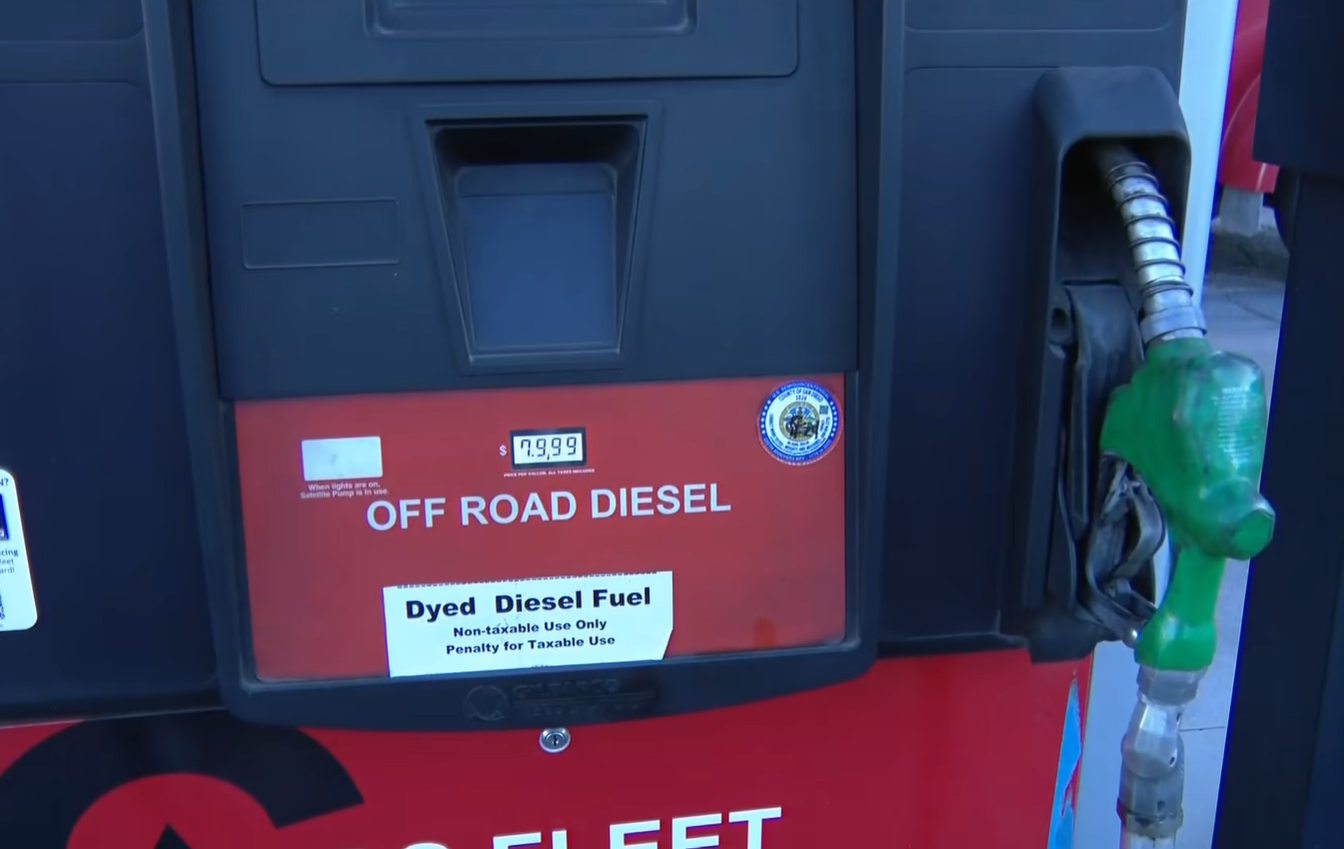
President Donald Trump signed an executive order while at a Nebraska campaign event on Monday allowing the sale of red-dyed diesel for use in on-road vehicles through the end of this year. Typically used in off-road vehicles like farm and construction equipment, the dyed fuel is exempt from the 24.4 cents per gallon federal diesel tax.
Trump, who explained he didn’t “know what the hell it is,” nonetheless said the move would drive down costs for truckers and farmers, which would trickle down into lower prices paid generally by U.S. consumers.
“The typical trucker will save over $100 every time they fill up … and farmers will also save millions and millions of dollars,” Trump said. “And this order will also drive down the cost of all goods, including grocery prices, very substantially.”
Agriculture Secretary Brooke Rollins said farmers would ultimately save $640 million on federal and state taxes in the last quarter of the year, which would “better enable our farmers to deliver America’s harvest during this critical time.”
Republicans in competitive races, like Iowa Rep. Ashley Hinson, who’s running for Senate to replace retiring GOP Sen. Joni Ernst, and Sens. Pete Ricketts of Nebraska and Roger Marshall of Kansas, promptly praised the administration’s move. The White House even touted a Democrat’s backing: Rep. Don Davis of North Carolina, one of his party’s most vulnerable incumbents.
Various Republicans in tight races had previously called for a temporary diesel export ban, which Trump could impose using existing emergency powers without the need for congressional action. Trump had toyed with the idea but ran into massive pushback from the oil industry and from his own advisers, like Energy Secretary Chris Wright, and the plan never got off the ground.
A fuel tax holiday was another idea that bubbled up, but that couldn’t be implemented without congressional action. So instead they hit upon the dyed-fuel plan, which can be carried out under existing law allowing for postponed taxes due to natural disasters, a “significant fire” or—most applicable on account of the Iran war—a “terroristic or military action.”
Recommended Articles

Taxes October 7, 2026
Trump Says He’s Considering Gas Tax Suspension to Ease Costs
But key details remain missing from the order; namely, while the tax relief is good for dyed diesel sold between Oct. 5 and Dec. 31 of this year, it’s only a tax deferral—it must eventually be paid under current law. There’s not even a deadline for payment of the deferred tax; that part is up to Treasury Secretary Scott Bessent to figure out through separate guidance.
The order does stipulate that the secretary “shall explore avenues, including legislation, to eliminate the obligation to pay” the tax, but there’s no guarantee Congress will go along. The federal diesel tax brings in around $10 billion annually for the dwindling Highway Trust Fund so permanently removing a chunk of that money could hasten the trust fund’s demise and deprive states of infrastructure resources.
Rep. Greg Steube, R- Fla., used the announcement to call for action on his bill, introduced in August, that would eliminate penalties associated with using red-dyed diesel for normally taxable purposes. The fine is equal to the greater of $1,000 or $10 for every gallon involved. But Steube has no co-sponsors and there’s been no movement on his bill in the tax-writing Ways and Means Committee, on which he sits.
‘Elevated price environment’
Given the uncertainty over the deferred taxes’ future, it’s unclear whether the temporary relief will end up passed downstream to consumers.
SIGMA, the trade group representing major fuel distributors and retailers like ExxonMobil Corp., Marathon Petroleum Corp. and Valero Energy Corp., said in a notice to association members Tuesday that “we expect the current elevated price environment to persist” despite Trump’s executive order.
“The White House appears to be trying to encourage the supply chain to move toward selling dyed fuel in non-traditional ways,” they said. “We do not expect most reputable diesel retailers and fuel marketers to do this.”
They said there is “limited upside” to selling dyed fuel to defer taxes that are likely to still come due absent congressional action, especially because residual dye can linger in tanks allowing marketers to be fined outside of the waiver window.
While SIGMA said the action could help agriculture-focused businesses with their own bulk dyed storage, to sell dyed fuel at scale there needs to be enough dedicated equipment and supply. And a patchwork of state laws and exemptions means truck drivers traveling through multiple states on any given day may purchase fuel in one state with a tax waiver but still be liable in another.
“Ultimately, for most marketers, the liability and customer risk outweigh any temporary, uncertain benefit,” the group said. “It’s a lot of risk for compliance departments to absorb over the potential for a $0.24 deferral on diesel that is retailing for more than $6.00 per gallon in many parts of the country.”
NATSO, the trade group representing truck stops and travel centers such as Love’s Travel Stops and QuikTrip Corp., also isn’t making any promises about fuel price cuts, at least for now.
Tiffany Wlazlowski Neuman, the group’s vice president for public affairs, emphasized that it would be up to Congress how to handle the eventual tax payments.
And that’s no sure thing based on recent experience. Despite House GOP conservatives’ efforts to pass a gasoline and diesel tax suspension bill, surface transportation funding advocates led by House Transportation and Infrastructure Chairman Sam Graves, R- Mo., scotched that effort.
“Although it won’t be collected from the customer, the fuel tax would still be an obligation” under Trump’s order, Neuman said. “Congress may or may not waive that obligation considering the current needs of the Highway Trust Fund. It’s a lot of risk to absorb the 24 cents per gallon.”
And roadbuilding groups are already pushing back.
“Fuel taxes provide vital, dedicated funding for our nation’s roads and bridges. Reducing that revenue would undermine investment in the infrastructure Americans depend on,” said Nile Elam, vice president of government affairs for the National Asphalt Pavement Association.
‘Minimal relief’
On top of the federal tax, there are state-level diesel taxes averaging around 35.5 cents per gallon, according to the Energy Information Administration. The executive order includes provisions to “encourage” states to adopt similar relief, but such an action by itself cannot override state laws.
Several states have already relaxed some of their own rules around red dyed diesel, though the specifics of those actions range from allowing increased usage for farmers to temporarily halting road usage enforcement.
Those altering their state regulations include Alabama, Arkansas, Indiana, Iowa, Louisiana, Mississippi, Missouri, Nebraska, North Carolina, North Dakota, South Dakota, Oklahoma, Tennessee and Texas.
Patchy state-level engagement with the policy and limited overall supply will hinder the administration’s effort, industry analyst Patrick De Haan wrote on X.
“The current price spike is about a lack of global supply, driven by continued disruptions in the Middle East and strikes on Russian oil refineries and declining global inventories,” wrote De Haan, head of petroleum analysis for GasBuddy, a price-tracking app. “The dyed diesel order may be a real change on paper, but the impact at the pump is likely to be limited and flat-out lumpy.”
Trucking companies, particularly smaller independent outfits that have been less able to absorb recent price hikes, were also skeptical. While diesel prices are down on average about 20 cents per gallon from their late September record, according to AAA, they are still up about $2.50 a gallon since the Iran war broke out in February.
Todd Spencer, president and CEO of the Owner-Operator Independent Drivers Association, sees only “minimal relief” from the red-dyed diesel move. “Market stability is essential to bring down costs for the long haul,” he said.
Photo source: YouTube
_______
©2026 CQ-Roll Call Inc., All Rights Reserved. Visit cqrollcall.com. Distributed by Tribune Content Agency LLC.
Sign in to get access to this free resource, and all of our whitepapers and reports.

Download this content today!
Register Now Already registered? Click here to Log In