



By Claire Murphy
Pioneer Press Newspapers, Suburban Chicago
(TNS)
Come November, Cook County voters will take the first step in deciding whether a 3% tax should get tacked onto million-dollar incomes, but the question should particularly resonate in Evanston, Wilmette, Winnetka, Glencoe, Kenilworth, Northbrook, Glenview and other North Shore towns due to their wealth.
In liberal-leaning Evanston, one Council member proposed that such a so-called “millionaire’s tax” referendum question be placed on the municipal ballot, but that became a moot point after Cook County inked in the question on its ballot.
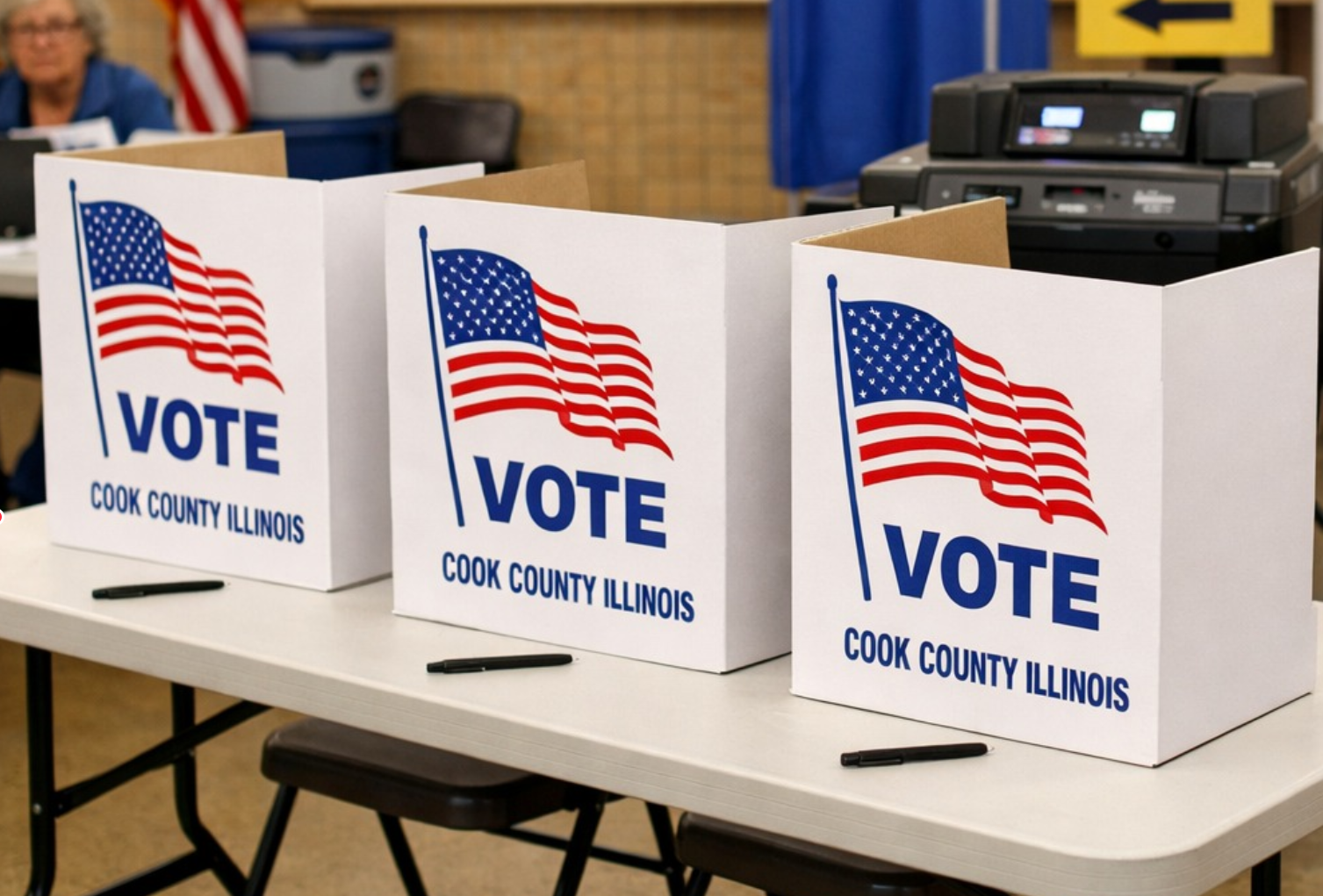
The non-binding referendum question will be included in all ballots county-wide in the Nov. 3 election, and is intended to gauge voters’ opinions on instituting higher taxes for higher earners. The outcome will not directly change policy without further action by state lawmakers.
Cook County election data from a similar 2024 millionaire tax referendum question found that over 77% of Evanston residents and 60% of Illinoisans would support such a measure, according to Alison Leipsiger, Evanston’s policy and intergovernmental affairs manager.
The advisory question could affect many on the North Shore, where household incomes are among some of the highest in the county and nation.
In Winnetka, for example, the median household income ranked over $250,000 in 2024, per U.S. Census data. Glencoe falls just shy of that, with nearly $249,000, and others like Evanston, which has more income diversity, still boasts a median household income around $93,000.
Ald. Parielle Davis, 7th, originally pushed for having the tax question added to Evanston’s local ballot, but retreated after the Cook County Board of Commissioners voted unanimously in July to place the advisory referendum on the county’s upcoming election ballot. The measure was first introduced in the Illinois House of Representatives in October 2025.
Because Illinois’ constitution mandates a flat income tax rate that prohibits increased taxes on greater incomes, the amendment proposal, HJRCA0021, would first need to be approved by the General Assembly and then would be pitched back to local voters before it could be altered.
The 3% tax would only apply to residents with annual incomes over $1 million and not to those with collective assets totaling to that amount, according to officials.
Fifty percent of the revenues collected from these tax increases would provide residential and commercial property tax relief, with the other 50% directed towards improving state funding for public education, the referendum details.
Economists are divided on whether the tax would help or hurt Illinois’ residents and economy.
“I do hope that residents, when they see it on the ballot on the Cook County level this upcoming election, that we keep in mind that what we’re really trying to do here is to signal to the state legislature to consider taxing people who have more than they certainly need,” Davis said at Evanston’s Aug. 24 City Council meeting.
Davis added supporting the referendum would mean agreeing to direct those funds towards some of the city’s “more important projects,” referring to schools and ever-rising property taxes.
“As an elected official at the municipal level, I think that sounds like a dream for me, but also for many of the problems that I know our residents have,” she said.
Chicago’s City Council rejected an earlier bid by Mayor Brandon Johnson to put the millionaire tax question before Chicago voters. Johnson has previously stated the Illinois constitution’s flat income tax rate evades the city’s wealth gap.
If eventually passed, the amendment could generate nearly $4 billion in additional state income tax in its first year, according to a study conducted by the University of Illinois Urbana-Champaign’s Department of Labor & Employment Relations and the Illinois Economic Policy Institute.
However, the Illinois Policy Institute counters that a millionaire tax could open the door for higher taxes on thousands of local small businesses by generating an uptick in their marginal state income tax rate.
Researchers for the Illinois Policy Institute argue this type of tax rate increase is associated with a “decrease in entrepreneur hiring activity” as well as lower wages overall for employees.
However, 26 states have “graduated tax systems requiring individuals to incrementally pay more as incomes rise,” the UIUC and Economic Policy Institute study found, “including four states and the District of Columbia that levy surtaxes on earnings over $1 million.”
The study also said the increased revenue stands to make property taxes “more competitive nationally while adding $1.6 billion and 12,000 jobs to the economy.”
“Millionaires’ taxes have enabled states to invest in education and infrastructure, with no adverse effect on economic performance and little to no effect on the migration patterns of high earners,” researchers concluded.
Photo credit: Chicago Bar Association/cba_lic_official/Instagram
______
© 2026 Pioneer Press Newspapers (Suburban Chicago, Ill.). Visit www.chicagotribune.com. Distributed by Tribune Content Agency LLC.
Sign in to get access to this free resource, and all of our whitepapers and reports.

Download this content today!
Register Now Already registered? Click here to Log In