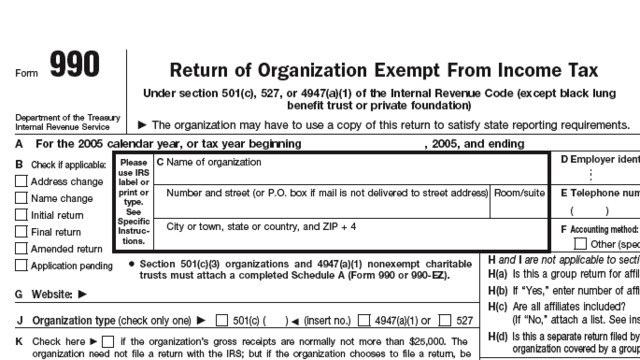




Since 2025, the IRS, Congress, and the current administration have set their sights on tax-exempt organizations. From highly publicized cases like the administration’s battle with Harvard to less discussed guidance like Rev. Proc. 2026-8 and the IRS’s planned revisions to Form 990, it is no secret that IRS scrutiny of tax-exempt organizations is on the rise.
It is not surprising, then, that the IRS’s FY25 Databook shows a significant year-over-year increase in audits of tax-exempt organizations. If that were not enough, the number and amount of penalties assessed also jumped from FY24 to FY25. News headlines tell part of the story, but the raw data confirms that organizations and their advisors should prepare now for potential IRS audits. This article provides a high-level overview of some of the potential consequences of an adverse IRS audit determination, discusses the significant year-over-year increase in the number of tax-exempt audits and number and amount of penalties assessed, and provides advisors with suggestions as to how to prepare clients for an IRS tax-exempt audit.
IRS audits: potential results and consequences
The thought of going through an IRS audit can be overwhelming. This is especially true for a tax-exempt organization that relies on its exempt status to fund charitable activities. While many audits may result in no change to a tax-exempt organization’s exempt status or liability, one misstep can spell disaster. For reference, IRS audits can result in a range of actions:
- No change to exempt status or tax liability
- No change to exempt status or tax liability, with an advisory that the IRS follows up on later to see if advice has been followed
- Change in tax liability (e.g., employment tax, excise tax, unrelated business income tax) and/or penalties
- Revocation of exempt status
- Reclassification of foundation status (for 501(c)(3) organizations and 4947(a)(1) trusts only).
While an adverse IRS audit determination (e.g., revocation of exempt status) would certainly impact the organization, the ripple effect could spread to donors and possibly tax-exempt bondholders that relied on the organization’s exempt status in funding its operations. Further, losing exempt status would preclude exempt organizations like schools, municipalities, state and local development authorities, hospitals, and museums from issuing tax-exempt bonds to fund infrastructure and other capital improvements.
Further, if the organization disagrees with an adverse determination by the IRS, it could litigate the issue. However, that approach would further divert the organization’s financial resources (e.g., incurring legal or forensic accounting fees).
The IRS’s FY25 Databook shows that severe financial consequences for exempt organizations is not an abstract concept reserved for the Internal Revenue Manual. Rather, raw data shows a substantial increase in audits of exempt organizations as well as the amount of penalties assessed during those audits.
IRS Databook: where we’ve been and where we’re headed
Recently, the IRS published its annual Databook for FY25. The Databook provides raw data with respect to IRS audits, collections, and litigation. For tax-exempt organizations, the FY25 Databook shows IRS audits increased by 33.48% from FY24. The drastic year-over-year increase in tax-exempt audits is striking considering that tax-exempt audits decreased by 35.28% from FY23 to FY24. A deeper dive into the IRS Databooks for FY23, FY24, and FY25 show the financial impacts are real and punitive.
As an example, in FY25 the total number of penalties assessed for excise taxes and tax-exempt organizations and trusts increased from FY24 by 4.5%, and the total amount of those penalties increased by 160%. By contrast, the total number of penalties assessed in FY24 decreased from FY23 by 6.7%, and the total amount of penalties decreased by 19.62%.
The year-over-year increases in tax-exempt audits and assessed penalties confirm that the IRS is acting on the administration’s directives. Yet, many organizations need outside help to prepare for an IRS audit. Planning early with the help of a knowledgeable advisor can reduce the time spent gathering documents during an audit and expose issues before the IRS knocks on the door.
The role of the tax advisor: review, discuss, defend
Generally, the IRS does not focus on one issue during a tax-exempt audit. Rather, the IRS looks at whether the organization can prove that its Form 990, governance practices, financial documents, and exempt-purpose expenditures tell the same story.
Internal Revenue Manual (IRM) Section 4.70.13 (Executing the Examination) outlines the IRS’s procedures and techniques for auditing tax-exempt organizations. Section 4.70.13 is a helpful tool for an advisor seeking to understand how the IRS conducts a tax-exempt audit, including which documents the IRS may request, who the IRS may contact (both internally and externally), and how the IRS may analyze an organization’s financial documents (e.g., chart of accounts, general ledger, bank statements).
Some documents the IRS may request during an audit include:
- Governing documents and exemption materials, including governing instruments and amendments, determination letters, exemption applications, and other filed federal returns;
- Governance and operational records, including board and committee minutes, attachments and reports, operating manuals, employee handbooks, websites, newsletters, brochures, and other publications;
- Financial and accounting records, including the chart of accounts, trial balance, financial statements, general ledger, journals, bank and brokerage statements, invoices, receipts, canceled checks, credit card statements, and reconciliations;
- Contracts and property records, including agreements with insiders or key employees, leases, mortgages, loans, deeds, title documents, and purchase or sale agreements;
- Revenue and unrelated-business-income support, including bank records, deposit support, advertising contracts, pricing charts, lobbying contracts, and documents showing the source, classification, and exempt-purpose relationship of income; and
- Expense, compensation, and private-benefit support, including invoices, receipts, vouchers, travel logs, payments to officers, directors, trustees, key employees, contractors, and records relevant to Forms 1099 or other filing obligations.
Understanding how the IRS executes a tax-exempt audit is crucial for the organization and the advisor. But understanding IRS procedures and techniques is merely the first step. The next is using those procedures and techniques to prepare a tax-exempt organization for IRS scrutiny. For example, an advisor can prepare a tax-exempt client in advance of an IRS audit by:
- Reviewing Form 990 for consistency with the organization’s financial records, program descriptions, revenue classifications, and governing documents;
- Building an audit-ready file that includes bank statements, payroll records, Forms 1099, Forms 990 and 990-T, expense substantiation (e.g., receipts and invoices), organizational documents, exemption letter(s), contracts, insurance policies, leases, and grant records;
- Reviewing and confirming that grants, government payments, and restricted funds are tracked by program, restriction, and purpose;
- Testing unrelated business income reporting, including whether the organization was required to file Form 990-T;
- Documenting executive compensation, including review of comparable compensation data, written records, and approval by disinterested decision-makers;
- Reviewing and updating whistleblower, document-retention, and board-minute practices and procedures; and
- Reviewing group-exemption oversight (if applicable), including review of subordinate finances, filing compliance, and activities.
In short, ask questions, request documents, critically review the facts, and engage experts when needed (e.g., forensic accountants). The old adage “the best defense is a good offense” applies equally to football games and IRS tax-exempt audits. In either case, you can’t show up on gameday unprepared and expect to win. Rather, it takes a year-round compliance program that makes the organization’s exempt purpose, Form 990 reporting, and financial controls easy to verify.
==
Adam R. Young is a tax controversy partner at Fox Rothschild LLP and creator of #TaxDadJokes. As a former IRS Chief Counsel attorney, he helps taxpayers navigate and resolve IRS audits and IRS appeals. When necessary, he represents taxpayers in U.S. Tax Court, U.S. District Court, and U.S. Courts of Appeals against the IRS and Department of Justice. He also presents on IRS enforcement priorities, conservation easements, and legislative updates.
Sign in to get access to this free resource, and all of our whitepapers and reports.

Download this content today!
Register Now Already registered? Click here to Log In