By Mason Edwards
Chattanooga Times Free Press, Tenn.
(TNS)
A nearly $50 million civil judgment was entered against former Chattanooga accountant Jonathan Frost and three companies tied to him, according to court records from a Cook County, Illinois, class-action lawsuit.
Filed in 2023, the lawsuit accused Frost and other defendants of running a clean energy investment scheme that used about 99% of investor funds to prop up other businesses and pay personal expenses.
It’s unlikely that victims will receive restitution from Frost, as other civil judgments have not been successful in recouping losses, according to Chicago attorney Alex Loftus, who represents the complaint’s investors.
“It’s a piece of paper that says that they need to pay this money,” he said by phone. “That’s the biggest, best thing that can be achieved.”
Even though most of the investor funds were spent, Loftus said by phone, the judgment—so far his largest against Frost—is an important step. It opens up other sources of recovery for the victims, though he declined to share his exact plans.
In his ruling, Judge Davis Atkins wrote that Frost and the companies—Rhino Onward International, Croft & Frost and Scorpio REF—didn’t answer the complaint. Frost’s lawyer for civil matters, Sam Elliot, declined to comment in an email.
The judge said the complaint’s allegations satisfied the appropriate elements for a claim under state law against the non-answering defendants. Loftus said the ruling was based on the claim’s merits. Meanwhile, the lawsuit continues against Frost’s former business partner, Paul Croft, and another company.
Judgment impact
Loftus said his clients reacted to the news as if it were long overdue. He said he found it weird that Frost and the other companies didn’t answer the complaint. According to Loftus, if someone defrauds people out of millions, the person generally fights attempts to pay back anything.
“Instead, he just rolled over and said, ‘uncle,'” Loftus said. “That’s maybe more of a good thing, as far as character, his character to not fight and do what he did.”
Frost is free on a $10,000 bond while awaiting his sentencing Aug. 7. In February, he pleaded guilty to three federal financial crimes involving conspiracies to commit tax fraud, wire fraud and money laundering.
The plea agreement said that, unless otherwise negotiated, Frost could owe the government no less than $70 million. His criminal defense attorney, Lee Davis, said by text that Frost will not be making public comments at this time because of the ongoing criminal case.
Recommended Articles
SEC September 24, 2026
Feds File Suit Over Alleged $64M Croft & Frost Investment Scheme

Accounting August 19, 2026
Frost’s Sentencing Delayed for Second Time
According to Loftus, the criminal judgment is only against Frost personally, not the related entities in the class-action lawsuit Loftus is pursuing.
“So legally, a judgment creditor can step into the shoes of the entities and then score all sorts of points against other parties with money that isn’t achievable from just going after Frost personally,” he said.
Wider reach
In early April, Frost’s parents were dismissed from a lawsuit filed in Chattanooga’s federal court district. The lawsuit accused the parents of helping hide their son’s assets from creditors. The judge saw no need to address the allegations based on a speculative theory of liability, he wrote.
“I think that’s correct,” Loftus said. “The parents did a really good job of setting things up to shield themselves from their son’s activities.”
As a matter of law, Loftus said, the judgment order against Frost can be bad for Croft if the entities he managed or participated in are found liable for fraud. Still, he already has direct claims against Croft, he said.
“The goose is already cooked, so it doesn’t really matter,” he said. “I mean, everybody knows what happened here, and it’s obvious.”
Even though most of the investment funds were spent, Loftus accused Croft of overfunding a life insurance policy.
“Generally, a creditor can’t tap a life insurance policy, so it’s a pretty savvy move on his part to have,” Loftus said. “He has like $20 million of life insurance.”
According to Loftus, the government could potentially collect from that policy. Croft did not answer a text or phone call requesting comment. His attorney, Melinda Power, said by phone that the judge denied a motion to issue a pretrial judgment against Croft, letting the case continue.
She declined to answer whether the Croft & Frost company, which didn’t fight the complaint, could be used to hold Croft liable. She also declined to answer follow-up questions about Croft’s insurance policy practices.
Working for Croft
Well over 100 investors in several firms linked to Frost formally united to recoup some of their losses in the Illinois lawsuit in 2024. Sarah Bivans, a 34-year-old single mother from Minnesota, said she is one of them.
In 2019, Bivans was seeking a new job after leaving the hospitality industry. According to her, she met Croft through a mutual friend and called him as he was driving from a networking event, as she thought he would be well-connected.
Over the next two to three hours, she talked to him on the phone while he was driving a luxury convertible. He interviewed her over the phone on the spot, which she didn’t expect, she said.
“I’m yelling on the phone to this man who’s yelling,” she said, “because he decided he didn’t want to put his convertible top up.”
Croft offered her a job—starting the next day—as his executive assistant, she said. According to her, she did everything for him, including emails, scheduling, payroll, driving and more. He had grand ideas about becoming a billionaire and was always showing wealth off, she said.
“At one point, I was like, ‘Hey, like if you have any plan to scale this business, you can’t do it this way,'” she said. “Like you can’t operate out of a handwritten notepad and your Gmail account.”
Bivans was new to the accounting and tax world and didn’t question Croft’s tax and accounting practices, she said. She found it odd that he frequently asked her if she recorded their phone conversation, but she was his assistant, and she said he seemed like a godly, Christian man.
“He became a friend first,” she said, “and you never want to think that about your friends, that they would do something like that to you.”
Croft & Frost
She worked her way up the corporate ladder, and one day, Croft introduced her to Frost as a potential new partner. According to her, she couldn’t see the sense in why he wanted a business merger, and she had advised against it.
Bivans was eventually promoted to the executive leadership team, she said. She built a house, purchased her dream car—a Jaguar SUV—and started saving money. She worked hard for the raises, she said, and her parents were proud.
According to her, Croft and Frost encouraged employees to invest with the company, comparing the gains Croft & Frost were making to the interest yields from banks, so she invested a sizeable chunk of her savings, and her loved ones invested even more.
“We just thought this is a greatest place on earth,” she said, “and then all of a sudden, there started being payroll issues.”
Employees were getting double-digit annual pay increases, which she later realized was likely to keep the scheme going, she said. Everything was secret, happening behind the backs of the leadership team, according to Bivans.
In September 2023, Croft & Frost collapsed, and it quickly emerged that the firm had been failing to make payroll on time for months, even as Frost and other leaders assured staff the future was bright.
Frost never answered another phone call from the leadership team, Bivans said, and it was like he vanished.
Whiplash
Bivans had to cut back on expenses and refinance the SUV with a tripled interest rate, she said. She can’t find a job that pays at a similar level, even with all her promotions and experience.
For a while, she was taking the Croft & Frost company name off her resume, she said. She didn’t want to flip her daughter’s world upside down by selling the house and going back to a one-bedroom apartment, she said.
“I think about it literally every day of my life,” she said. “And I’m like there’s just so much hatred built up.”
Many investment victims have lost hope of reclaiming funds, she said. With the news, between civil judgments and Frost’s criminal plea agreement, she said it’s been a lot of back-and-forth, exhausting whiplash between hope and grief.
“Maybe if he actually does get convicted of it and like actually has to serve jail time,” Bivans said, “then maybe his family would step up and do some sort of deal where they pay back a portion.”
She knows many investors would be happy to receive even a portion back, but then Bivans wonders whether the investors or the IRS would get paid first, she said.
“I think at this point I’m like, ‘Yeah, I obviously want my money back,'” she said. “And that would be a very big surprise if we did, but I think a lot of us aren’t holding our breath, because I just feel like this stuff takes years.”
Whenever she tells people her story, they always suggest Netflix should pick it up as a documentary, she said, and she agrees with them. One investor has already written a book about the scheme.
“I just have to keep telling myself that one day he will pay,” Bivans said. “And it might not be on Earth, but I mean, you can’t just do something like that and get away with it.”
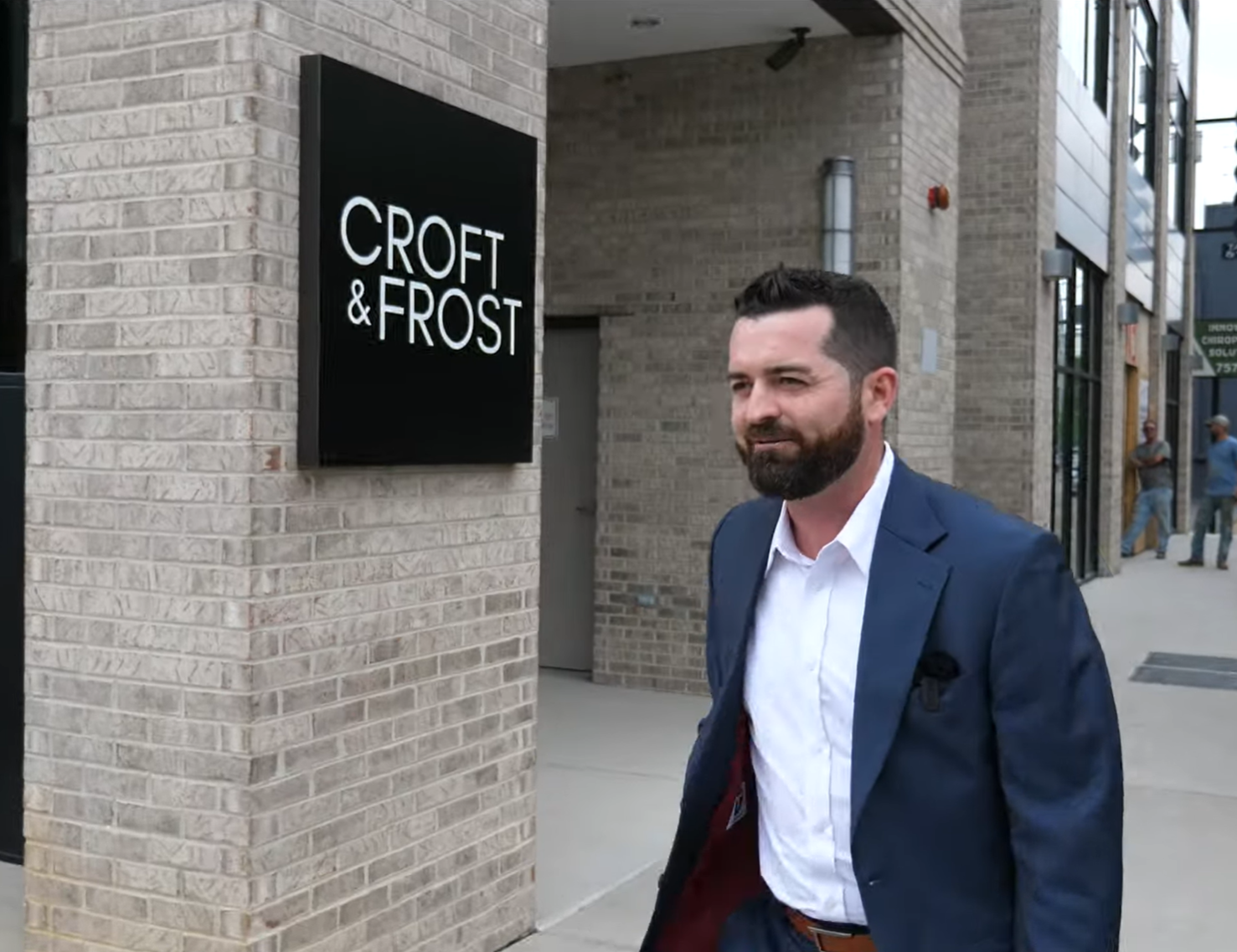
Photo caption: Jonathan Frost (via his YouTube page)
_______
© 2026 the Chattanooga Times/Free Press (Chattanooga, Tenn.). Visit www.timesfreepress.com. Distributed by Tribune Content Agency LLC.
Sign in to get access to this free resource, and all of our whitepapers and reports.

Download this content today!
Register Now Already registered? Click here to Log In