



By Cayla Bamberger
New York Daily News
(TNS)
New York Gov. Kathy Hochul, a Democrat, on Monday defended herself against criticism from labor allies and members of her own party over her intent to opt into the GOP’s federal tax-credit scholarship program, which would help families pay for private school and other educational expenses.
New York’s participation in the scholarship program is a nonstarter for the state’s and city’s teachers unions, who contend the program takes students and public dollars away from local public schools. The governor disagrees with that characterization.
“This money,” she said during an unrelated news conference in Midtown East, “it’s not public dollars that could have been going to public schools are now going to private schools. It’s just not how it works.”
Under the program, American taxpayers can receive dollar-for-dollar credits of up to $1,700 for donations to approved nonprofits that grant scholarships. The organizations then offer financial support for private or religious school tuition, tutoring, after-school programs, classroom supplies, and other school-related costs.
Families who earn up to 300% of their area’s median income, or a maximum of $309,000 in New York City, would be eligible, including those who are already paying for private schools.
The program was launched as part of President Trump’s “One Big Beautiful Bill,” but requires states to opt in for families to participate. Dozens of Republican-led states have signed up, but only one Democratic governor has given the official green light so far: Gov. Jared Polis of Colorado.
Recommended Articles
Taxes February 10, 2026
19 States Offer Tax Credits for Private School Scholarship Donations
Taxes November 25, 2025
IRS Seeks Comments on New OBBBA Tax Credit Scholarship Program
Other Democratic governors, including Hochul, have said they are waiting on more information from the federal government before formally opting in, including if the dollars can be used to the benefit of public schools.
“I want to see what the regulations look like,” Hochul said at the news conference. “Because if it says something that’s detrimental to public schools—for example, saying none of this money can be used for a public school—that’s a big issue for me. That’s a big issue.”
The governor even suggested that teachers unions could become scholarship-granting nonprofits, though it’s unclear if labor organizations would meet federal statutory requirements for the tax-credit program. The program was billed by the Trump administration as an effort to promote school choice through what officials have dubbed the “Education Freedom Tax Credit.”
“I’ve encouraged our labor leaders for months now to say, why don’t you become a scholarship organization that people can contribute to you or to some other entity or to public schools?”
Hochul’s support for the scholarship program comes as she runs for re-election against GOP nominee Bruce Blakeman, who has criticized the governor for not opting in sooner. But it’s likely to drive a wedge between Hochul and the United Federation of Teachers (UFT) and New York State United Teachers (NYSUT), both of which quickly released statements Friday criticizing the governor’s intent to participate.
Also on Friday, State Sen. John Liu (D-Queens), chair of the New York City education committee, said that if the governor follows through on her plan, he would consider drafting a bill that would prevent New York from taking part in the program.
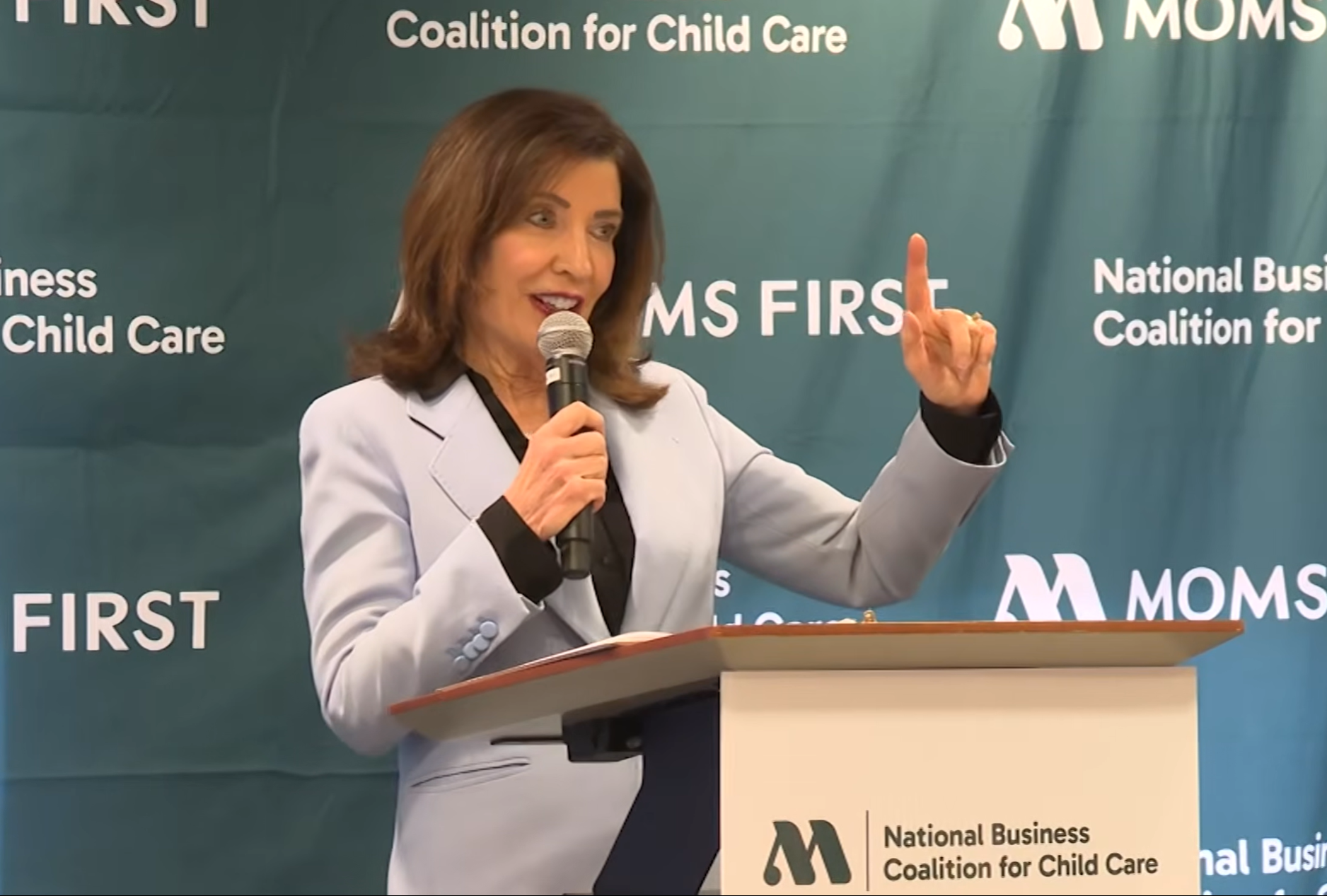
Photo caption: New York Gov. Kathy Hochul speaks at an event on April 15, 2026. (Kathy Hochul/YouTube)
_______
©2026 New York Daily News. Visit nydailynews.com. Distributed by Tribune Content Agency LLC.
Sign in to get access to this free resource, and all of our whitepapers and reports.

Download this content today!
Register Now Already registered? Click here to Log In