



By Curtis Killman
Tulsa World, Okla.
(TNS)
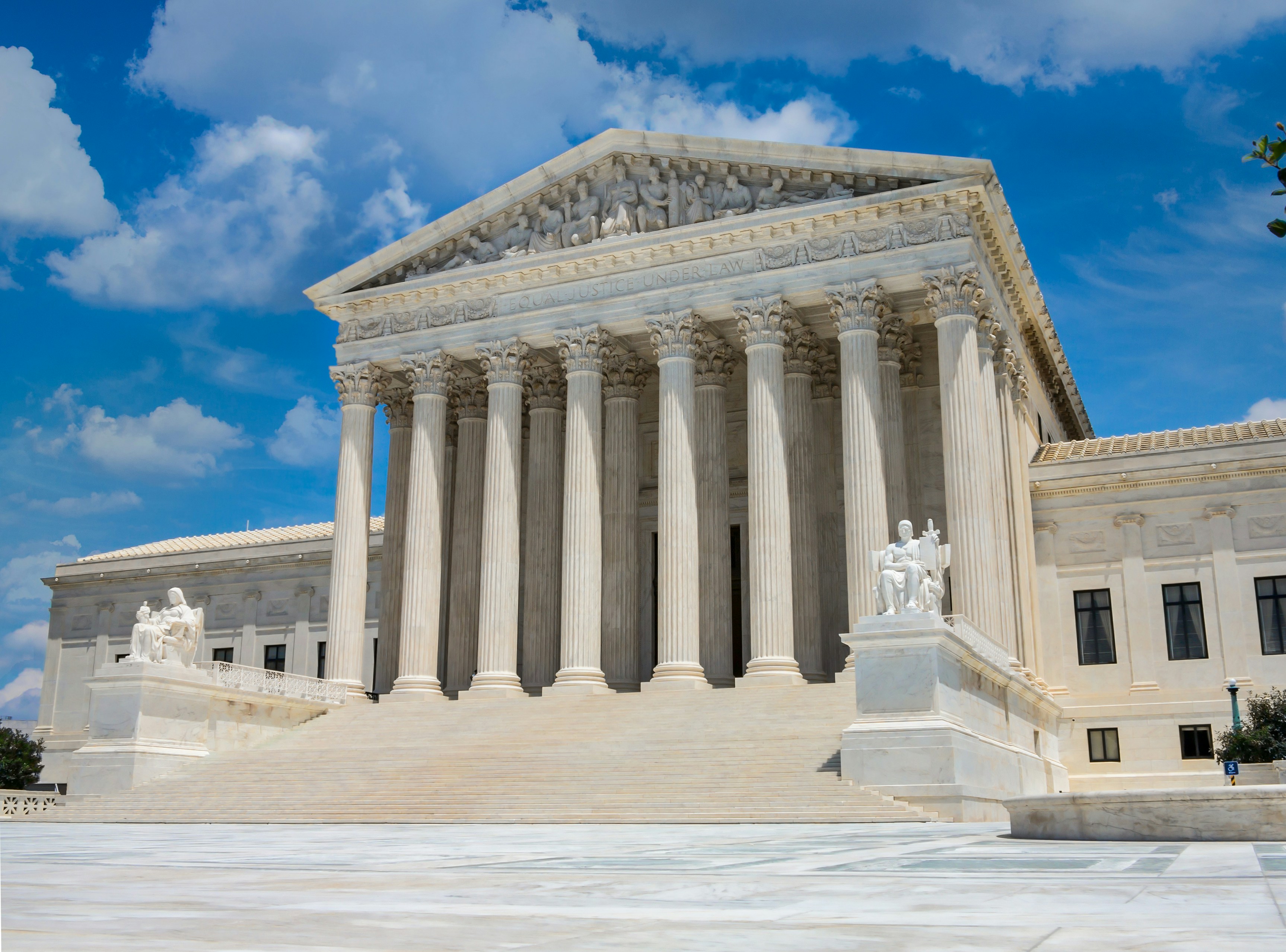
April 6 — The U.S. Supreme Court on Monday turned away a request from a Muscogee Nation tribal member to take up an Oklahoma Supreme Court decision that denied her request to be exempt from state income taxes.
The ruling, without comment, means an Oklahoma Supreme Court decision on July 1, 2025, which denied Muscogee Nation citizen Alicia Stroble an exemption to state income taxation based on the U.S. Supreme Court’s McGirt ruling, stands.
The Oklahoma Supreme Court in 2025 ruled by a 6-3 vote that the U.S. Supreme Court’s 2020 decision in Oklahoma v. McGirt did not apply to civil cases.
The 2020 McGirt ruling determined that the Muscogee Nation Reservation still existed when it came to dealing with federal criminal law.
Stroble, a Muscogee Nation citizen, works for the tribe and lives on privately owned land in Okmulgee, which is a part of the Muscogee Reservation.
Stroble argued that because the Muscogee Reservation still exists, she should be exempt from state income taxes as a result.
Stroble’s contention was backed by the Muscogee Nation, Cherokee Nation, Seminole Nation and the National Congress of American Indians, among others in briefs filed before the U.S. Supreme Court.
While current state law exempts from taxation income earned by tribal citizens from tribal sources while living on tribal land, Stroble’s case sought to expand the tax exemption to include tribal members working and living anywhere within the reservation.
In her original claim, Stroble sought a refund of state income taxes paid in 2017, 2018 and 2019, asserting the state did not have the authority to tax her income based on the McGirt ruling and earlier, precedent-setting decisions.
Gov. Kevin Stitt said in a statement that the ruling was “about fairness for all four million Oklahomans.”
“Time and time again, the courts have limited the McGirt decision, rightfully upholding state jurisdiction,” Stitt said. “This decision made it clear that someone’s tax bill will not be based on their race.”
Muscogee Nation Principal Chief David Hill issued a statement following the ruling that read, in part: “We had hoped the U.S. Supreme Court would step in to address an egregiously wrong Oklahoma Supreme Court decision that disregards decades of settled federal law. We are reviewing all available options, including seeking a remedy in federal court.”
Riyaz Kanji, an attorney for the Muscogee Nation, argued during a January 2024 hearing before the Oklahoma Supreme Court that the law has been clear since 1993 that a state can’t tax a tribal member who lives and works within the tribe’s reservation.
Kanji was referring to the U.S. Supreme Court’s 1993 decision in a case involving the Sac and Fox Nation and the Oklahoma Tax Commission.
The ruling said the state can’t tax tribal citizens who live and work within a tribe’s reservation boundaries.
In the past, the rule has applied in Oklahoma only to those in situations such as residing in tribal-owned housing and working for the tribe.
Kanji said the U.S. Supreme Court’s McGirt decision in 2020, which established that the Muscogee Nation reservation had never been disestablished, means Stroble is living within the tribe’s reservation, qualifying her for the tax exemption.
Despite claiming Stroble lived within the Muscogee Nation Reservation, Kanji said he didn’t believe she and others in her situation were exempt from paying property taxes on privately owned land within the Muscogee Nation reservation.
Kanji also said he believes that tribal members living on reservations other than their tribe’s would be required to pay state income taxes, too.
The Oklahoma Tax Commission estimated a ruling for Stroble would cost the state an estimated $75.3 million per year if it applied to eastern Oklahoma’s traditional Five Tribes: Muscogee, Cherokee, Chickasaw, Choctaw and Seminole.
A state administrative law judge in 2022 ruled that Stroble was entitled to the exemption.
The three-member Oklahoma Tax Commission overturned that ruling later that same year, setting up the eventual decision by the Oklahoma Supreme Court.
During oral arguments before the Oklahoma Supreme Court in January 2024 an Oklahoma Tax Commission official said the agency had fielded 11,855 requests for tax exemptions similar to Stroble’s.
The Supreme Court’s landmark McGirt ruling said the state of Oklahoma did not have jurisdiction under the federal Major Crimes Act to bring a criminal case when it involved a tribal citizen and the crime occurred within the never-extinguished boundaries of a reservation granted to the Muscogee Nation tribe by treaty in 1866.
The reservation covers an 11-county region that includes most of the city of Tulsa.
Meanwhile, Hill, in his statement, called out Stitt’s comments on the issue.
“Recent attempts by (Stitt) to characterize these long-established legal protections as a ‘racial preference’ are simply false,” Hill said. “The United States Supreme Court has made it abundantly clear that tribal citizenship is a political classification, not a racial one.
“Tribal nations are diverse, with citizens of many races and backgrounds. What unites our citizens is citizenship in a sovereign tribal nation, not race. The State of Oklahoma’s ongoing pattern of selectively complying with settled law poses a danger to all Oklahomans. The rule of law cannot be optional.”
Photo credit: Fine Photographics/Unsplash
_______
© 2026 Tulsa World, Okla. Visit www.tulsaworld.com. Distributed by Tribune Content Agency LLC.
Sign in to get access to this free resource, and all of our whitepapers and reports.

Download this content today!
Register Now Already registered? Click here to Log In