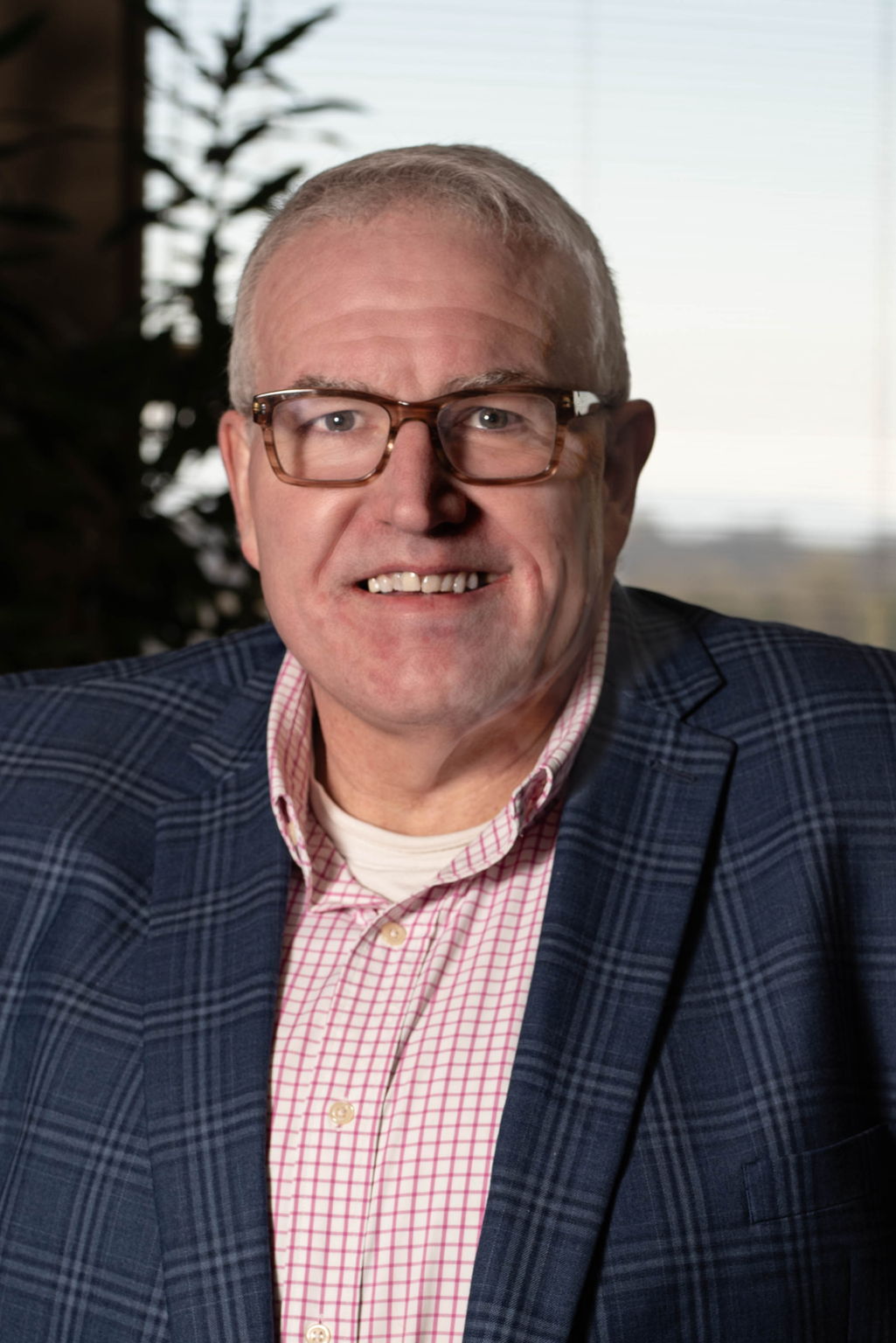
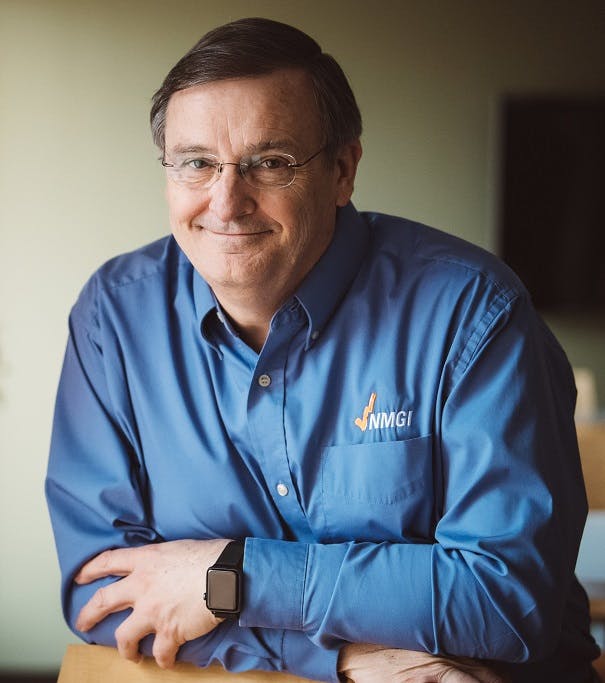




Randy Johnston and Brian Tankersley, CPA, CITP, CGMA, discuss the latest version of ChatGPT 5 Pro, and how it can help firms with various types of analysis, from firm and client data, to client advisory services.
The Accounting Tech Lab is an ongoing series that explores the intersection of public accounting and technology.
View the video below:
Or listen to the podcast using the below player:
==
Transcript
(Note: There may be typos due to automated transcription errors.)
SPEAKERS:
Randy Johnston; Brian F. Tankersley, CPA.CITP, CGMA.
Brian F. Tankersley, CPA.CITP, CGMA 00:00
Welcome to the accounting Technology Lab brought to you by CPA practice advisor, with your host, Randy Johnston and Brian Tankersley. Hi everybody. It’s Brian working hard at the lab today, but I thought I would let you know that do have a quick announcement. We have a giveaway. We’re going to be giving away one Ricoh Scan Snap IX 2500 receipt edition we’re going to draw. We’re gonna make the drawing right after April 30.
No purchase required. Suggested Retail value, $599 this is a one has one touch simplicity, and our friends at Rico graciously provided it to us with automatic invoice, OCR, detachable receipt guide for small and curl documents and lightning fast, 45 page a minute, duplex scanning. It transforms paperwork into clean, searchable digital data in seconds. If you want to register, it’s CPA te.ch/scan snap. The rules are at CPA te.ch/rules and the privacy policy is at CPA, te.ch, forward, slash, scanner, dash, privacy. And for those of you attending the video, attending the video version of this, I’ve actually put on the screen now a QR code that you can capture and use to register for the for the again, for the scanner. Giveaway again. We’re giving one away.
We’re going to give it away again right after April 30 and again, you must, you must be an accounting professional when all the rules again are at https://cpatechblog.com/official-sweepstakes-rules/ and register at https://survey.zohopublic.com/zs/8uBhNP – So anyway, with that, thanks for joining us, and here we are back in the lab.
Randy Johnston 01:38
Well, welcome to the accounting Technology Lab. I’m Randy Johnson with co host Brian Tankersley, and we’re coming to you from fabulous Brentwood after teaching a bit of a tech conference. But Brian had the good opportunity of stepping into ITA to present some sessions, and while we have used chat GPT pretty much since inception, ChatGPT Five, released here in August, has some additional capabilities, and Brian spent a little bit of time learning or teaching others how to do analysis with chat GPT five Pro, and we thought it’d be worth you at least picking up a few of those ideas. So Brian, I hope I’ve set that up correctly. What would you like our listeners to know?
Brian F. Tankersley, CPA.CITP, CGMA 02:23
Okay, so the purpose of this, and again, the thing we’re trying to do here is we’re trying to figure out, okay, how can I get analysis done on the work while I’m doing this? Okay, one of the mantras we’ve had for a long time about about any kind of real time reporting is we want real time data and real time information without real time work, okay? And the way to do that without real time work is to let the AI engines do it for us now that we can’t let it go all by itself and not check it. Okay? But you know, there are all kinds of interesting things happening just today, November 10, the Monday year, today, digits announced that they have AI based bank reconciliation built into their product, where it will ingest the statement, it will reconcile it, and it will do the bank reconciliation itself, 85 90% of the time, and it’ll be more and more over time. But when we think about this, when we think about advisory, one of the things we need is a whole lot of analysis done. But one of the things we don’t have are a whole bunch of really good business analysts laying around thinking I’d like to write the MDNA for Bob’s liquor store for the last quarter, so that he can talk to his board and we can talk about the operational opportunities that exist here. So what did I do here? Okay, so I think you and I have talked about this, but I picked on BDO here.
And the only reason I picked on BDO is because BDO has probably the single best network out of me, outside of maybe the Big Four, for nationwide coverage through their BDO Alliance. Okay? And so I picked on BDO only because I the my thesis was, okay, I got BDO out here. They’ve got coverage in pretty much every big city, but everybody can do better. You know, I could lose a few pounds. I could have a different hair color. I could do something to make my hairline retreat less. We can all do better all the time. Okay, you, on the other hand, you you are Obi Wan, so you don’t have to worry about this. But I show this to you here because I uploaded a spreadsheet with the locations of their offices. And I said, Okay, I want you to analyze the cities where BDO has a presence from this document, and want you to identify the cities they need to have a more complete network. Okay? And so I uploaded all of that, and I said, Okay, I just, I did this. And I said, okay, just, let’s see what happens. Okay, and so I threw it in here and and then it came back. And so this is a, this is a Power Map done in Excel of all the cities where they have offices, okay? And so you can see that they have coverage in literally all 50 states. But there are still some metros where they can do this. Now, I could have gone in here and looked at the cities and looked at this in detail and spent three hours on it, okay? Or I could let chat. GPT spend 10 minutes thinking about it. Tell me what the answer is.
Randy Johnston 05:02
So you know these pin maps we’ve recommended for a long time in firms just to know where their clients are at. Yes, example. And I’m also considering, if you’re trying to get into a niche, notice this same logic could be done to say, Where are dental offices around the country, or where are whatever your target is, and let the AI tool do your analysis well.
Brian F. Tankersley, CPA.CITP, CGMA 05:23
And the thing is, too is we have to remember, even though it’s a virtual world we live in, there is a magic that happens when human beings see each other and they talk to each other, and they get the energy exchange that happens when you talk to each other. So, so the thing I’m saying here is that, you know, if you don’t have coverage in that market, there are opportunities that go missed because they don’t see somebody from that firm that gets an opportunity to bat when somebody pitches an idea, how do I solve this problem? Okay, so what I did was I had it look at it. It went through and analyzed the file, okay? And it included 568 distinct offices. Okay, not 568 cities. That’s a mistype there, but it was 568, offices, you know, because, again, like in New York, San Francisco, LA, multiple firms are there, so but it identified and did a histogram to tell me how many we have by state. So 47 in California, 33 in PA, 32 in Florida, and so forth. It actually created a pivot table off of the data as well as this histogram. And then it went through and analyzed. And it said, Okay, it’s it went through and did all this analysis. Now, put it all in here in the slides, and there’ll be a QR code coming up that you can look at, see it. But what I did was it said, Okay, you need it was looking at the names of the cities themselves, and that’s important, because if you wanted, if you had an office in Knoxville, Tennessee. But then it was actually in Farragut, Tennessee. Farragut would not be the same city as Knoxville. Okay, so it was looking at the cities themselves, and he’d identified out of there that it need, they needed coverage in San Antonio, Milwaukee, Tucson and Mesa, Arizona. Okay, that’s what it first said, okay, but check this out. This is cool. It went through and did why it ranked, why it created scoring. It did all this in the background. So if I was the M A analyst for them, trying to figure out where we needed to create these, this next opportunity, it would have given me, it gave me all the details surrounding that. Okay, so we next. So this, these are the four cities that identified now, but when it came back, it also said, if you really want to get this right, you need to do this at the Metro level. So in a in the metro level, that would say, Take Long Beach and include it with Los Angeles. And that would take Brookfield, Wisconsin and include that in Milwaukee. And that would take, you know, Jersey City, New Jersey, and include that with New York City. And so the idea here is that it’s going to look at those Metro markets for those opportunities, which I think is the right approach. Okay? And I was glad that it came out and said that this was what we ought to do.
Randy Johnston 07:54
Well, you know that concept I’ve used for a long time, because when I was in analyzing the country I used to go off of the smsas statistical metropolitan areas. And that’s somewhat a similar concept.
Brian F. Tankersley, CPA.CITP, CGMA 08:09
Is the exact same context. In fact, it said, roll up cities to msa, CSAs rescore the gaps at the metro areas. And that’s exactly what they did. Okay? So it suggested, said, if you’d like, I can do these using the same workbook. Okay, so notice what it did. It did the analysis. It did exactly what I asked it to and then it said, you know, I think you may be missing an opportunity here. I think I may not get exactly the right answer. Why don’t I do it this way? And let’s see what comes out. Now, remember my cities that it came up with were San Antonio, Milwaukee, Tucson and Mesa, those four cities, okay? And again, Milwaukee, and then Mesa is, you know, Mesa is part of Phoenix, and Tucson is pretty close to Phoenix, but it’s a couple hours away, okay, so it identified these gaps in here. Now, then I had it look at this at Metro level, and it identif. It looked at 54 metros, and it identified three metro areas, three big metro areas that needed help. Okay, now what’s interesting is Mesa fell off the list because it became part of Phoenix, and Milwaukee also came off the list because it got some stuff. It picked up Brookfield, which is on the northern suburbs. I mean, that’s where the Wisconsin Institute CPA office is from the in Milwaukee. So it picked that one up. And so again, they even had a scoring methodology and the whole thing. But then they identified that they had plenty of coverage in the Inland Empire in California and Orange County, which was a different conclusion than it got when it did it by city. And then so then it came up with three metros that they need, okay, the most important one in their mind was San Antonio, New Braunfels, Texas. This says why? This says the adjacent metros where they have coverage. You know, again, this is the best network in the country, so, you know, outside of the big four. So it’s logical that it’s there. Providence, Warrick note, Rhode Island, they already have some coverage in Rhode Island. And but this, again, creates those opportunities when people are at kids ball games and at golf courses and things like that, inside Rhode Island itself, and then Tucson, okay, and again, if you’ve ever driven that drive, what is it I ate? I think, between Tucson and Phoenix, that’s a long, lonely road. And by the way, it looks just like a Bugs Bunny cartoon or a road runner cartoon, because it’s got those saharo cactuses that are the ones that focus
Randy Johnston 10:23
up like that. And culturally, people from Phoenix really don’t go down Tucson. And Tucson people don’t go up to Phoenix much either. Now Tucson going down into the Green Valley. That happens, right? Yeah, but you know that other way? Yeah, they do. But it’s not like something.
Brian F. Tankersley, CPA.CITP, CGMA 10:39
They just, it’s kind of like, it’s kind of like, I don’t know, it’s kind of like New York and Atlanta, they’re both big cities, but they’re, they look at the world
Randy Johnston 10:50
differently, yeah. And in this case, San Antonio and Austin actually has a little of that same separation. You know, San Antonio culture and Austin culture quite far apart, yeah. And when you consider the big cities in Texas are Dallas and Houston and San Antonio, and those three cities are in the top 10 cities in the United States. Yeah. You know, a lot of people don’t think like that about Texas, but those are all big cities when you compare him to LA and New York and Chicago?
Brian F. Tankersley, CPA.CITP, CGMA 11:23
Yeah. I mean, they’re, they’re, you know, as they as Burgess Meredith said in Rocky they’re contenders, you know. So anyway, so they came up with those cities. Now, it also identified these five things that were gaps in the previous thing that weren’t there, that weren’t in here. So notice Milwaukee and Waukesha, Wisconsin, were covered by Brookfield. You can see that Inland Empire, Riverside San Bernardino, Ontario, is covered by Redlands, California, you know. And again, if you don’t know this geography in California, you wouldn’t know that those are close to each other. Same thing with Tampa Bay and St Pete, you know, the Twin Cities you have. You don’t have to have a St Paul office. We have a Minneapolis office, because chances are, some of the people in that office probably are in St Paul and doing that, and same thing with Orange County and Irvine. So this was a conclusion that they had. I wrote none of this content. Okay, chat. GPT wrote all of this, and I looked at it, and after glancing at the map and spending a little bit of time on it, now, again, I didn’t spend enough that I felt comfortable sending an invoice to BDO for this, and so BDO, this is my gift to you, Merry Christmas. But I did this because I wanted to see what level of analysis in here, and I want you to see this because this may be part of your way to get into advisory, to advise people on business problems, especially surrounding operational issues they’re having inside their businesses, where you may have some depth, but you may not have the people you need to go down into detail analysis and do this kind of thing, so you may be able to let the AI go in and do the analysis. Now you still need to vet it and read it just like you would. You know, I would treat this no different than I would something that an MBA intern gave me that had no experience in my industry. Okay, I would still tear it apart, but it at least went through here. And I threw, I think, about an hour at this project. And it was a very well spent hour, because it showed me the extent to which you can take some of the strategic analysis and you can set, you can set, you know, kind of like we do a social media post. You know, my trick for doing social media posts with AI is I tell it to write 40, okay, about a topic, four, zero, okay. And then there are 35 that are not going to be good, but there are five that are going to be rock stars. Okay, so I take the five that are rock stars and I pitch the ones I don’t need. Same thing here. I can do this analysis. I can look at it. And if this was unremarkable analysis, I haven’t thrown five staff days at this like I would if I needed somebody to seriously look at this. I mean, this is a task. So what’s great about this now is I have invested almost very little money and time, but I have potentially come out with some interesting nuggets that wouldn’t have surfaced on my own, and I now can create value for the client, who probably would look at what I’m doing here and say, What planet are you from? Okay, because this is so different than the things we normally think of doing as accountants.
Randy Johnston 14:14
Yeah, and I’m reflecting, as you’re talking about this project, something a lot more standard, because I had the opportunity to teach some analysis and AI prompting to a group of energy companies. And I did an analysis of all public energy companies, compared the financials, the trends charted, developed KPIs, how much time, 12 minutes. And you know the results, because the people that I was presenting to, it was their companies, and they’d never seen the data comparing themselves to other companies, and all of a sudden, it’s like aha moments, and it’s like how and I built it in front of them so they knew it was a 12 min. A job, and they were just flabbergasted.
Brian F. Tankersley, CPA.CITP, CGMA 15:03
And that’s the thing, you know, when you think about this, if you were to make a list of some of the things, some of the problems you’d like to look at, and things you’d like to consider, and you have no clue how to accomplish this problem, you can always gather a little bit of data, and, you know, throw a half hour at it. You know, you threw 12 minutes at it. Okay, I threw a whole hour because I read all the detailed stuff and I dug into the detail, because that’s the, that’s how I’m wired. But I will say that, you know, the interesting thing here now is, if you think about the, you know, the 240 hours you have in a half day, 240 minutes and a half day, you could run 20 of these analyzes, and if 15 of them are complete crap, you still have five earth shattering things of really good analysis that you come up with in a half day.
Randy Johnston 15:57
I think times are changing so much. I wish I was young again.
Brian F. Tankersley, CPA.CITP, CGMA 16:02
You know, I wish I was young again too, but it would be so I don’t have to take as much naproxen to be to survive.
Randy Johnston 16:07
I understand on that, well, friends, you can hear Brian’s enthusiasm on this. My is there too. He just happened to have this recently developed presentation. And you know, when he said, Hey, I think this would be a good topic, I said, you know, Brian, I think I’m with you on this one. So anyway, we appreciate you listening along. You heard the enthusiasm. I bet you can do something like this in your world, too.
Brian F. Tankersley, CPA.CITP, CGMA 16:34
And again, if it’s a complete bust, you’ve lost a half hour. Okay, so get a tuna fish sandwich from home. Sit at your desk and do this and see what comes out. You may nothing. You may not have anything worthwhile except for you had you didn’t eat your lunch alone staring at the window. Okay? But on the other hand, you may cure cancer with something like this.
Randy Johnston 16:54
Who knows? Well, we’ll look forward to talking to you yet on another accounting Technology Lab. Good day.
Brian F. Tankersley, CPA.CITP, CGMA 17:01
Thank you for sharing your time with us. We’ll be back next Saturday with a new episode of the technology lab from CPA practice advisor. Have a great week.
= END =
Sign in to get access to this free resource, and all of our whitepapers and reports.

Download this content today!
Register Now Already registered? Click here to Log In