



By Andrew Khouri and David Zahniser
Los Angeles Times
(TNS)
LOS ANGELES — Measure ULA, L.A.’s so-called mansion tax, has been an object of scorn within the real estate industry, with developers saying it has put a major chill on the construction of desperately needed apartments.
Mayor Karen Bass, expressing sympathy for those arguments, sponsored a state bill last fall to overhaul the tax, but that effort quickly fell apart.
On Tuesday, City Council member Nithya Raman took her own shot at rewriting the tax, saying she too believes it is holding back housing production. Raman asked her colleagues to place a measure on the June 2 ballot that would spare the sellers of newer apartment buildings from paying the tax, which currently applies to most property sales of $5.3 million or more.
Council members, faced with an outcry from labor leaders and the many community groups that support Measure ULA, refused to take up Raman’s proposal on Tuesday, sending it to the Housing and Homelessness Committee for additional review.
Because Wednesday is the deadline to request measures for the June 2 municipal ballot, the council’s action effectively means the proposal wouldn’t be available until the November election at the earliest.
Raman made a last-ditch effort to get her proposal on the June ballot, telling her colleagues that the housing industry’s lenders and investors “are backing away from the city.”
“We are sabotaging ourselves,” she said, adding: “You can’t address a housing crisis with a policy that worsens our housing shortage. You just can’t.”
Proponents of Measure ULA blasted Raman’s proposal, which would shield owners of apartments and other commercial properties from the tax if their buildings were built 15 years prior to a sale.
ULA backers said their measure should not be blamed for a slowdown in housing production, pointing to other issues, such as high interest rates. They said the tax, which has collected $1 billion since it went into effect, has delivered financial support to more than 10,000 people who were at risk of becoming homeless, as well as crucial funding for hundreds of units of affordable housing—at a time when the Trump administration has threatened cuts to some federal homeless programs.
Recommended Articles
Taxes December 15, 2022
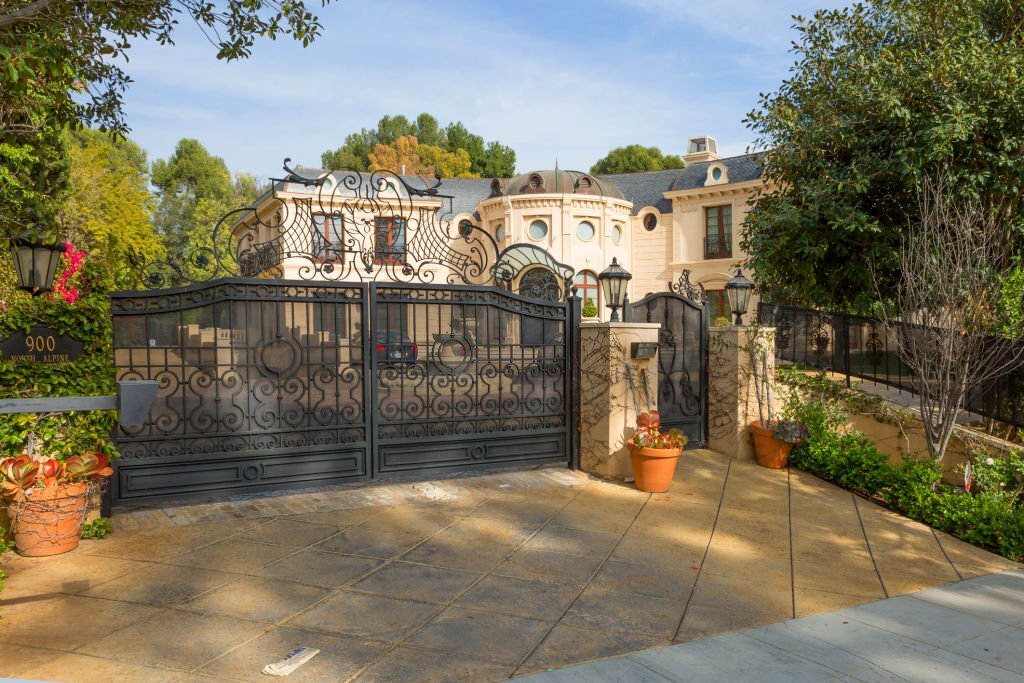
Are the Rich in L.A. Trying to Avoid New ‘Mansion Tax’?
“We do not have enough funding already to deal with the housing crisis in front of us and so this is not the time to be changing” ULA, said Jerry Jones, executive director of the Greater LA Coalition on Homelessness.
Yvonne Wheeler, who heads the Los Angeles County Federation of Labor, told council members they should not give in to “powerful developers” who want carve-outs from a voter-approved tax.
“Let’s be honest about the pressure you’re under today,” she said. “ULA has been under relentless attacks from the billionaire class—the same interests that have filed lawsuit after lawsuit (against ULA) to avoid paying their fair share.”
Real estate experts have argued that, by adding costs to the buying and selling of land, the measure has made it more difficult for developers to earn a profit on new housing developments, killing potential deals and worsening the housing crisis.
A study issued last year by researchers at UCLA and RAND supported that view, concluding that the city is losing out on 1,900 new apartment units per year.
ULA proponents have criticized the methodology of the UCLA-RAND study, and have pointed to more recent data that show housing construction is starting to rebound.
Joe Donlin, director of the United to House LA coalition, a collection of groups that opposed Raman’s proposal, said housing production in L.A. increased in the third and fourth quarters of 2025, as compared to the prior year.
Those numbers, he said, have shown there is “strong confidence in the real estate market,” even amid rising construction costs and other economic challenges.
“ULA is an economic engine for the city,” he said. “It’s building hundreds of housing units every year … and every year it’s going to be funding hundreds of millions of dollars of investment in our neighborhoods.”
Supporters of Raman’s effort include Abundant Housing LA, California Yimby and the California Community Foundation. Miguel Santana, the foundation’s top executive, said his organization still supports Measure ULA but has concluded that it needs to be reworked.
“We believe in its mission and purpose, but we also believe that we have to respond to the unintended consequences,” he said. “And one of the unintended consequences is that it has essentially induced the equivalent of a recession on the production of housing.”
Raman portrayed her ballot proposal as part of a larger strategy to blunt statewide efforts to repeal Measure ULA.
The Howard Jarvis Taxpayers Assn. has been gathering signatures for a November ballot measure that would strike down an array of real estate taxes, including Measure ULA.
Jon Coupal, president of the Howard Jarvis Taypayers Association, said his group wouldn’t halt its effort even if Raman’s proposal became law.
“What we propose is well beyond just the city of L.A.,” he said.
Raman had attempted to fast-track her proposal, saying putting it on the June ballot would help diminish support for the Jarvis measure. She released the proposal Friday and had been pushing for a council vote four days later.
Councilmember Monica Rodriguez, while offering her own criticism of Measure ULA, accused Raman of trying to avoid a public vetting process.
Raman’s proposal would also give relief from Measure ULA to property owners whose buildings were destroyed by the Palisades fire. It would also make other technical changes to encourage developers to build more subsidized, affordable housing.
Azeen Khanmalek, executive director of Abundant Housing, voiced disappointment that Raman’s proposal won’t make the June ballot. But he voiced hopes that the extra time would allow all parties to negotiate a solution.
“We can have a broader conversation about doing something that everyone is happy with,” he said.
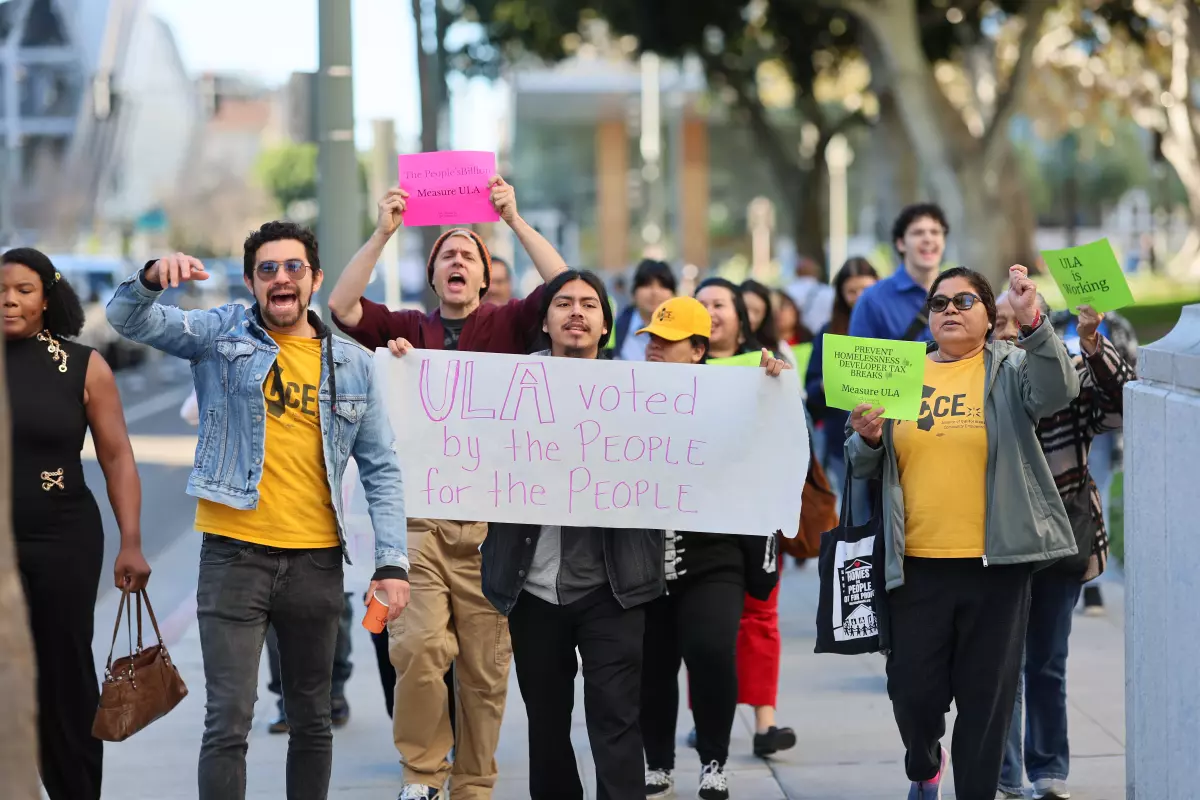
Photo caption: Sergio Vargas, left, in a jean jacket, co-director of Alliance of Californians for Community Empowerment Action, leads a chant with supporters of Measure ULA, a tax that funds affordable housing, as they walk to City Hall on Jan. 27, 2026, in Los Angeles. The groups rallied before the Los Angeles City Council debated whether to approve a ballot measure that would change the measure. (Allen J. Schaben/Los Angeles Times/TNS)
_______
©2026 Los Angeles Times. Visit at latimes.com. Distributed by Tribune Content Agency LLC.
Sign in to get access to this free resource, and all of our whitepapers and reports.

Download this content today!
Register Now Already registered? Click here to Log In
Tags: Los angeles, Mansion Tax, Taxes