



By John Rose, Tax Director | Professional Practice Group | Aprio Advisory Group, LLC.
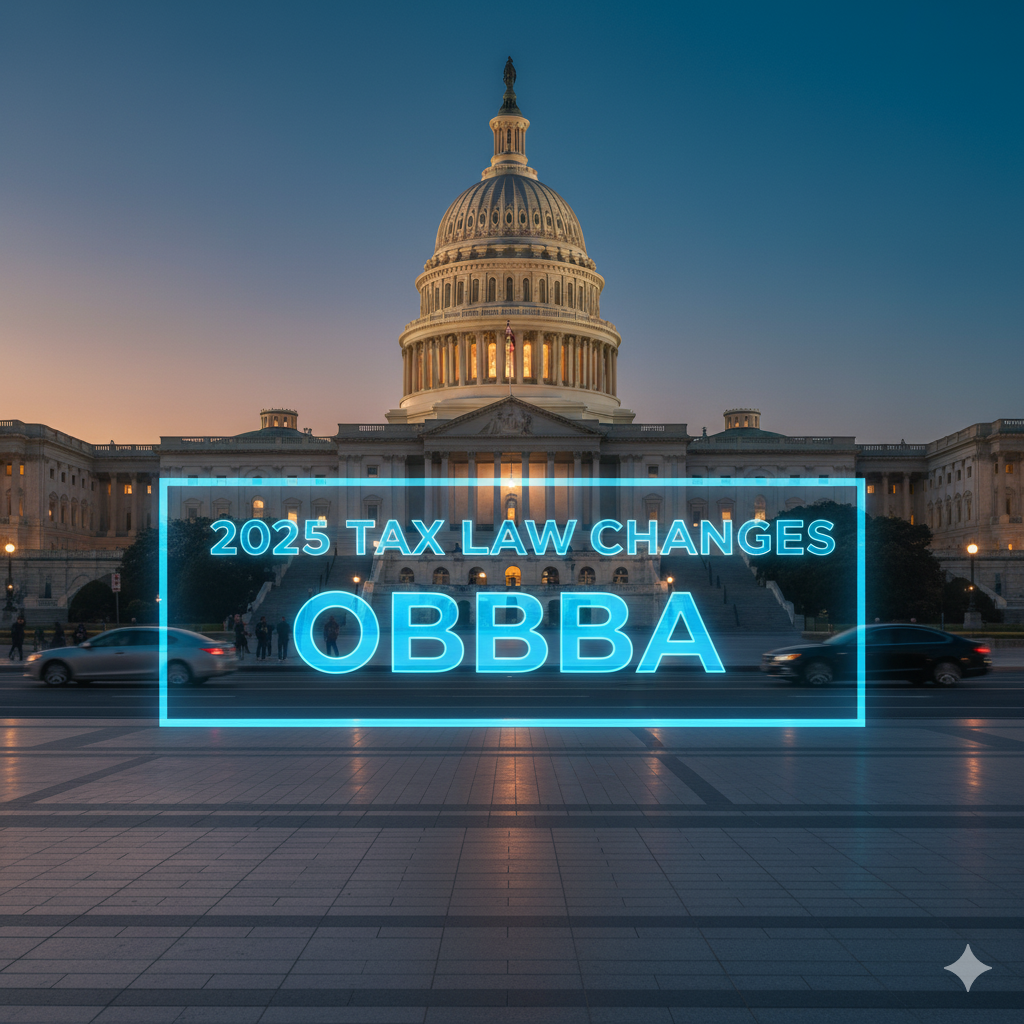
The passage of the One Big Beautiful Bill (OBBB) marks a pivotal shift in U.S. tax legislation, impacting businesses looking for sustainable growth and individuals planning for the future. For CPAs, accountants, and tax professionals, the OBBB delivers sweeping reforms, some long-awaited from the Tax Cuts and Jobs Act (TCJA) of 2017 and some unexpected. From significant changes in research and experimental (R&E) expensing, an overhaul on international tax regulations, and a more generous SALT cap to extended estate and gift tax exemptions and the new no tax on tips provision, there’s a lot to unpack.
While much remains uncertain as 2025 comes to a close, what we do know is that the tax landscape is more complex than ever before. This article provides a practical breakdown of these reforms and how to help your clients leverage new opportunities.
Recommended Articles


R&E Expenses and Section 174: Immediate Deductions & Nuances
One of the most significant provisions in the OBBB is the modification to the rules for domestic R&E expenditures. For taxable years beginning after December 31, 2024, businesses can once again deduct qualifying domestic R&E expenditures under Section 174A in the year that they are paid or incurred; however, foreign R&E expenses must still be capitalized and amortized over 180 months. This change reverses the prior Tax Cuts and Jobs Act (TCJA) statute that required capitalization and five-year amortization for domestic R&E expenditures. For clients with significant R&E activities, such as technology startups, manufacturers, and pharmaceutical companies, this change can drastically improve cash flow and reduce current-year tax liability.
However, for taxpayers who capitalized domestic R&E expenditures under the TCJA, this will require a change in accounting method for tax years beginning after December 31, 2024. The accounting method changes are applied on a cut-off basis for taxable years beginning after December 31, 2024. In most cases, taxpayers can attach certain statements to their 2025 tax returns in lieu of filing Form 3115, with no IRC §481(a) adjustments required. There are two transition rules that can help your clients reverse the impact of the TCJA capitalization requirements:
- Election for Retroactive Application by Certain Small Businesses: Eligible small businesses (excluding tax shelters) meeting the IRC §448(c) $31 million gross receipts test for the first taxable year after December 31, 2024 can retroactively apply the new rules to tax years starting after December 31, 2021, by filing amended tax returns, or AARs, for each applicable tax year beginning after December 31, 2021 and before January 1, 2025.
In most cases, the amended tax returns, or AARs, for 2023 and 2024 tax years are due one year after OBBB was enacted which is July 6, 2026. For tax years beginning in 2022, taxpayers should be aware that the statute of limitation rules under IRC §6511 for applying for a credit or refund apply. This means that for tax years beginning in 2022, amended tax returns, or AARs, will be due on the earlier of July 6, 2026, or the date that is three years after the 2022 tax return was originally due (or the date that is three years after the 2022 tax return was filed, if the return was extended). - Election to Deduct Certain Unamortized Amounts: Available to all taxpayers, this election allows for the deduction of certain unamortized domestic R&E expenses paid or incurred between December 31, 2021 and January 1, 2025, either all at once in the first taxable year beginning after December 31, 2024 or ratably over two years.
International Tax Reform: Navigating a Complex New Landscape
The international tax landscape will be subject to significant changes under the OBBB, affecting multinational clients. International clients will need robust modeling and scenario planning to maintain compliance with the new reporting requirements.
Key updates your clients should be aware of include:
- Foreign Tax Credit (FTC) Updates: Among other changes, amended FTC rules clarify creditability and require enhanced documentation from foreign source net CFC tested income (formerly known as GILTI). Clients with cross-border operations must review their structures and maintain compliance with the updated FTC regulations.
- Base-Erosion and Anti-Abuse Tax (BEAT) Adjustments: A permanent rate of taxation combined with retention of favorable tax benefits may lead to more beneficial treatment for companies subject to BEAT. Under the TCJA, the BEAT rate of taxation was 10% of a taxpayer’s modified taxable income and was scheduled to increase to 12.5% in taxable years beginning after December 31, 2025. The new bill amends Section 59A to permanently increase to 10.5% instead of 12.5% in taxable years beginning after December 31, 2025. Additionally, favorable treatment of R&D credits and other credits will remain unchanged.
- Controlled Foreign Corporation (CFC) Tested Income: Changes to the definitions of tested income may alter Subpart F and CFC calculations. GILTI is now referred to as net CFC tested income or NCTI. Under the OBBB, the credit for deemed paid foreign taxes increased from increased from 80% to 90%.
- Foreign-Derived Deduction Eligible Income (FDDEI): The OBBB modified a few important components for calculating FDDEI (formerly FDII). Deduction eligible income (DEI) has been updated to exclude income and gain from the sale of certain properties. However, as before, identifying qualifying income streams and proper documentation will be essential.
SALT Cap Expansion: Higher Thresholds, More Planning Opportunities
The OBBB temporarily raises the federal deduction cap for state and local taxes (SALT) from $10,000 to $40,000, with a 1% annual adjustment beginning in the 2025 calendar year. The deduction cap will revert back to $10,000 in 2030. While this expansion will come as a relief for clients in high-tax states, the increased SALT cap phases out for married couples with adjusted gross incomes above $500,000 in 2025 and will be reduced by 30% for every dollar earned over the threshold, but never below $10,000.
A proposal within the House bill to restrict the SALT deduction for certain pass-through entities (PTEs) was not adopted by the Senate and consequently did not make it into the final version of the bill. This proposal would have essentially eliminated the ability of PTE owners in specified services, trade, or businesses from using a popular workaround to avoid the SALT cap.
Estate & Gift Tax Exemption: Extension and Inflation Adjustments
A favorable provision from the OBBB is the expanded estate and gift tax exemption created by the TJCA, doubling the gift and estate exemption. Starting on January 1, 2026, the lifetime exclusion increases to $15 million per decedent and is subject to inflation adjustments on an annual basis. These changes eliminate the previously scheduled reduction and allow taxpayers the opportunity to execute wealth transfer strategies with minimal federal transfer tax exposure.
The increased thresholds under the OBBB reduce the need for complex planning for estates under the $15 million exemption while simultaneously affording those above the limit to preserve more of their estate for heirs. While these changes do not directly affect the annual gifting exclusion, it’s important to sit down with your clients to revise existing estate plans and gifting strategies.
No Tax on Tips: What Employers and Employees Need to Know
The new OBBB provision, no tax on tips, made big waves with an above-the-line deduction for qualified tips for the 2025-2028 tax years. Under this rule, eligible tipped employees in certain service-based industries may exclude up to $25,000 in qualified tips, such as cash or charged tips paid voluntarily not subject to negotiation, from their federal taxation, subject to annual limits and employer certification. The IRS has released a preliminary list of roughly 70 job classifications grouped into 10 industry categories that fall under the no tax on tips provision, including:
- Restaurant servers and bartenders
- Hotel concierges, bell staff, and valets
- Casino dealers and floor attendants
- Salon and spa professionals
- Event and entertainment venue workers
For employers, this provision introduces new compliance requirements as businesses must track tipped income, verify eligibility, and provide annual statements to employees and the IRS. CPAs and tax advisors should help clients in these industries prepare for the temporary rules and anticipate further IRS guidance, especially regarding documentation and audit standards.
Final Thoughts: Proactive Steps for Client-Centered Success
The OBBB introduces substantial changes to the tax landscape, both from an opportunity and challenges standpoint. CPAs and tax professionals must familiarize themselves with these provisions to effectively guide clients through these transitions, maximize new opportunities, and remain compliant.
By proactively addressing R&D expensing, international tax reforms, SALT cap planning, estate and gift tax strategies, and tip income reporting, you can provide invaluable support to your clients in an ever-evolving tax landscape.
==
John Rose is Aprio’s National Tax Director, serving in the firm’s Professional Practice Group. In his role, John works closely with the firm’s tax team to continuously advance Aprio’s tax knowledge base and resources to ensure the quality of tax deliverables and client service.
Aprio’s 2025 End of Year Tax Update breaks down the most notable twists and shifts in federal, state, and international taxes impacting businesses and individuals.
Sign in to get access to this free resource, and all of our whitepapers and reports.

Download this content today!
Register Now Already registered? Click here to Log In