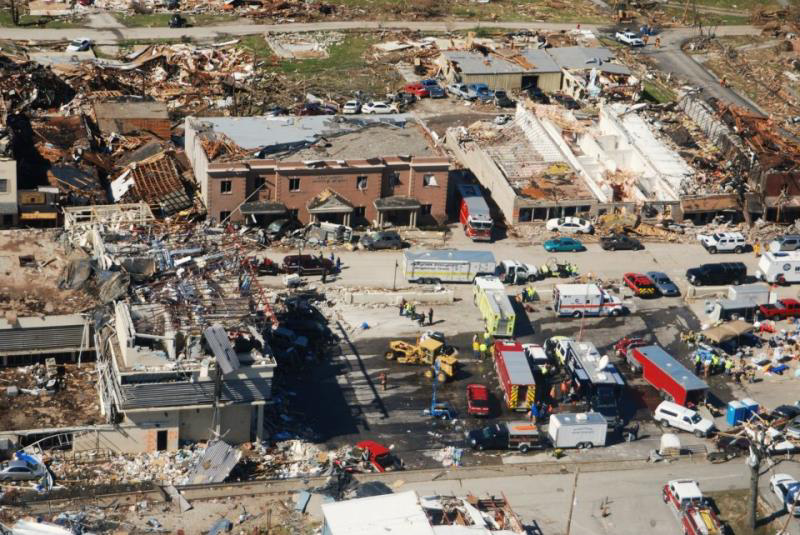




Despite a tax recent crackdown, extended by the One Big Beautiful Bill Act (OBBBA), individual taxpayers can claim losses incurred in certain disaster areas. In fact, they may qualify for faster tax relief than usual. Plus, the OBBBA now extends the limited deduction and broadens its scope to include more deductible losses.
[This is part of a Special Series on the tax changes made by the One Big Beautiful Bill Act, which was enacted in July 2025. It includes a wide range of changes to individual and corporate taxes, deductions, credits, forms and other topics, that affect tax filing starting this year into the future.]
Background: Prior to the Tax Cuts and Jobs Act (TCJA), itemizers could deduct losses to personal property that were caused by a “sudden, unexpected, or unusual” event. Typically, this included damage or destruction from natural disasters, but also applied to, say, an automobile collision or water pipes bursting during a winter freeze.
The amount of deductible loss was reduced by any insurance reimbursements received by the victim. Furthermore, the law included two other obstacles.
- The deduction was limited to the excess above 10% of adjusted gross income (AGI).
- The amount of the deductible loss must be reduced by a floor of $100 for each event.
For example, say an individual had an AGI of $100,000 and incurred an unreimbursed loss of $20,000. As a result, they could deduct $9,900.
However, the TCJA suspended the deduction for casualty losses from 2018 through 2025, except for losses incurred in federal disaster areas. (The $100 floor was temporarily increased to $500 for limited time periods.) A list of official federal disaster areas is available at FEMA.gov/Disaster.
Recommended Articles



Now the OBBBA extends the tax rules for casualty loss deductions, including the exception, beyond 2025 and makes them permanent. In addition, the new law applies the rules for federal disaster areas to losses incurred in state-declared disaster areas, beginning in 2026. This increases eligibility for tax relief. Note that taxpayers still have to itemize in order to claim the deduction.
Special rule: Normally, a casualty loss is claimed on the tax return for the year in which the casualty occurred. However, a unique election is available for losses incurred in a federal disaster area (or state disaster area, beginning in 2026). Alternatively, you can elect to deduct the loss on the tax return for the year preceding the actual event.
For example, if someone suffers a loss during hurricane season in 2025, they don’t have to wait until they file their 2025 return in 2026. Instead, the taxpayer can obtain faster relief by filing an amended 2024 return.
Caution: Be aware that the IRS often challenges casualty loss deductions. The best proof a taxpayer can have is to photos or videotapes of the property in its current condition. In other words, they should obtain documentation before a casualty occurs. The visual proof can be convincing when coupled with snapshots of the property immediately after a casualty occurs. Encourage clients to store these records in a secure location.
Finally, the rules stated above only apply to personal casualty losses. Therefore, a small business may deduct qualified casualty losses in full without regard to any dollar or percentage limits.
Offer your help: If a client suffers a personal casualty loss before the end of the year, rush to their tax aid. They may want to speed up tax relief by filing an amended return. Remind them that you are just a phone call away.
Sign in to get access to this free resource, and all of our whitepapers and reports.

Download this content today!
Register Now Already registered? Click here to Log In