



By Cathie Anderson
The Sacramento Bee
(TNS)
A new campaign is underway in California to make the state’s wealthiest residents pay to help rescue its health care system, with organizers filing a ballot measure that would impose a one-time 5% tax on billionaires.
Two health care industry players—Jim Mangia, chief executive of St. John’s Community Health, and Suzanne Jimenez, chief of staff for Service Employees International Union-United Healthcare Workers West—on Thursday formally filed the 2026 Billionaire Tax Act, a proposed statewide ballot measure that would tax billionaires with a net worth of more than $1 billion.
The measure, filed with the state Attorney General’s Office on Tuesday, seeks to raise $100 billion to replace federal health care dollars that were cut earlier this summer as part of Republicans’ One Big Beautiful Bill Act.
“These federal cuts didn’t happen by accident,” said former Labor Secretary Robert Reich, in a prepared statement. “They were designed to shield billionaires from contributing while pushing the consequences onto patients and workers. A time-limited emergency tax on the ultra-wealthy is a practical way to keep the healthcare system functioning.”
During a Thursday news conference, nursing assistant Josephine Rios, said the Medi-Cal funding cuts will threaten her grandson Elijah’s care. He was born with a grade 4 hemorrhage that has left him with daily health struggles.
“Without Medi-Cal, his medication would cost $5,000 a month,” Rios said. “He also receives 19 hours of behavioral, occupational and physical therapy. All of this is made possible by Medi-Cal. Without it, we wouldn’t have Elijah.”
Organizers say the tax would affect only about 200 Californians—the wealthiest 0.0005% of residents— while stabilizing hospitals, community clinics, long-term care facilities and K-12 schools threatened by the federal reductions.
Who’s behind the ‘billionaire tax’ initiative?
Mangia leads St. John’s Community Health, a nonprofit network of community health centers serving working-class and uninsured patients across Southern California.
Jimenez’s union, SEIU-UHW, represents thousands of frontline health care workers including nursing home caregivers, respiratory therapists and hospital staff. Many of them fear job losses and service cutbacks if federal funding dries up.
The two proponents’ legal filing, submitted through Kaufman Legal Group of Los Angeles, establishes a 2026 billionaire tax reserve account in the state treasury to receive all revenue from the tax.
According to the act’s text:
- 90% of funds would restore Medi-Cal and other health programs.
- 10% would go to public education, ensuring classrooms remain staffed.
- Expenditures would be capped at $25 billion per year, with the remainder held in reserve for future needs.
Why propose a billionaire tax?
Backers say the measure is necessary to prevent what they describe as a “manufactured crisis” caused by federal cuts that will slash California’s Medicaid program by about $30 billion annually over five years, threatening coverage for nearly 15 million low-income Californians.
Experts have warned that these cuts could devastate nonprofit rural and community health centers which depend heavily on revenue from Medi-Cal. The loss could reduce services, force staff layoffs and even lead to closures, all while increasing the number of uninsured patients that these clinics are legally obligated to serve regardless of their ability to pay.
In a news release issued by the proponents, Mayra Castanada, an unltrasound technologist in Lynwood, said her clinic is already short-staffed.
“If these cuts take effect without replacement funding, it won’t just mean longer lines,” she said. “It means people won’t be able to get care when they need it.”
Economists note that the 5% tax amounts to less than the 7.5% average annual growth that billionaires see in their wealth, meaning their fortunes would continue to grow even after paying the tax.
Who pays this tax—and who doesn’t?
For those who would be taxed, it defines their wealth broadly as global assets such as stocks, bonds, trusts and other investments, making it difficult for billionaires to shift holdings offshore to avoid payment.
The proposed initiative would not impose taxes on middle-class residents, homeowners or small businesses.
Jimenez and Mangia said that it makes sense for California to lead this experiment because its 200 billionaires—individuals such as Oracle co-founder Larry Ellison, Nvidia CEO Jensen Huang and Laurene Powell Jobs, widow of the Apple co-founder—hold roughly $2 trillion in wealth. Much of their wealth is rarely taxed because gains on stocks and assets are rarely realized or have been inherited tax-free.
Many of the billionaires are unlikely to leave the state, proponents said, because they have relied on its infrastructure, workforce and markets to build their wealth. A report for the National Bureau of Economic Research found that the state tax burden for California’s billionaires is 20% lower than that of average residents.
Tim Disney, speaking on behalf of the group Patriotic Millionaires, described the ballot initiative as a common-sense solution.
“The measure will not solve everything,” he said, “but it is a good and important step in the right direction, and the Patriotic Millionaires are proud to see it get off the ground.”
The measure’s submission set the stage for a battle with business coalitions and wealth donors. The California Republican Party did not immediately respond to a request for comment.
Attorney General Rob Bonta must issue an official title and summary before supporters can begin collecting signatures. To qualify for the 2026 ballot, backers will need to gather nearly 550,000 valid signatures from registered voters within 180 days.
If this initiative qualifies, it would mark the first time that a state ballot measure imposes a temporary tax on billionaires’ total wealth. Proponents hope California’s model will inspire emergency funding mechanisms in other states.
Meanwhile, health care industry experts have warned that, if funding from federal cuts isn’t restored, 145,000 jobs could disappear and hospitals may shutter services around the state.
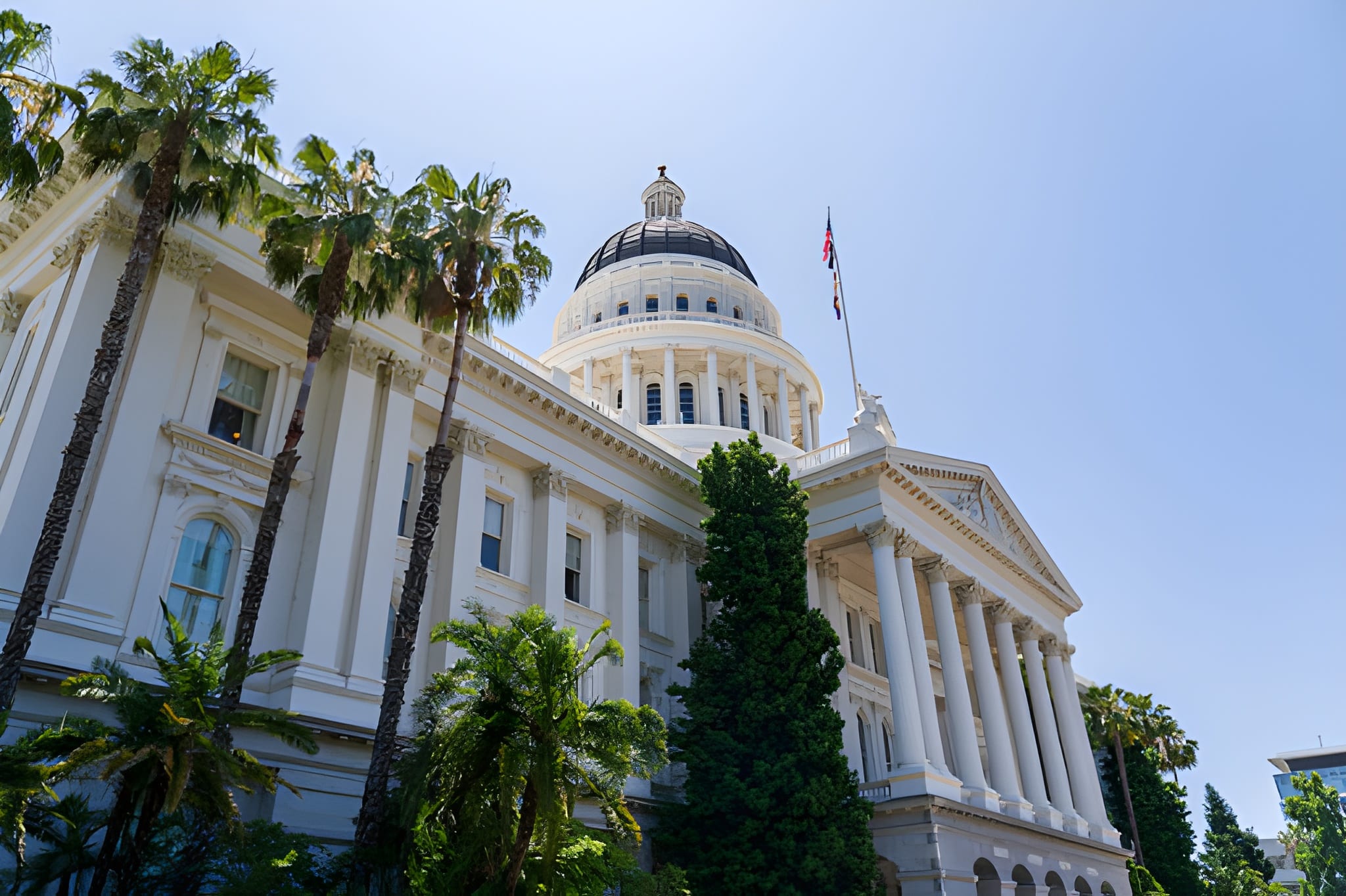
Photo caption: The California State Capitol in Sacramento. (John Nilsson/iStock)
_______
©2025 The Sacramento Bee. Visit sacbee.com. Distributed by Tribune Content Agency LLC.
Sign in to get access to this free resource, and all of our whitepapers and reports.

Download this content today!
Register Now Already registered? Click here to Log In