



By Ted Clifford
The State
(TNS)
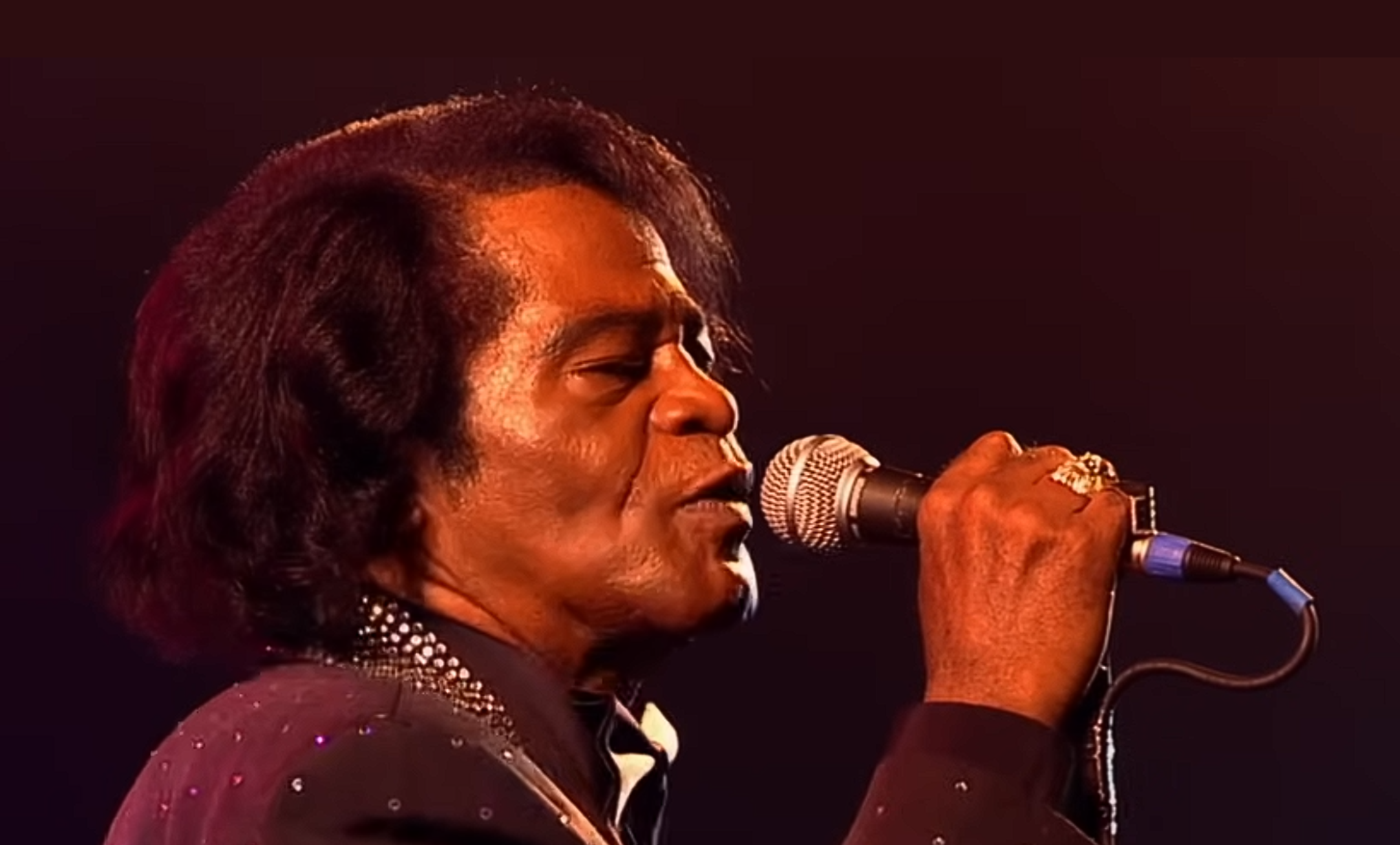
In 1999, James Brown deposited $14 million dollars in a Morgan Stanley investment account. In 2004, just three years before the legendary entertainer’s death, there was just $300 left.
When Brown died on Christmas Day 2006, many of those close to him learned of the extent of his money problems. His estate had virtually no cash and a mountain of debt. Brown had pledged his fortune to educate the children of his home states of South Carolina and Georgia. But it seemed that there was no fortune left.
The man at the center of the missing money was David Cannon, Brown’s longtime accountant.
Cannon ultimately pleaded guilty to embezzling $8.6 million from Brown. But this revelation went much further than the money he stole—it set in motion a chain of events that have prevented Brown’s estate from closing to this day.
For years, Brown’s money problems had been blamed on his extravagant spending. He bought outrageous clothes, collected cars and made unwise investments, including in office buildings, a soul food restaurant and three radio stations.
Brown’s will had named Cannon one of his three personal representatives and trustees of the “I Feel Good” trust. This trust would collect the majority of Brown’s assets and then dispense educational scholarships. An unusual provision of the trust allowed trustees to spend up to 50% of its income on undefined “management fees.”
After Brown’s death, legal battles between the trustees and Brown’s family led to the courts appointing two special administrators: Adele Pope and Bob Buchanan. A type of fiduciary, special administrators are charged by courts with protecting an estate’s assets.
Pope and Buchanan were the first to blow the whistle on Cannon. The accountant was removed from his position and the other personal representatives resigned.
In their place, Pope and Buchanan were put in charge of Brown’s estate. But Cannon did not go away. He sued the estate for supposed unpaid fees. His fellow personal representatives—Buddy Dallas, Brown’s attorney, and Al Bradley, a former magistrate judge and Brown’s manager—sued to try to regain their positions as personal representatives.
Cannon’s thefts also formed the basis of challenges to Brown’s will by his family. They accused Cannon and the other personal representatives of exercising “undue influence” over Brown.
Just 18 months later, Pope and Buchanan were themselves deposed as part of a settlement between Brown’s family and the South Carolina Attorney General’s Office that carved up the estate.
Since then, Pope has been dogged by accusations she mismanaged the estate during her brief time as personal representative. But to this day, she maintains that she saved Brown’s estate from destruction.
“I’m very proud of what I did for James Brown,” Pope testified.
Managers all steal from you
James Brown didn’t like banks. He grew up in poverty in the Depression-era South, and even when he was an international star he often demanded to be paid in cash.
He buried wads of bills in coffee cans around his estate in Beech Island, South Carolina. He hid cash under the floorboards of his favorite hotel rooms and stashed it with friends and confidants.
One of those confidants was Cannon. An accountant from Barnwell, South Carolina, Cannon began working for Brown in the 1980s. He was brought into Brown’s circle by Dallas, a Georgia attorney who had begun helping Brown with some of his legal problems.
Cannon was brought onboard to help resolve the millions in back taxes that Brown owed to the IRS. Soon he was a part of Brown’s inner circle. He ran his books, prepared his taxes and stashed Brown’s money in his home safe, according to an interview with writer James McBride.
But over the years their relationship turned increasingly symbiotic.
Cannon kept Brown on a $100,000-a-month allowance. Meanwhile, the accountant seemed to be making far more money than he should. He had the power to sign checks from Brown’s business accounts and was writing checks to a company he controlled.
Brown appears to have tolerated a little bit of skimming as simply part of the music industry.
Managers “all steal from you,” Brown once told his son Daryl, according to investigators’ notes.
But Daryl Brown told investigators with the South Carolina Law Enforcement Division that his father was afraid of Cannon. The accountant told Brown that he had connections with the IRS. Brown “was afraid to make Cannon mad because he would use his connections to make more trouble,” Daryl told investigators.
In 1999, Brown completed one of the biggest deals of his career. Known as a Pullman bond, Brown traded his future royalties for a $26 million loan. Roughly $14 million of that money was deposited in a Morgan Stanley account. Cannon was “100% in charge,” one of Brown’s financial advisors told investigators.
While the accountant originally told the advisor that Brown would need approximately $1.4 million a year to maintain his lifestyle, Cannon began making more requests for money. According to investigators, Cannon reached out to Morgan Stanley saying money was needed for taxes or to renovate a burned building. In a few years, the account was nearly completely depleted.
The advisors told investigators that they tried to reach out to Brown. The entertainer told them to “mind their own business,” according to investigators’ notes.
Mysterious checks and a house in Honduras
The first time Adele Pope and Bob Buchanan met David Cannon in March 2007, he slammed his fist on the table and accused them of being spies. Soon, they discovered why he was so defensive.
As court-appointed special administrators, the pair had been charged with going through Brown’s assets. That July, Pope and Buchanan discovered an unaccounted for $900,000 check. From there, Cannon’s story unravelled. They discovered a blank $5 million check Cannon had drawn. He was spending millions on property in Augusta, Horry County, Columbia and the Honduran island of Roatan.
In November 2007, less than a year after Brown’s death, South Carolina Attorney General Henry McMaster requested SLED open an investigation into Cannon.
Cannon claimed that many of his payments were simply the result of unconventional business agreements with Brown. Investigators found that Cannon was taking advantage of four different business contracts with Brown. Some of the contracts promised him a percentage of Brown’s earnings while one guaranteed him an annual $200,000 fee.
Defending himself, Cannon told McBride that he did everything with Brown’s blessing.
Brown could “count his money to the dollar,” Cannon said. “No one told James Brown what to do.”
But SLED investigators noted that a “significant portion” of the money in Brown’s Morgan Stanley account went to Cannon. He wrote checks to a company called DGC Associates (Cannon’s initials are DGC), of which he was the sole officer, according to the affidavit.
In 2011, Cannon entered an Alford plea. Essentially a guilty plea, it allows a defendant to maintain their innocence while acknowledging that the government has enough evidence to convict them. He was given a 10-year suspended sentence, three years of house arrest and five years of probation.
He would ultimately serve six months in prison for failing to pay restitution. Cannon died in 2018.
_______
©2025 The State. Visit thestate.com. Distributed by Tribune Content Agency LLC.
Sign in to get access to this free resource, and all of our whitepapers and reports.

Download this content today!
Register Now Already registered? Click here to Log In
Tags: accountant, Accounting, back taxes, embezzlement, IRS, James Brown, Taxes