



By Simone Carter
The Olympian (Olympia, Wash.)
(TNS)
Tax them, and they will flee. That’s the idea behind capital flight, an economic term used by tax critics to describe an exodus of wealth and investments because of higher taxes or cost of doing business.
Is there truth to it? Experts differ over the extent to which taxes play a role in where the well-off decide to live.
The phenomenon is a central argument against Washington Democrats’ proposed income tax on millionaires, legislation that’s on track to reach the governor’s desk.
The income-tax measure, which the majority party calls the “millionaires tax,” would impose a 9.9% levy on annual household income above $1 million. Supporters—including the state’s leading lawmakers—largely dismiss capital-flight predictions and point out that some millionaires themselves have backed the tax.
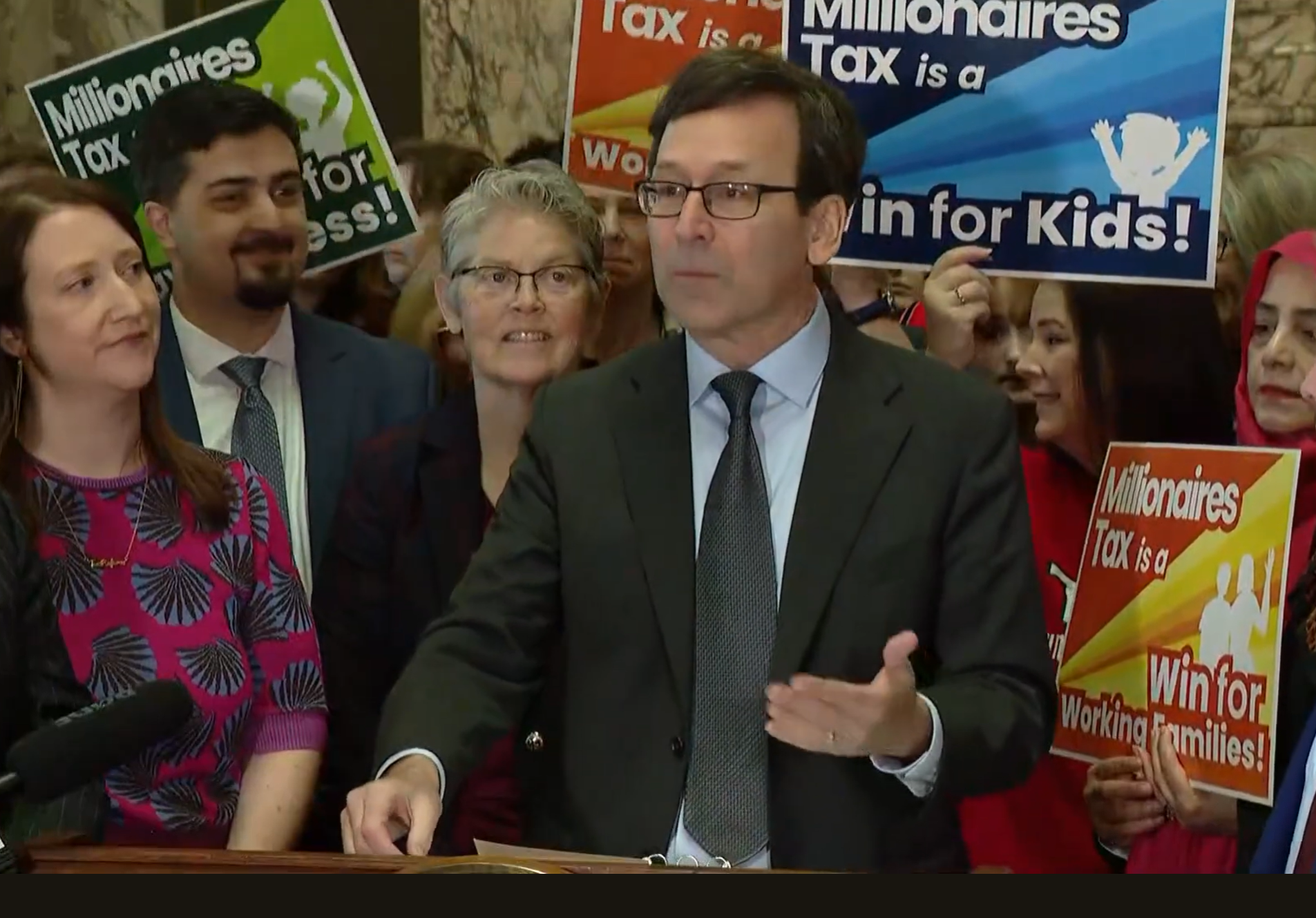
Gov. Bob Ferguson said during a January legislative preview that he doesn’t think the tax would prompt innovators to leave the state.
“Considering the fact that I think 41 states have an income tax, I don’t think that’s going to happen,” he said.
Recommended Articles



Critics often point to Jeff Bezos when arguing that that could, indeed, happen. The Amazon founder announced his move to Florida in 2023 following the implementation of the state’s capital gains tax.
Rep. Timm Ormsby of Spokane, the lower chamber’s Democratic budget lead, argued at the same January preview that Bezos’ move had more to do with personal reasons, like being closer to family.
Because Bezos left Washington, the state lost out on $954 million in 2024, according to Forbes. That year, Washington voters opted to uphold the state’s capital gains tax following a repeal effort.
PJ Tabit is the principal economic policy analyst at the Committee for Economic Development of The Conference Board, a nonpartisan, nonprofit, business-led public policy center. He told McClatchy that the research on capital flight is mixed overall. It’s difficult to make generalizations about the concept, he added, citing differences in tax structures and dynamics in one state or country versus another.
People have varying reasons for choosing where to live, be it job opportunities, quality of life or family commitments, Tabit said.
“From a research perspective,” he said, “it’s actually quite difficult to suss out the role of tax policy in those decisions.”
Another expert offered a different take.
“At some level, this is just intuitive and not really debated,” said Jared Walczak, senior fellow at the Tax Foundation, a nonpartisan tax-policy nonprofit.
Although debate exists over how intensive it is, economic research over the past decade has increasingly supported the idea of meaningful capital flight, he said.
California, for instance, saw certain billionaires depart in advance of its wealth-tax ballot measure, and the same was true with some of its previous tax increases, Walczak added. Companies like Hewlett-Packard (HP) and Tesla have left the Golden State for Texas in recent years.
As taxes creep up in Seattle, jobs have started leaving the Emerald City for neighboring jurisdictions, he said. If the income tax passes, Seattle’s high earners could face the nation’s highest combined local and state top rate, he wrote for the Tax Foundation in January.
“That creates a very strong incentive to locate elsewhere,” Walczak said in a call. “It also creates an incentive for businesses to hire elsewhere.”
Seattle-based startup attorney Joe Wallin wrote in a Feb. 6 GeekWire opinion piece that the income tax would hurt the state’s startup economy. In a recent LinkedIn post, he also pointed to IRS data suggesting that in the first year after Washington’s capital gains tax was enacted, the state saw a loss of $1.66 billion in net adjusted gross income.
Seattle Times columnist Danny Westneat has argued the opposite point.
Westneat wrote in December that, despite predictions of a mass wealth exodus after Massachusetts voters passed a millionaire tax in 2022, the measure brought in more than double what was projected in its first two years: $5.7 billion rather than $2.3 billion.
Rep. April Berg, who authored a Ferguson-endorsed striking amendment to Washington’s proposed tax, said in a Friday call that she doesn’t think the measure will result in capital flight. She said the bill is a boon for small businesses, including by boosting the state’s business and occupation tax return filing threshold to $250,000.
The Mill Creek Democrat said that amounts to a 49% increase in the number of businesses that will no longer pay B&O taxes.
Senate Minority Leader John Braun, a Centralia Republican, said during a Feb. 10 media availability that many people who are invested in Washington business have decided to leave based on prior tax hikes—or are actively considering doing so.
Last month the Association of Washington Business released a survey indicating that 44% of the state’s business leaders are thinking of moving their personal domicile outside the state.
Kennewick Rep. April Connors, the House Republican floor leader, told McClatchy in January that financial planners are advising clients to move their primary residence elsewhere. As a real estate agent, she said she’s had at least 10 clients recently exit the Evergreen State, half of whom cited the state’s new estate tax.
One constituent relocated their primary residence to Montana, she said. The year before they’d donated $100,000 to the surrounding community.
“We’re not only losing people that are paying into our tax base, but we’re losing people who are paying with their philanthropy dollars into the Tri-Cities,” Connors said.
Last session Democrats increased the estate tax, bumping the top rate from 20% to 35%—the highest in the nation. This year, they’ve worked to roll back those changes.
Senate Majority Leader Jamie Pedersen told The Seattle Times in February that legislators have anecdotally heard of residents looking to switch their legal residence to other states to dodge the estate tax.
Still, the Seattle Democrat says he doesn’t think that the income tax on millionaires would lead to a significant change in taxpayer location.
Pedersen said during a media availability last month that the estate tax made the state an outlier.
“With the millionaire’s tax by contrast, the top marginal rate, 9.9%, that is not out of line with a large number of the 41 other states that have some form of a personal income tax,” he said.
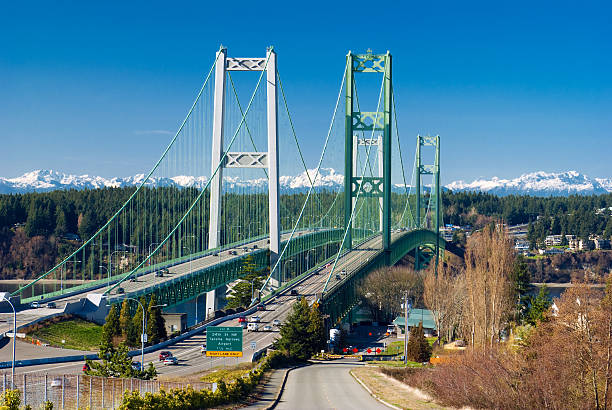
Photo caption: The Tacoma Narrows Bridge in Washington state linking the city of Tacoma with Gig Harbor of the Kitsap Peninsula. (gregobagel/iStock)
_______
© 2026 The Olympian (Olympia, Wash.). Visit www.theolympian.com. Distributed by Tribune Content Agency LLC.

Thanks for reading CPA Practice Advisor!
Subscribe Already registered? Log In
Need more information? Read the FAQs