


By Kurt Erickson
St. Louis Post-Dispatch
(TNS)
JEFFERSON CITY — Republican Gov. Mike Kehoe’s attempt to replace the state’s income tax with sales and use taxes advanced to the full House Wednesday, setting up a potentially contentious debate in the coming weeks over the future of the state budget.
With Republicans cheering the move and Democrats expressing concerns about its effect on state services and low-income Missourians, a proposed constitutional amendment that would phase out the state’s 4.7% income tax was endorsed by the House Commerce Committee.
If approved by lawmakers, House Joint Resolution 174 will ask Missouri voters in November to lift a state constitutional prohibition on the expansion of sales and use taxes put in place by voters in 2016.
An OK from voters would give lawmakers a green light to use sales and use tax revenue to begin lowering the income tax rate if certain revenue triggers are met.
Republicans contend other states without income taxes are booming, while growth in Missouri has flatlined.
House Speaker Jon Patterson, R-Lee’s Summit, who is sponsoring the proposal, said if nothing is done, Missouri will remain a mediocre state with stagnant population and slow economic growth.
“Or, we could be a state that is really doing well,” Patterson told the committee.
Democrats said their constituents are not clamoring for a change that could shift the tax burden to low-income Missourians.
“No one is asking for the elimination of state income tax,” said Rep. Patty Mansur, D-Kansas City. “You may receive some very small relief on one end, but you’ll pay more on the other.”
Kehoe, who is in his second year in office, outlined the plan in in his January State of the State address. He wants voters to grant lawmakers broad authority to expand the state’s 4.2% sales tax rate to currently untaxed goods and services. Services such as accounting fees for tax preparation or software subscriptions currently are not taxed; goods exempted include prescription drugs and home utilities.
Recommended Articles
Taxes November 20, 2025
Missouri Gov. Says He Plans to Phase Out State’s Income Tax
Taxes January 15, 2026
Missouri Governor to Voters: Swap Income Taxes for More Sales Taxes
Taxes January 29, 2026
Opposition Lines Up Against Missouri Governor’s Tax Swap Plan
The governor has said protections must be in place to shield agriculture, health care and real estate from new sales taxes. Those exemptions could stave off opposition from powerful lobby groups like the Missouri Association of Realtors, which bankrolled a 2016 ballot initiative that banned the taxation of such services as real estate transactions.
Missouri collected $9.2 billion from the individual income tax last year. Generating the same revenue on the current sales tax base would require an additional sales tax of about 8.5%.
The proposal would not affect the state’s corporate income tax rate, which is set at 4% and generated nearly $1 billion last year.
Supporters point to the economic success of the nine states that do not impose income taxes as a reason to make the switch. Those states are Alaska, Florida, Nevada, New Hampshire, South Dakota, Tennessee, Texas, Washington and Wyoming.
“It’s affected them in a very positive manner,” said Rep. Brian Seitz, R-Branson. “We want to have a piece of that pie.”
Rep. Steve Butz, D-St. Louis, who is running for a seat in the Senate, said Missouri does not have the oil wealth of Texas or Alaska, nor the tourism industry that fuels much of Florida’s budget.
“God bless Branson, but it is not Orlando,” Butz said.
Butz also said Republicans should slow down and see how their past tax policy changes are working before taking the dramatic step of eliminating the state’s largest revenue stream. The state eliminated capital gains taxes last year and has been lowering the income tax rate in recent years.
“Income taxes have been cut continuously. Take the victory lap. Let’s see how it goes,” Butz said. “You don’t turn an economy like this around on a dime.”
The proposal seeks to protect school funding by including language barring counties from reducing funding to schools.
The Missouri Budget Project, an independent nonprofit think tank that analyzes state expenses and revenue, said eliminating the income tax would create a $5 billion hole in Missouri’s budget, leading to cuts for local public schools.
An interactive map created by the organization shows many rural school districts in the southern half of Missouri facing possible cuts of up to 10% of their current revenue if the income tax is completely eliminated.
Although Republicans on the committee voted “yes” to advance the proposal, the issue is viewed as a political liability for some members at a time when voters are focused on prices at the grocery store and the gas pump.
“Government-imposed higher prices on everything is not the answer to the affordability crisis facing Missouri families struggling to pay for the basics,” said House Minority Leader Ashley Aune, D-Kansas City.
The measure originally was heard by the committee in January, but House GOP leaders sat on the resolution for more than a month talking with skeptical members in search of support. The version that emerged Wednesday was not significantly different than what Kehoe had outlined earlier to the House and Senate.
Patterson, who is running for a seat in the Senate, will not be handling the resolution on the floor. He said political calculations are not the reason he is leaving the floor debate in the hands of Rep. Bishop Davidson, R-Republic.
“I’m not necessarily a person who needs my name on everything,” Patterson said.
There was no public input on Wednesday’s vote, but a previous hearing included opposition from attorneys, senior citizen groups and the realtors.
The push by Kehoe has the backing of the Trump administration. The White House Council of Economic Advisors, which includes former University of Missouri economist Aaron Hedlund, issued an analysis in January that concluded the elimination of state income taxes nationwide could increase gross domestic product and business startups and result in an influx of higher wage earners.
“To summarize, income taxes are the most economically damaging of the major taxes states rely on (the others being sales and property) because they directly penalize the foundations of economic prosperity: work, investment, entrepreneurship, and innovation,” Hedlund said in an email Wednesday.
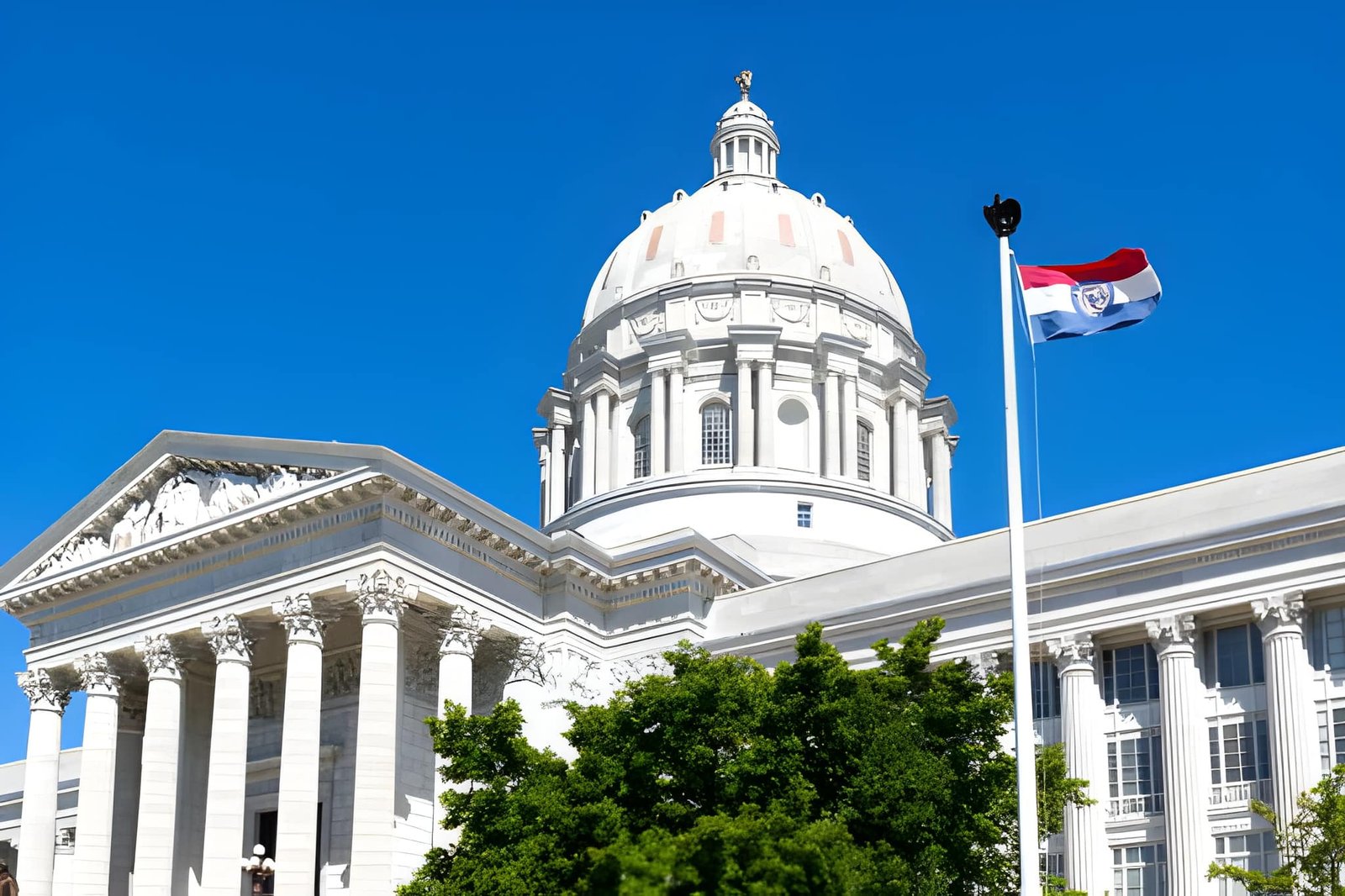
Photo caption: The Missouri State Capitol building in Jefferson City, MO. (4nadia/iStock)
_______
© 2026 the St. Louis Post-Dispatch. Visit www.stltoday.com. Distributed by Tribune Content Agency LLC.

Thanks for reading CPA Practice Advisor!
Subscribe Already registered? Log In
Need more information? Read the FAQs
Tags: Income Taxes, Missouri, sales and use tax, Taxes