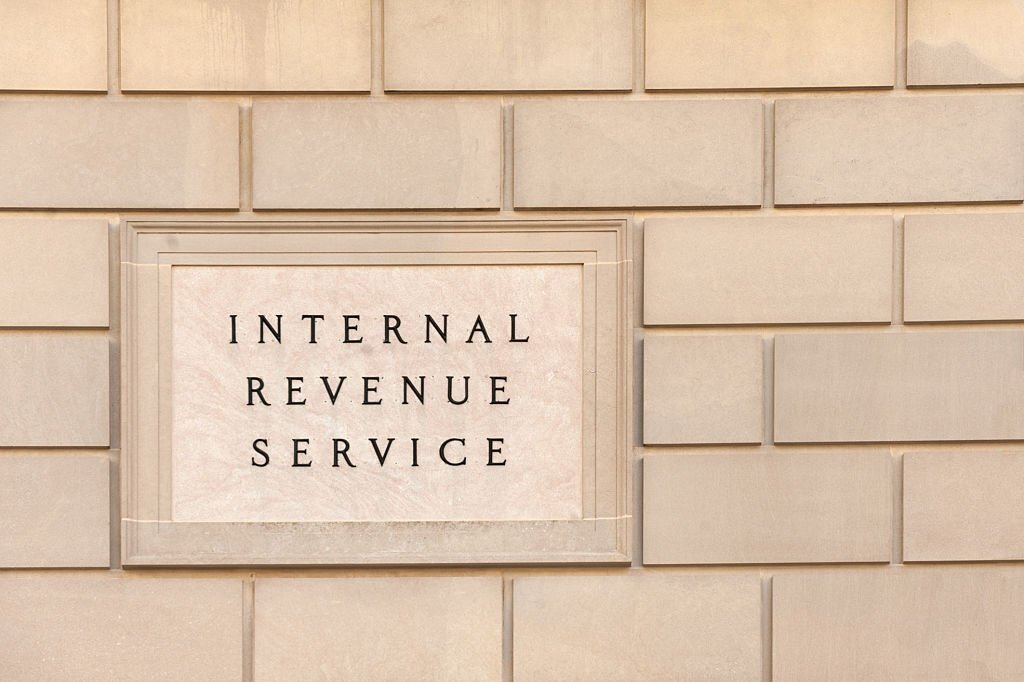




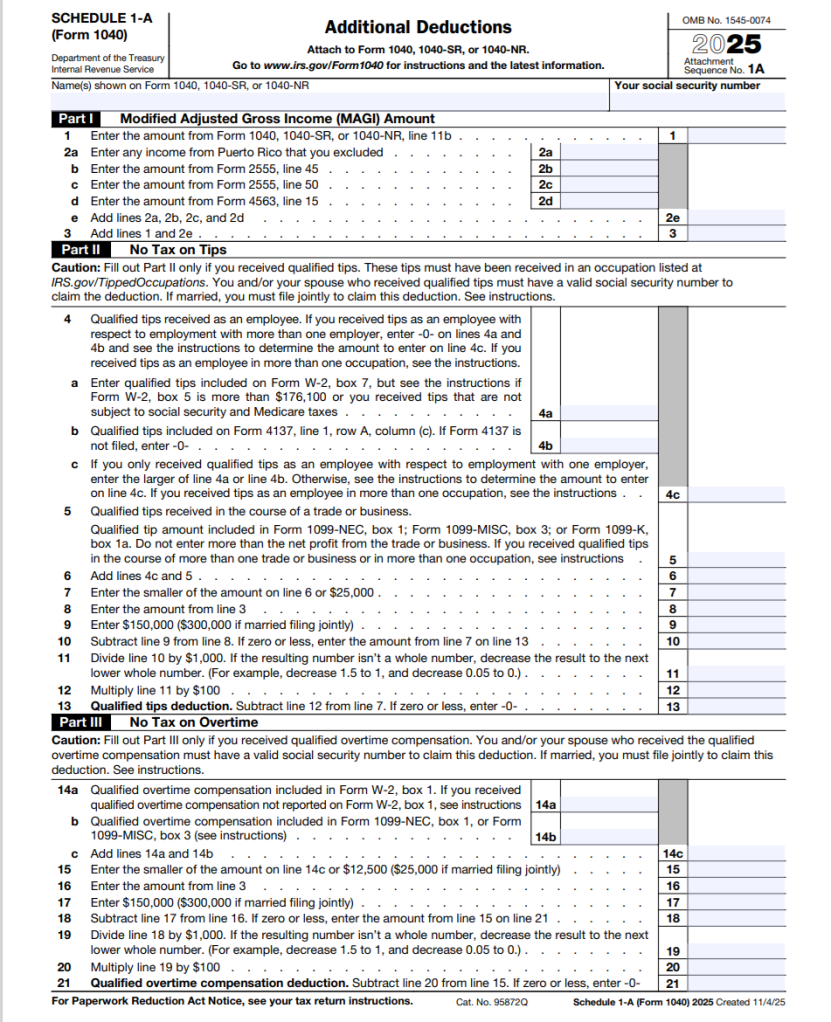
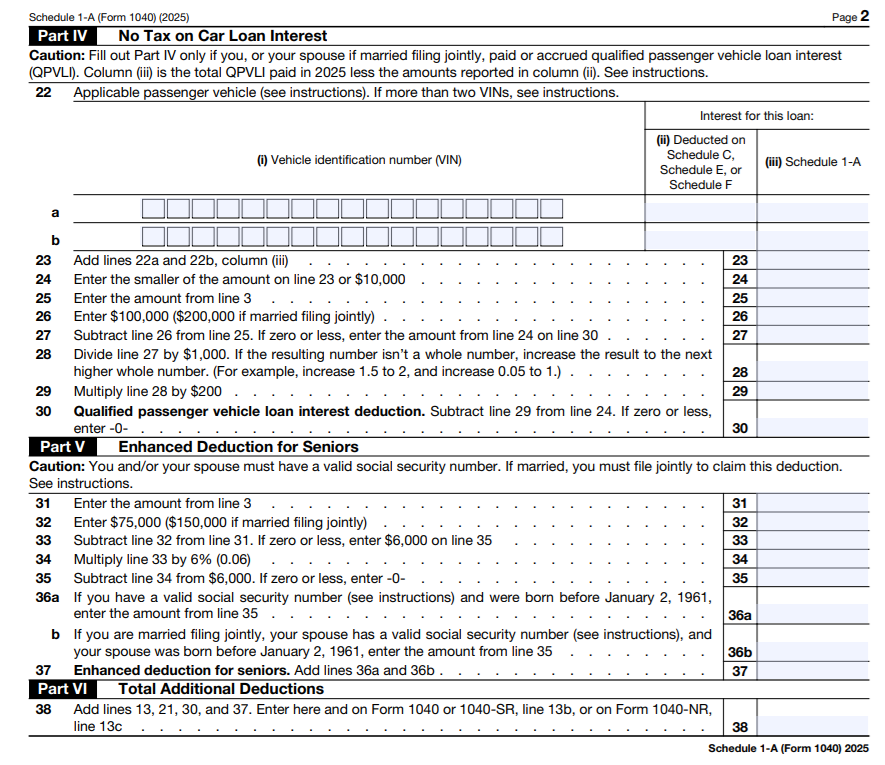
The IRS on Monday published Schedule 1-A and its related instructions (included in the Form 1040 Instructions) for tax year 2025 so eligible taxpayers can claim tax breaks on tips, overtime, and auto loans, as well as the enhanced deduction for senior citizens, introduced in the One Big Beautiful Bill Act last July.
The tax agency released a draft version of Schedule 1-A in September 2025.
Recommended Articles
Taxes September 15, 2025
IRS Provides Glimpse of Schedule 1-A Form for New OBBBA Tax Deductions
Tips deduction
After Part I, Modified Adjusted Gross Income (MAGI) Amount, Part II of the new instructions for Schedule 1-A explains how to determine the amount of qualified tips, how to claim the deduction (up to $25,000), and the phaseout for MAGI greater than $150,000 ($300,000 for married taxpayers filing joint returns). Workers can utilize this deduction whether they claim the standard deduction or itemize.
To claim the deduction, tips must be reported, and married taxpayers must file a joint return. The new instructions also provide examples of different scenarios for tipped workers, worksheets to help tipped workers calculate their tipped income, and information on lists and categories of occupations where workers customarily and regularly receive tips, as well as definitions of qualified tips.
Overtime deduction
Part III of the new instructions explains how certain workers can claim a deduction for overtime compensation they received. Married taxpayers must file a joint return to claim this deduction. Workers can utilize this deduction whether they claim the standard deduction or itemize.
The new instructions describe how taxpayers can claim a deduction of up to $12,500 ($25,000 if married filing jointly) and explain how the deduction is reduced when MAGI exceeds $150,000 ($300,000 if married filing jointly).
The instructions define qualified overtime compensation as “overtime compensation that is paid to you as required under section 7 of the Fair Labor Standards Act of 1938 (FLSA) that is more than the amount of your regular rate of pay. This generally means the ‘half’ portion of ‘time-and-a-half’ compensation that is required by the FLSA. This ‘half’ portion may be described by employers on various forms and statements as ‘overtime premium’ or ‘FLSA Overtime Premium.'”
The instructions provide illustrative examples and worksheets.
Auto loan interest deduction
Part IV of the new instructions explains how taxpayers can claim a deduction for car loan interest. Taxpayers can deduct qualified passenger vehicle loan interest whether they claim the standard deduction or itemize.
The instructions define the terms “qualified passenger vehicle loan interest,” “applicable passenger vehicle,” “final assembly in the United States,” and “personal use,” and provide an example.
Enhanced deduction for seniors
Part V describes the enhanced deduction for senior citizens, which can be claimed whether they take the standard deduction or itemize; to claim the deduction, married couples must file jointly.
To qualify for the enhanced deduction, the taxpayer (and/or the taxpayer’s spouse, if filing a joint return) must have been born before Jan. 2, 1961. The taxpayer must have a valid Social Security number; if married filing jointly, each spouse who is claiming the enhanced deduction for seniors must have a valid SSN.
The maximum enhanced deduction for seniors is $6,000 per person. For married filing jointly, if both spouses were born before Jan. 2, 1961 and both have a valid SSN, the enhanced deduction for seniors is $12,000. The $6,000-per-person amount is reduced if the MAGI exceeds $75,000 ($150,000 for married couples filing jointly).
Recommended Articles

Photo credit: Natalia Bratslavsky/iStock

Thanks for reading CPA Practice Advisor!
Subscribe Already registered? Log In
Need more information? Read the FAQs
Tags: auto loan interest tax deduction, auto loan tax break, car loan interest deduction, changes to taxes for seniors, deductions, Form 1040, Income Taxes, IRS, MAGI, modified adjusted gross income, no tax on overtime, no tax on tips, no taxes on tips, obbba, one big beautiful bill act, overtime and tips, overtime taxes, Schedule 1-A, senior citizen taxes, senior citizens, tax deductions, Taxes, taxes and overtime, tips and overtime taxes