



By Sophia Sostrin
The Seattle Times
(TNS)
OLYMPIA, Wash. — With lawmakers facing mounting budget pressures and potential cuts to child care and K-12 education, 13 House Democrats are urging the finance committee to strip a corporate tax break from the proposed “millionaires tax” before advancing the bill.
In a letter sent this week to the House committee leadership, the lawmakers said Senate Bill 6346—which would impose a 9.9% tax on income above $1 million annually—should move forward only if a provision accelerating a major corporate tax break is removed.
At issue is a section of the bill that would end a surcharge on the state’s Business & Occupation (B&O) tax for large corporations in 2028 rather than 2029. Legislative estimates project that change would reduce future state revenue by approximately $550 million.
The group argues that forgoing that revenue would undermine the bill’s central purpose: raising funds to support essential public services at a time when the state is weighing reductions to core programs and services.
Recommended Articles
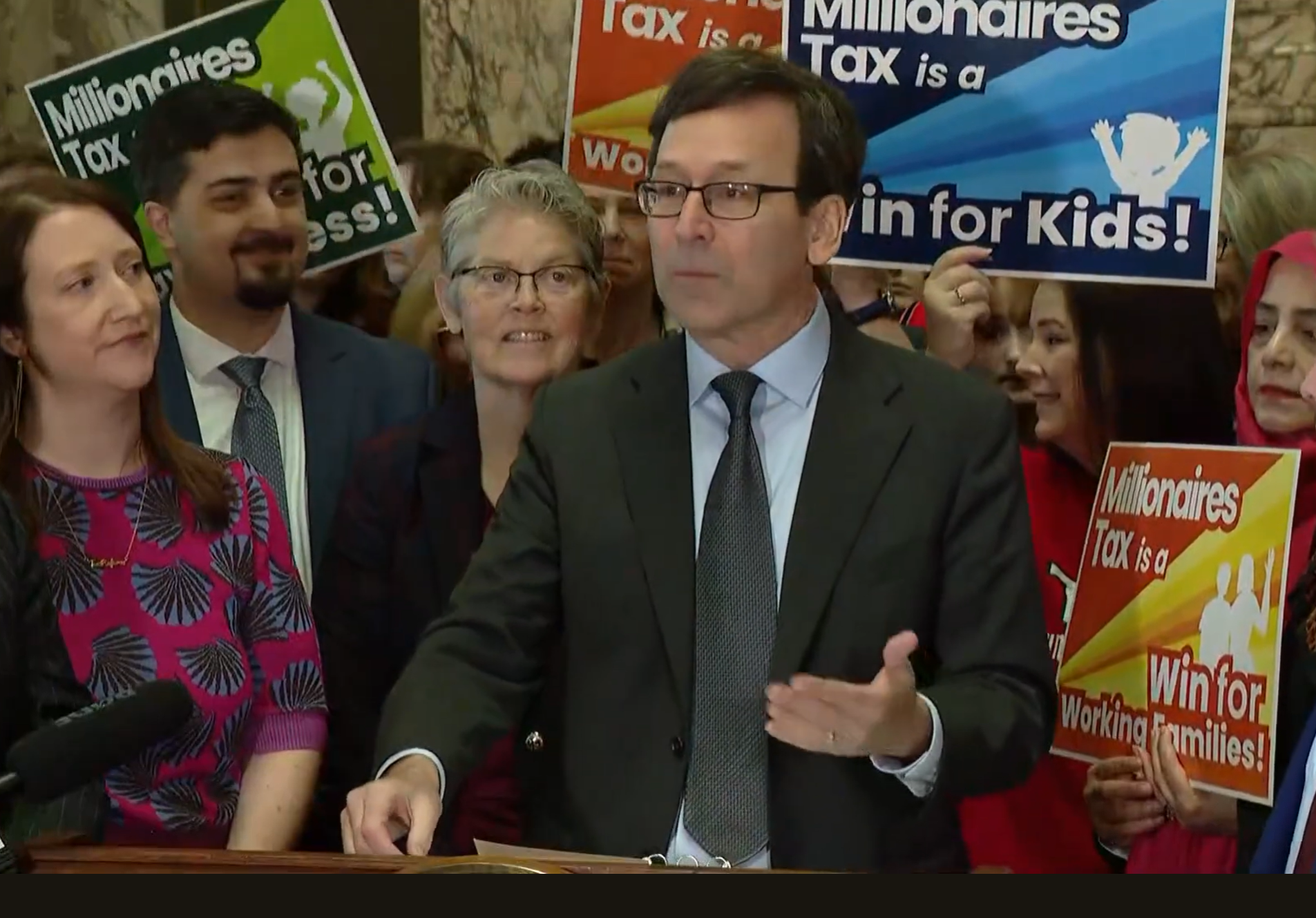




Rep. Shaun Scott, D-Seattle, who led the effort, described the income tax on high earners as a long-sought milestone for progressive lawmakers.
“A tax on millionaires would be a breakthrough that generations of economic justice advocates in Washington have fought for,” Scott said in an interview.
But Scott said pairing that policy shift with what he views as unnecessary corporate tax relief sends the wrong signal and weakens its fiscal impact.
Washington, he said, has built a reputation for strong public programs—both long-standing and recently enacted—that attract families and businesses alike. Sustaining that growth, he argued, requires stable and expanding revenue.
“Those programs are going to need not only the current levels of funding that we have but also need to be watered and grown,” Scott said.
He tied the estimated $550 million revenue impact directly to current budget debates.
“When you add together the reductions that have been proposed in the governor’s supplemental budget for child care and the Senate’s supplemental reductions to K-12 schools, you’re talking about roughly the same amount of money that this amendment could help preserve,” Scott said.
In that context, he argued, accelerating the expiration of the B&O surcharge could make it more difficult to avoid or soften cuts to public education and child care programs.
Scott also pointed to recent federal tax changes benefiting corporations, saying large companies are well positioned to absorb state-level taxes.
“Working families in our state cannot afford to hand that money over to large corporations that frankly won’t miss it,” Scott said. “Especially when many of those same corporations just received a significant federal tax break under HR-1 and the Trump administration.”
In their letter, lawmakers emphasized that revenue legislation should focus squarely on funding public priorities rather than providing what they characterize as corporate giveaways. They urged the finance committee to amend the bill before moving it to the full House.
In a Feb. 16 press release announcing the passage of the bill’s Senate version, Sen. Jamie Pedersen, D-Seattle, framed the proposal as a response to both federal tax policy and mounting pressure on Washington’s state budget.
There is growing anger and frustration as we watch the Trump administration deliver massive tax cuts for the ultrawealthy while slashing funding for health care and food assistance,” Pedersen said. “And it is making it impossible for our state budget to keep up with the needs of Washington families.
The debate comes as the legislative session enters its final stretch, adding urgency to negotiations over both tax policy and the state’s operating budget. The finance committee must now decide whether to modify the proposal or advance it as written.
For Scott and his colleagues, the decision is both symbolic and consequential: Pursue a landmark move to tax high earners while maintaining hundreds of millions in anticipated revenue, or agree to a compromise that reduces the bill’s fiscal impact amid mounting budget constraints.
Scott’s amendment was co-signed by Reps. Julia Reed, Liz Berry, Gerry Pollet, Nicole Macri, Tarra Simmons, Beth Doglio, Brianna Thomas, Edwin Obras, Lisa Parshley, Natasha Hill, Sharlett Mena, and Steve Bergquist.
The measure is up for a committee vote Friday morning, as the 2026 legislative session nears its March 12 adjournment.
Photo credit: Peter Robbins/Unsplash
_______
©2026 The Seattle Times. Visit seattletimes.com. Distributed by Tribune Content Agency LLC.

Thanks for reading CPA Practice Advisor!
Subscribe Already registered? Log In
Need more information? Read the FAQs