




If you have clients who export—manufacturers, agricultural producers, food processors, even engineering firms—this year’s economic environment has created an urgent planning opportunity you need to surface in your next conversation.
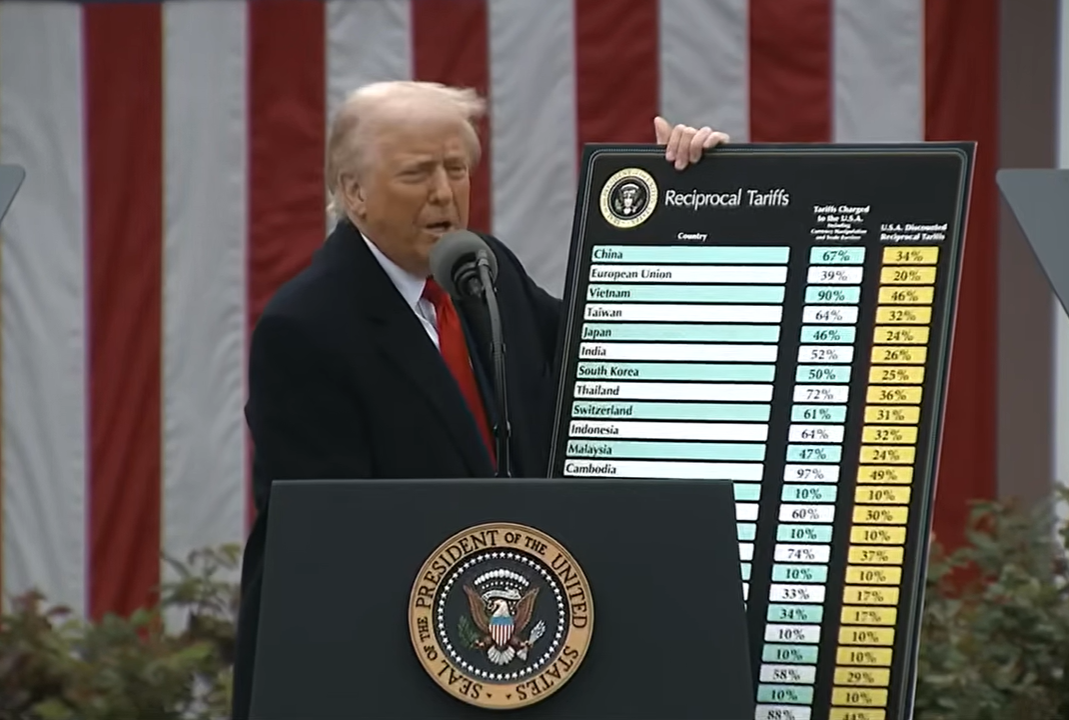
In a landmark ruling reshaping the scope of executive trade authority, the U.S. Supreme Court held by a 6-3 vote in Learning Resources, Inc. v. Trump (Case No. 24-1287) that the International Emergency Economic Powers Act (IEEPA) does not grant the president authority to impose tariffs on imported goods. After the ruling, the president said he would impose new tariffs using a different authority, and American businesses are unsure how any new tariffs will affect them.
While your clients are focused on operational survival, many are missing a tax strategy that becomes dramatically more valuable precisely when margins compress: the Interest-Charge Domestic International Sales Corporation (IC-DISC).
For CPAs and tax advisors, IC-DISC represents both a high-value client service and a practical solution to offset tariff impacts. Here’s what you need to know to start those conversations.
Recommended Articles

Taxes February 20, 2026
Supreme Court Strikes Down Trump Tariffs

Small Business February 24, 2026
Trump Faces Tough Legal Landscape to Oppose Tariff Refunds
The client opportunity: Permanent tax savings when they need it most
IC-DISC works by converting export income otherwise taxed at ordinary rates—up to 37% for pass-through entities’ owners and individuals, 21% for C corporations—into qualified dividend income taxed at preferential rates of 0%, 15%, or 20%. The permanent tax savings typically range from 5.8 to 13.2 percentage points, with the added benefit of immediate working capital improvement.
Here’s why timing matters: when a client’s pre-tax export profit drops from $10 million to $7 million due to tariff pressures, their IC-DISC tax savings of $203,000 to $462,000 represents a proportionately larger share of after-tax earnings. What was nice-to-have tax planning becomes survival-level cash flow preservation.
The second, less obvious benefit: tariff-driven reshoring may actually expand IC-DISC eligibility for your clients. To qualify, exported products must contain more than 50% U.S. content by fair market value. As clients bring production back onshore or switch to domestic suppliers to avoid tariffs, product lines that previously didn’t qualify may suddenly meet the threshold.
Which clients should be on your radar?
Start with these high-priority segments:
- Manufacturers producing machinery, industrial equipment, automotive components, or electronics. These clients face the most severe tariff exposure with costs rising on both imported inputs and retaliatory duties in export markets.
- Agricultural producers and cooperatives facing retaliatory tariffs on $223 billion of U.S. exports to China and Mexico while dealing with higher equipment and fertilizer import costs. For thin-margin farm operations, IC-DISC savings can be the difference between profitability and loss. Agricultural clients particularly benefit from multi-participant IC-DISC structures that allow cooperatives or family operations to share administrative costs.
- Food and beverage exporters dealing with tariffs on packaging materials and ingredients.
- Engineering and technical service firms whose design or architectural services relate to tangible exported goods—these often-overlooked candidates may qualify for IC-DISC treatment even when physical product volumes decline.
Framing the conversation: What to tell clients
Your initial conversation should focus on three questions:
1. What’s your five- to 10-year export outlook? IC-DISC works best when export activity is consistent and material. If tariffs are causing temporary disruption but the client plans to maintain export operations, IC-DISC provides ongoing value.
2. How diverse are your export margins? Clients with multiple product lines or varying profitability across customers are prime candidates for the transaction-by-transaction (T×T) calculation method. Under T×T, you compute IC-DISC commissions separately for each export transaction rather than on a blended basis. This matters enormously: loss transactions don’t offset profitable ones, so clients with heterogeneous margins or episodic losses can capture significantly larger tax benefits.
3. Do you have the accounting infrastructure? Maximizing IC-DISC benefits—especially using T×T—requires granular accounting systems that can track export transactions individually. If your client’s systems aren’t there yet, you can help them evaluate whether the projected savings justify the investment.
Implementation considerations: Structure and administration
From a practice management standpoint, you’ll typically help clients choose between two structures:
- Commission DISCs (the default choice for most mid-market clients) earn commissions without taking title to goods. This structure is simpler to implement and maintain, requires less documentation, and creates minimal operational friction.
- Buy-Sell DISCs take legal title and function as resellers. While potentially advantageous in specific scenarios, they require substantially more transfer pricing documentation, operational coordination, and ongoing compliance work. Unless there’s a compelling reason, steer most clients toward Commission structures.
For related-party situations—family farming operations, related manufacturing entities, or cooperative arrangements—multiple exporters can participate in a single IC-DISC to share costs. However, ownership alignment is critical. When IC-DISC shareholders aren’t proportionate to the underlying export activity of each participant, benefits get allocated unevenly, creating potential gift tax issues or family disputes.
Building this into your advisory practice
IC-DISC evaluation should be part of your trade policy response framework. When clients mention tariff impacts, supply chain changes, or reshoring decisions, that’s your trigger to discuss IC-DISC eligibility. The best outcomes happen when IC-DISC analysis runs parallel to operational trade strategy—not as an afterthought during year-end tax planning.
From a scope perspective, IC-DISC engagements typically involve: initial qualification assessment, entity formation, commission or pricing calculations, ongoing compliance and reporting, and annual optimization review. This creates recurring advisory revenue while delivering measurable value to clients navigating one of the most challenging trade environments in recent memory.
As 2026 trade policy continues to evolve, exporters face ongoing uncertainty. The accounting firms that proactively surface IC-DISC opportunities—particularly for clients under margin pressure—will differentiate themselves as strategic advisors rather than compliance providers.

ABOUT THE AUTHOR:
Mari Nakajima is director of international tax at BPM LLP, where she advises accounting professionals and their exporter clients on IC-DISC strategy and international tax planning.
Photo credit: AvigatorPhotographer/iStock

Thanks for reading CPA Practice Advisor!
Subscribe Already registered? Log In
Need more information? Read the FAQs