



By Shauna Sowers
The Seattle Times
(TNS)
OLYMPIA — State Senators passed legislation Monday to create an income tax on those earning over $1 million a year, the first hurdle in what will likely prove to be a long battle to get the bill over the finish line before the legislative session draws to an end.
After more than three hours of debate, the measure passed with a 27-22 vote, with three Democratic lawmakers splitting off to vote with Republicans against the passage of the bill.
Sponsored by Senate Majority Leader Jamie Pedersen, D-Seattle, and a majority of Senate Democrats, the legislation, if passed, would levy a 9.9% tax on earnings over $1 million a year, and is estimated to bring in about $3.5 billion annually. The proposal is estimated to apply to about 30,000 taxpayers in the state and tax collection would begin in 2028.
Sen. Lisa Wellman, D-Mercer Island, said she was in strong support of the bill because she believes the tax structure should be “based on the principle that we pay our fair share according to our means,” and that right now she doesn’t believe that is the case.
“This is not about penalizing wealthy people,” Wellman said. “It is simply asking for proportionality in our tax structure at a time when the gap between rich and poor has never been greater.”
Wellman added that her district is the one that the policy would affect the most, and she said that revenue from the tax would provide sustainable funding for schools across the state. She noted she has heard support even from constituents who would pay the tax.
Recommended Articles

Sen. Chris Gildon, R-Puyallup, said the bill represents “the largest tax increase this century” at a time when revenues “have never been higher.” Gildon said he believed that the measure was unconstitutional and that it is bad for the state’s economy.
“Lawmakers should be supporting policy that supports business and supports the economy, not just policy that taxes it into oblivion,” Gildon said, noting that people who would be affected by the bill have the means to move their residences out of state.
Gildon added that it was “embarrassing” how little tax relief the bill provides.
Before the debate Monday, lawmakers on both sides of the aisle filed multiple amendments, with only two of those amendments adopted on the floor.
An amendment sponsored by Sen. Marko Liias, D-Mukilteo, expands tax relief for small businesses and repeals sales taxes on retail services, except for advertising services, that were enacted as part of the $9 billion revenue package in 2025. Liias said he initially did not support the overall tax proposal because he did not believe tax relief went far enough, but the lawmaker voted in approval of the measure Monday.
Sen. Phil Fortunato, R-Auburn, said that he supported the amendment but noted that in order to get the sales tax break, lawmakers would have to pass the income tax, which he did not support.
Pedersen also sponsored a striking amendment adopted on the floor that clarified rules for pass-through entities and overall provided technical corrections.
One of the amendments would have added tax breaks on baby diapers, but it did not pass. Another amendment would have eliminated the referendum-proof necessity clause included in the bill.
While Republicans argued including the clause was deceitful, Pedersen argued that including the necessity clause does not preclude a citizen’s initiative and that he fully expects an initiative to be included on the November ballot.
“We fully expect that this is going to be in front of the voters for a determination by them,” he said.
The proposal exempts small businesses that make $300,000 or less from paying the state’s business and occupation tax and provides some relief for businesses with gross earnings up to $600,000.
The bill would also divert 7% of total revenues to a new account to support public defense services in cities and counties, with the remainder of the revenue to be deposited into the state’s general fund to pay for human services such as K-12 education and higher education.
Although Gov. Bob Ferguson previously announced he was in support of an income tax on millionaires, he spoke out against the initial version of the proposal released by Democrats in early February, citing concerns with the limited amount of tax relief for businesses and working people in the first version of the bill.
Recommended Articles

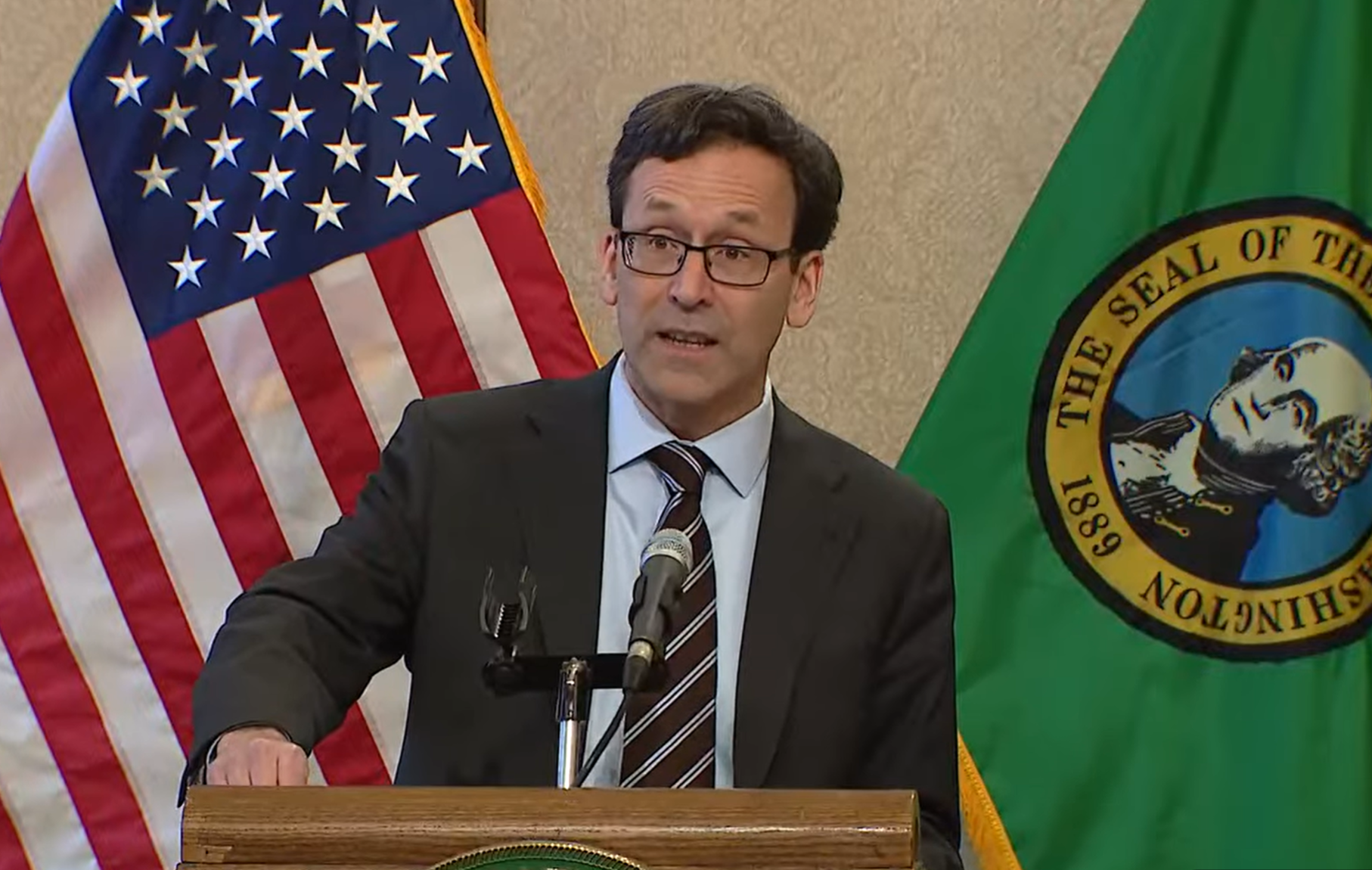
In a statement Monday, Ferguson said he believed the proposal is moving in the right direction.
“That said, as the process moves forward in the final weeks of the legislative session, we must direct significantly more revenue directly back to hardworking Washington families and small businesses owners, he said.
The bill now heads for the House for consideration. The last day of the legislative session is March 12.
Photo caption: The Washington State Capitol building in Olympia, WA. (RyanJLane/iStock)
_______
© 2026 The Seattle Times. Visit www.seattletimes.com. Distributed by Tribune Content Agency LLC.

Thanks for reading CPA Practice Advisor!
Subscribe Already registered? Log In
Need more information? Read the FAQs