



By Danny Westneat
The Seattle Times
(TNS)
Seattle’s new mayor was speaking to a roomful of supporters the other day when she dropped a rather blunt assessment of our city.
“You know what?” Katie Wilson said. “This city is filthy rich.”
The crowd laughed a bit. Can you say that when you’re mayor? Should you say that?
It bears some examination, because of what was announced next.
The city’s new social housing tax, levied on lofty pay packages to pay for public housing, was due Jan. 31. The startling news was that it blew the projections out of the water.
When the 5% tax on salaries and compensation above $1 million passed a year ago, its backers estimated it would bring in $50 million annually. Later the city’s finance department used state employment data for a more rigorous finding, and came up with $65.8 million.
But it looked precarious.
“The increase to the payroll expense tax … could cause businesses to change their hiring behavior to avoid taxation—such as moving existing employees to locations outside Seattle,” a report to the City Council said.
Conclusion: There’s “a large amount of uncertainty,” said the office of economic and revenue forecasts. The tax could collect anywhere from $39.2 million to $80 million, “but even larger variance cannot be ruled out.”
“Larger variance” is once again the story of just how rich we are. Because tax collections came in at $115 million—75% higher than the estimate. And 44% over the top of the range.
Recommended Articles

Taxes October 28, 2025
Mamdani-Like Contender Tests Seattle’s Breaking Point on Taxes
It means several things about our city—all of which inform the debates currently raging about tax-the-rich efforts in our state.
One is that Seattle’s plutocrats are wealthier than anyone imagines. This keeps getting revealed, where a scheme is developed to tax wealth, and then the amounts the tax brings in wildly overshoot even the most optimistic forecasts.
The same thing happened with the state capital gains tax on windfall stock profits, which poured in at triple its first-year projections. Ditto Seattle’s first JumpStart tax on high pay, which came in 48% higher. The amounts of money sloshing about here are incomprehensible, to the point of being unguessable, even by the experts.
Another thing is that Seattle businesses obviously did not flee.
This is interesting because the social housing tax should be one of the easier taxes to avoid. You only have to work at least half the time outside the city—in an office across the lake in Bellevue, for example.
If you make, say, $1.1 million, the social housing tax paid by your company would be $5,000 (5% of the $100,000 above $1 million). It’s probably not worth moving an executive due to five grand.
But one making $10 million? The tax on that is $450,000. $30 million? The tax hits $1.45 million.
As I wrote last year, it’d be cheaper for Amazon to fly its top execs to Bellevue in a helicopter three days a week.
They did not take me up on this strategic advice, apparently. In fact, the 5% tax is being paid by 170 Seattle companies, according to the social housing agency. (The tax is paid by companies, not individual workers.)
So are the rich set to bolt the city or the state to get away from tax-the-rich schemes? Last week at a hearing on a proposed state millionaires income tax,” Redmond hedge fund manager Brian Heywood, who himself fled California’s taxes, testified he knows of “about 50 couples who are already in the process of, or soon to be changing, their domicile, out of this state.”
That is a lot. I’m not sure I know 50 couples period, let alone 50 couples capable of taking such decisive action. Another way the rich are different than you or me.
The press has been filled with anecdotes of wealthy people decamping. Yet someone’s got to be hanging on here paying all these taxes—the totals of which keep racking up dramatically higher than expected.
One tech exec finally emerged to argue the fleeing-from-Seattle talk is bogus.
“The math doesn’t math,” wrote Jacob Colker, a Seattle AI venture capitalist. “Should we be thoughtful about tax policy? Heck yeah. Should it be tied to better stewardship of spending? Darn right. But the breathless narrative that Seattle is one bill from collapse is not serious analysis.”
My sense is taxes work when rates are reasonable. Single digits, like the 5% social housing tax, are not killer rates. Maybe the rich say “ugh, I don’t like it but oh well, it’s not worth uprooting my life.” So far, it hasn’t been worth even driving across the bridge.
On the other hand, Democrats last year jacked the top estate tax rate for the super-wealthy, to a gouging 35% for wealth north of $12 million. Some of those are said to be fleeing Washington, and who can blame them? There’s no good to come from fleecing people. This extreme rate situation has set off enough alarms that state Democrats now have a “tail between their legs” bill to unwind that rate back to where it was set for years, 20%.
Point is, keep it cool, lawmakers, and the rich can abide.
In Seattle, city finance experts warn the new social housing tax may go on a roller coaster, as high pay tends to be tied to stock winnings. As a warning, Amazon has seen nearly half a trillion dollars sheared off its market value in just the past two weeks. So frothy returns may not last.
For now, the windfall has the social housing developer saying it will take on less debt, or buy more housing stock faster to convert into affordable units, or both. These are good things for the city. The agency has been struggling, so we’ll have to see if it gets its act together now.
As for Seattle being “filthy rich,” that probably wasn’t the most politic thing for a new mayor to say.
For the record, the year before last, Katie Wilson wrote a column with a headline that called for taxing “the filthy, stinking rich.” So she’s actually toning it down a bit!
But seriously, as these latest eye-popping returns showed: She’s not wrong about us, now, is she?
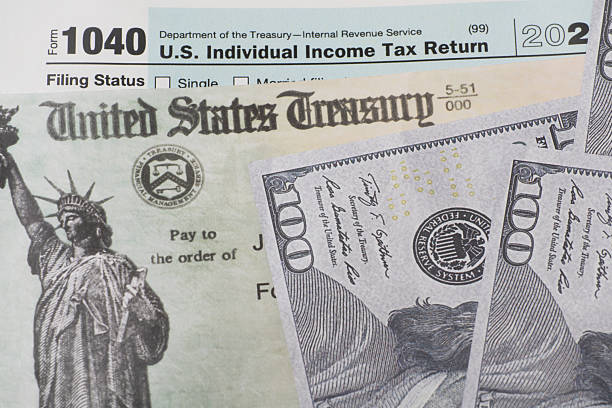
Photo credit: Engel Ching/iStock
_______
© 2026 The Seattle Times. Visit www.seattletimes.com. Distributed by Tribune Content Agency LLC.

Thanks for reading CPA Practice Advisor!
Subscribe Already registered? Log In
Need more information? Read the FAQs