



By Becca Savransky
The Idaho Statesman
(TNS)
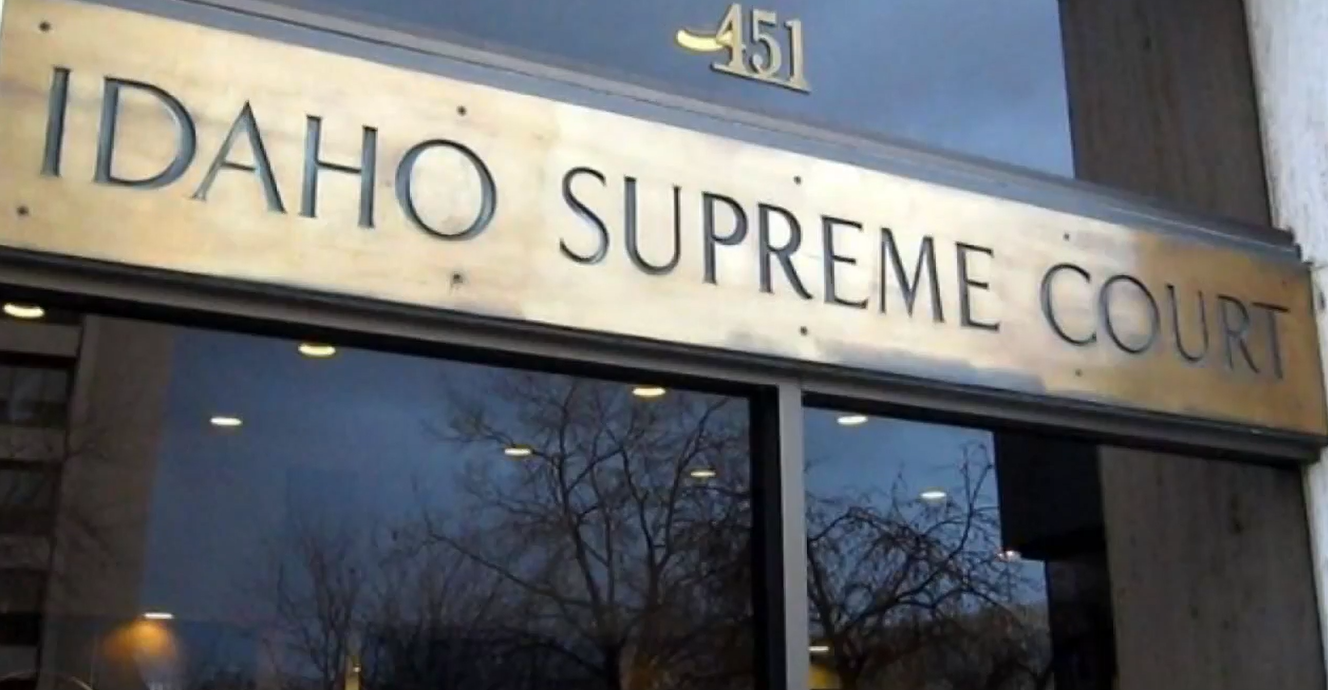
The Idaho Supreme Court heard arguments Friday on a challenge to Idaho’s $50 million tax credit program that directs public money toward private schools and homeschooling expenses.
After the Legislature approved the new law last year, a coalition of education advocates and groups sued, asking the Idaho Supreme Court to prohibit the tax credits. They argued that Idaho’s Constitution requires the state to create and maintain “a general, uniform and thorough” system of free public schools—and that diverting public funds to private options is a violation.
Attorneys from both sides presented their arguments before all five justices and a packed courtroom.
During the arguments, which lastly roughly an hour, many of the questions centered around whether the Idaho Constitution specifically requires the state to maintain a single system of free and uniform schools, hinging on the word “a” used in the Constitution.
Justices also asked about whether students who are homeschooled or in private schools must learn certain curriculum or meet specific criteria, and whether the state played any role in accrediting private schooling options.
Marvin M. Smith of Hawley Troxell, who presented the arguments for the coalition, said that when the Idaho Constitution was created, the article dedicated to ensuring a free and thorough system of public schools was, for many, the “crown jewel.”
He said the Constitution states it’s the Legislature’s duty “to establish and maintain one system of public education that is general, uniform, thorough, public, free and common.”
“By its very language, the Legislature may not establish and maintain another educational system outside of this single system,” he said.
Michael Zarian, Idaho’s deputy solicitor general, argued the petitioners presented “no constitutional basis” against the tax credit program, which he described as an “enormous investment” in Idaho’s next generation.
“All the text requires is that the Legislature establish and maintain a thorough system of public schools and nobody here today disputes that it’s done that,” he said. “That should be the end of the analysis.”
He also disputed that the law creates and maintains a separate system of schools. He said families can spend money at bookstores, and on tutors, and compared the claim to saying that food stamps create a system of grocery stores.
The coalition that filed the lawsuit included the Idaho Education Association, the Committee to Protect and Preserve the Idaho Constitution and the Moscow School District.
The lawsuit said that private schools have few requirements and that the law opens “the door for public funds to subsidize entities that can ignore innumerable State policies with impunity.” The program violates the state Constitution, the lawsuit said, because it uses public dollars to benefit private institutions “without public accountability or government oversight.”
Survey shows support for program
This year’s Idaho Public Policy Survey, conducted and released by Boise State University’s Idaho Policy Institute, showed support for the tax credits.
In the survey, conducted Nov. 8-17, surveyors phrased the question in two ways: People were asked whether they supported the “Idaho Parental Choice Tax Credit” or “House Bill 93.” The question then briefly explained the purpose of the program and how it works. According to the results, a majority of people said they strongly supported or somewhat supported the tax credits.
Over 20% of respondents strongly opposed the tax credits, and another roughly 10% said they somewhat opposed them, according to the results.
In a follow-up question, researchers asked people whether they would want to see changes to the program this legislative session. Over one-third of respondents said they wanted lawmakers to keep the program as-is to see how it works. Another 21% wanted to see the program grow to be available to more families, and about 35% said the program should be repealed and the money reinvested in public schools.
Those in support of the tax credit program have argued public support reflects the need for the law.
In a news release Thursday, the Idaho Attorney General’s Office cited other polls that showed support. In a statement ahead of the arguments, Attorney General Raúl Labrador said he knows kids learn differently as a father of five.
“What works for one doesn’t work for all. This law gives families that choice and takes nothing from public schools,” Labrador said.
Democrat calls law a ‘voucher scheme’
Idaho Democratic leaders on Friday spoke out against the tax credit program. Senate Democratic Leader Melissa Wintrow called it “unconscionable” for Republicans leaders to defend the program instead of “fully meeting the state’s existing obligations” and taking steps to close the gap in special-education funding.
“Kids who need extra support can’t wait for political priorities to shift. Idaho should be putting its money into the schools that take every student who walks through the door, in every community,” she said in a statement.
Recent estimates show a more than $80 million gap between what the state provides to schools to educate students with disabilities and what schools spend. In her initial budget proposal, State Superintendent Debbie Critchfield last summer asked for an additional $50 million for special education, but she shifted course months later after the state’s budget deficit became clearer.
House Democratic Leader Ilana Rubel called the tax credit law a “voucher scheme” that she warned could set a precedent “that invites even more public dollars to be diverted from the public school system Idaho is constitutionally required to fund and maintain.”
Thousands have applied for tax credits
Under the law, eligible families can receive a refundable tax credit of up to $5,000. Parents of students with disabilities can receive up to $7,500. Qualified expenses include tuition for non-public schools, tutoring, assessments and transportation.
During the application window, which began Jan. 15, families who earn up to 300% of the federal poverty level have priority. For a family of four, that would be around $96,000, according to the 2025 guidelines.
Gov. Brad Little signed the bill into law last year after legislators tried for years to pass a measure to provide funds for families who choose not to send their children to public schools.
Those in support of these programs have said public schools don’t fit every child’s needs, and have argued that the tax credit would allow parents to choose the best options. Those opposed worried it would direct money to schooling options with little oversight or accountability. Advocates against the law have also warned that public schools already face large budget gaps. Idaho consistently ranks last or near last in funding per pupil.
When applications for the program opened last week, people began filling them out within minutes, the Idaho State Tax Commission said. Thousands of people applied on the first day.
Idaho Democrats this week asked the Tax Commission to pause advance payments to families through the program, arguing that the lack of accountability “opens the door to fraud and abuse,” according to previous Statesman reporting. It is a claim House Majority Leader Jason Monks, one of the sponsors of the tax credit law, disputed.
_______
©2026 The Idaho Statesman. Visit idahostatesman.com. Distributed by Tribune Content Agency LLC.

Thanks for reading CPA Practice Advisor!
Subscribe Already registered? Log In
Need more information? Read the FAQs