



By Brendan Murray
Bloomberg News
(TNS)
President Donald Trump’s duties on imported goods are paid almost entirely by American importers, their domestic customers and ultimately U.S. consumers, a study from a German think tank concluded.
“Foreign exporters did not meaningfully reduce their prices in response to U.S. tariff increases,” a report released Monday by the Kiel Institute for the World Economy said. “The $200 billion surge in customs revenue represents $200 billion extracted from American businesses and households.”
The study found that only about 4% of the tariff burden is shouldered by foreign firms, with a “near-complete” pass-through of 96% to U.S. buyers that pay the levies and then must either absorb them or raise selling prices. Manufacturers and retailers are next in line in deciding whether they’ll pass along their higher costs or deal with tighter margins.
“The tariff functions not as a tax on foreign producers, but as a consumption tax on Americans,” Kiel researchers Julian Hinz, Aaron Lohmann, Hendrik Mahlkow and Anna Vorwig wrote.
Recommended Articles
Taxes January 9, 2026
Opinion: Americans Are Living in the Worst of All Tax Worlds

Taxes November 5, 2025
Supreme Court Sounds Skeptical of Broad Trump Tariff Powers
The research zeros in on Brazil and India, whose exports were targeted with steep, broad U.S. tariffs last year. After a 50% duty took effect, Brazil’s exporters “did not substantially reduce their dollar prices.” A similar pattern was seen with India, which first faced a 25% that was raised weeks later to 50%.
Several reasons exist why exporters don’t foot much of the bill, including their ability to redirect sales to other markets.
“The adjustment occurs through reduced trade volumes, not price concessions,” according to the Kiel paper. “Given the choice between maintaining margins on reduced sales or slashing margins to maintain volume, most exporters apparently prefer the former.
Based on shipment data covering 25 million transactions worth about $4 trillion, the Kiel study runs counter to the Trump administration’s argument that trading partners pay tariffs.
“This claim has been central to the policy’s justification: Tariffs are framed as a tool to extract concessions from trading partners while generating revenue for the U.S. government—at no cost to American households” the Kiel researchers wrote. “Our research shows the opposite: American importers and consumers bear nearly all the cost.”
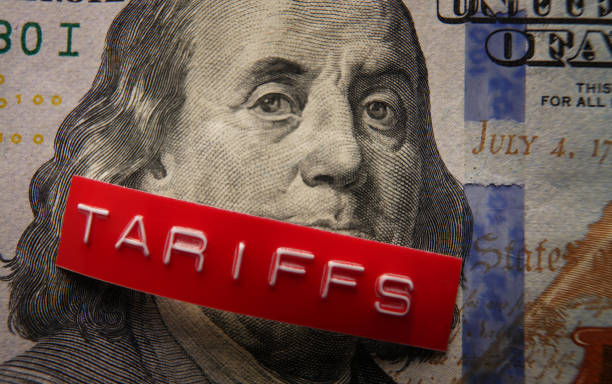
Photo credit: zimmytws/iStock
______
©2026 Bloomberg L.P. Visit bloomberg.com. Distributed by Tribune Content Agency LLC.

Thanks for reading CPA Practice Advisor!
Subscribe Already registered? Log In
Need more information? Read the FAQs