



A Top Technology Initiative Article by Randy Johnston.
January 2026.
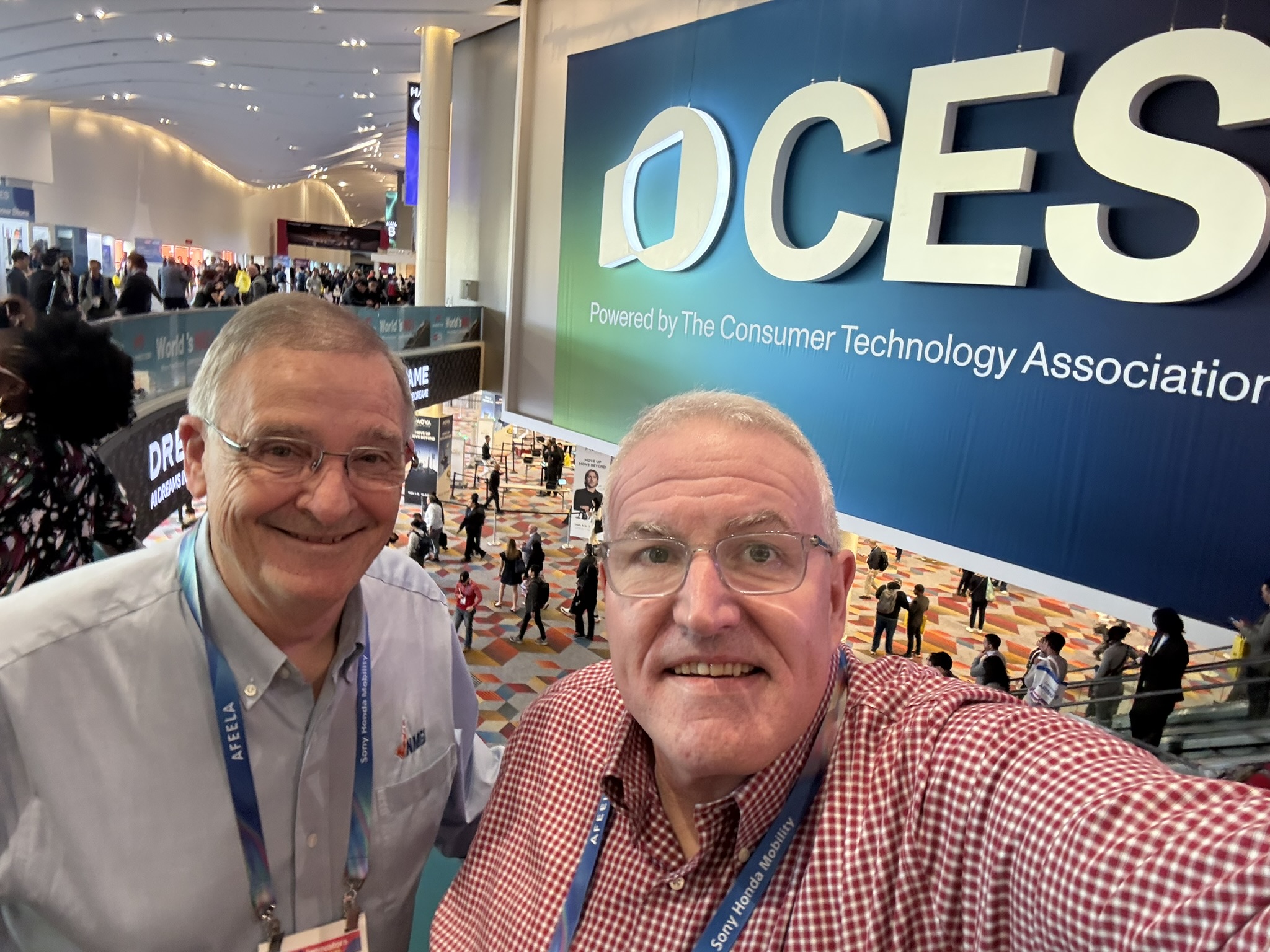
This month’s column provides a chance to look ahead while reflecting on a week at the Consumer Electronics Show (CES) with my fellow Accounting Technology Lab podcaster, Brian Tankersley. We recorded three podcasts while at CES, including a general overview, a session on business infrastructure technology, and a session about our AI discoveries.
We also discussed the structure and content of the year ahead. I encourage you to listen to the latest news and insights into a wide variety of products. 2026 is the fifteenth year we have walked the show together. Many prominent vendors did their own events and did not participate on the show floor as they have in prior years, including Sony, Nikon, Samsung, Intel, and AMD. As usual, no major computer hardware vendors were on the floor, including HP, Lenovo, and Dell, but all had major announcements.
This year’s CES provided a worthwhile lens into the future with Artificial Intelligence (AI) and robots everywhere. However, direct conversations about strategy and the reasoning behind products provided the most insight. For example, the Model Context Protocol (MCP, a similar technology to an API for AI) from Sabre, the airline reservation software company, convinced us even more that this is the year of MCP models to solve real problems. The relationships we have built over the years at trade shows of all kinds have reminded us of the importance of direct conversations.
The Big Theme: AI Moves to the Edge
We were not surprised to see so many AI products, but many of the offerings were slop we did not believe was either viable or useful. For example, AI-based toys and comfort items for people, like MoFo, and the dozens of children’s items, gave us pause. At least there were fewer devices for your pet this year, but there was still plenty of automation for food, water, litter box, comfort, and bathing. Every time you turned around, there were AI-powered ovens, washers, pool robots, and lawn-mower robots that provided minimal advantage.
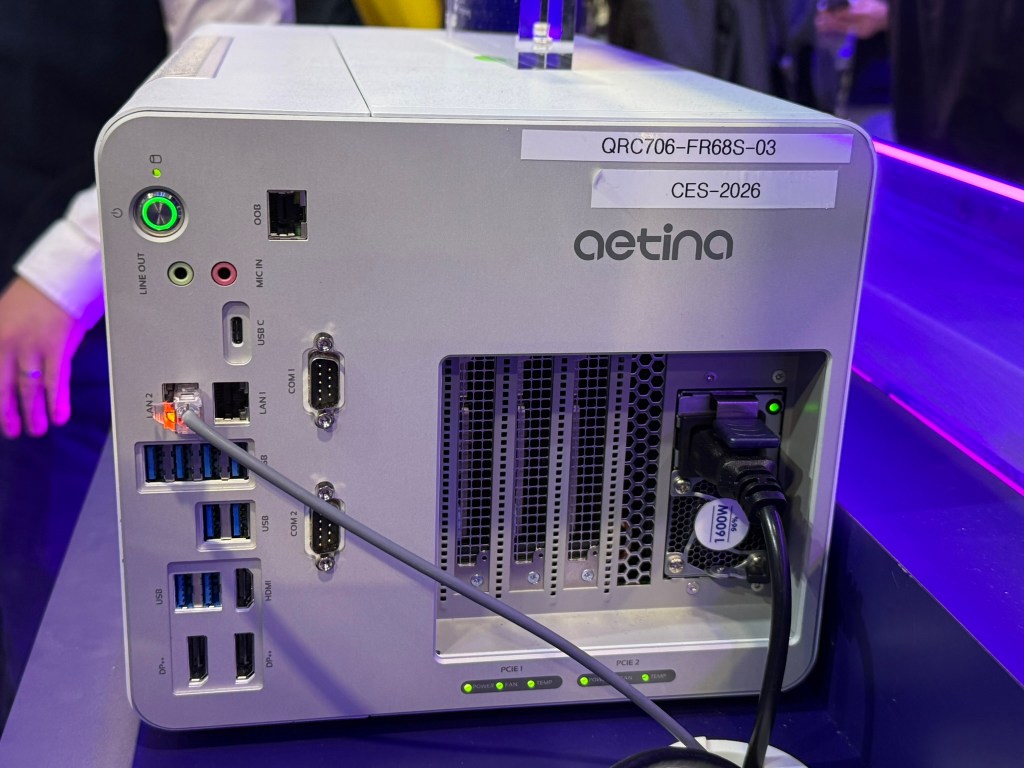
On the other hand, it was clear that edge computing offers economic, security, and performance benefits. The AI in glasses had far more purpose; for example, the macular degeneration support glasses from Ohio seemed particularly useful. Qualcomm had an awe-inspiring display of glasses and new-generation laptops running the latest Snapdragon processors. Imagine using a laptop computer for a week without recharging. Qualcomm also had a dedicated AI device, the Dragonwing AI On-Premises Appliance.
It is a local box programmed by a partner with bespoke AI models for the customer, running on an on-premises Snapdragon appliance. What makes this unit (and another one, the NAS from UGREEN below) so interesting is that you can run a bespoke AI model privately. Partner customization of the unit seemed straightforward, with minimal internal effort required.
Equally impressive was the UGREEN NASync iDX Series network-attached storage (NAS) that leveraged their local AI-Powered Data Organization. The options include Universal Search, Uliya AI Chat, AI Album, Voice Memos, and AI File Organization. I would like you to picture that every file you have can be retrieved in less than 1 second, with the content of a file, video, or picture available in less than 1 second. The built-in AI chat can answer questions about the files, which are automatically organized into albums via semantic search, content similarity, or image recognition.
The AI voice memo feature can transcribe, translate, and summarize meetings. All these features have no recurring fees, only requiring the purchase of NAS storage. It is clear which NAS I am going to buy for my next replacement, but I do not think I will wait for the replacement cycle to order a UGREEN iDX6011 Pro. I am also going to watch for the UGREEN SynCare Series private security cameras and doorbell when they become available in the second half of 2026. This family of products is the first to offer sufficient privacy to make me comfortable recommending them in your home or office.
What Other Technologies Deserve Attention?
While there are no guarantees that every product on display at CES will make it to market, the larger vendors tend to deliver the products they show sometime in the first quarter. Therefore, the new laptops from HP, Dell, and Lenovo are all pretty much shoo-ins. Impressive portable monitors from CTX feature a clamshell design that provides two monitors for portable users. The clear advantage is that the screens are in the interior, with rigid plastic protection on both sides, protecting the glass on both screens in the middle. The 14, 15, and 17″ models seem to weigh about the same as an individual screen. The dual-screen, clamshell 27″ monitor was absolutely massive but should still fit in a checked bag for an airline trip.
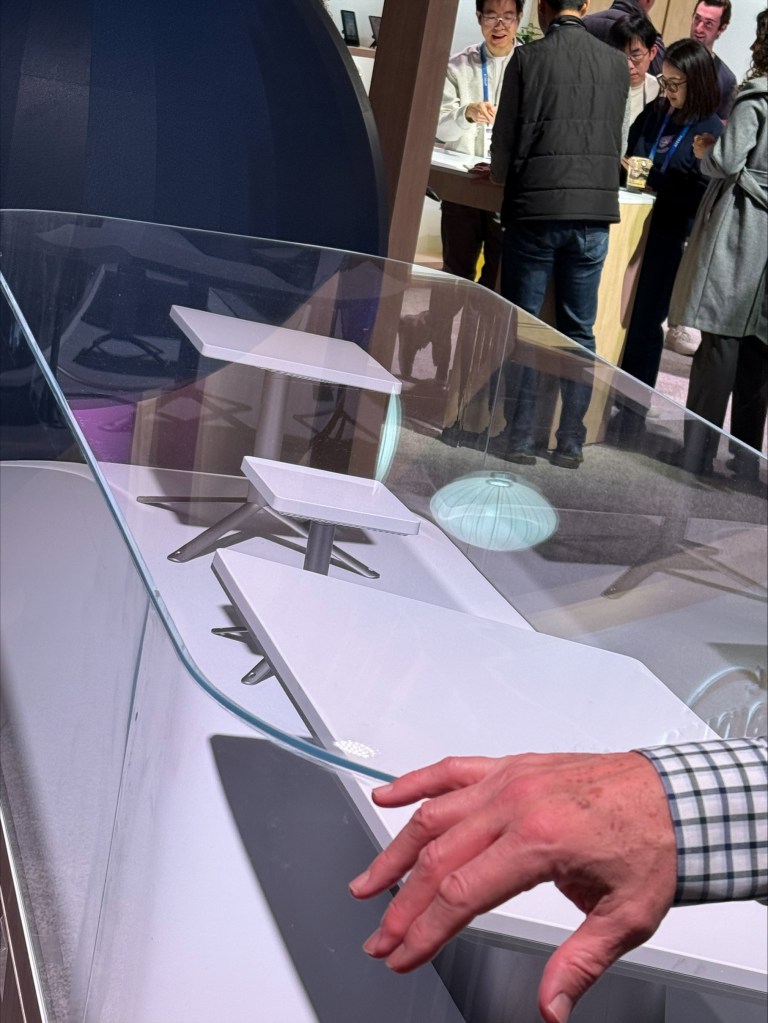
We noted that ASUS and TP-Link both promoted Wi-Fi 8, but products were in short supply. We are recommending Wi-Fi 7 for most homes and offices, particularly now, given the price-performance of the Ubiquiti brand. Amazon surprised us a bit with their Eero Wi-Fi line. More impressive are the new Nano, Pro, and Ultra LEO (Low Earth Orbit) dishes to compete with Starlink. Amazon LEO (formerly Project Kuiper), with up to 180 satellites (out of a projected total of 3,236), is well short of SpaceX’s 9,300-9,500 satellites currently in orbit. Still, they are determined to close the gap.
One other important note was the release of the new HDMI 96 standard. HDMI 96 is designed to support up to 96Gbps and 16K monitors. The current copper cables are short, and the fiber optic designs are pending. However, I expect to transition my HDMI cable recommendation to 96 this year.
What Other Technologies Were of Note?
An important note for your future purchases was the release of the new HDMI 96 standard. HDMI 96 is designed to support up to 96Gbps and 16K monitors. The current copper cables are short, and the fiber optic designs are pending. However, I expect to transition my HDMI cable recommendation to 96 this year.
On the healthcare front, I also took the time to use the Withing Body Scanner. This device took about 2 minutes to assess various body systems and organs. The output was very readable, and I can see this device being acquired by and used in many doctors’ offices. Another capable health diagnostic product from Korea won an innovation award for its ability to assess patients with an ECG and for mental assessment.
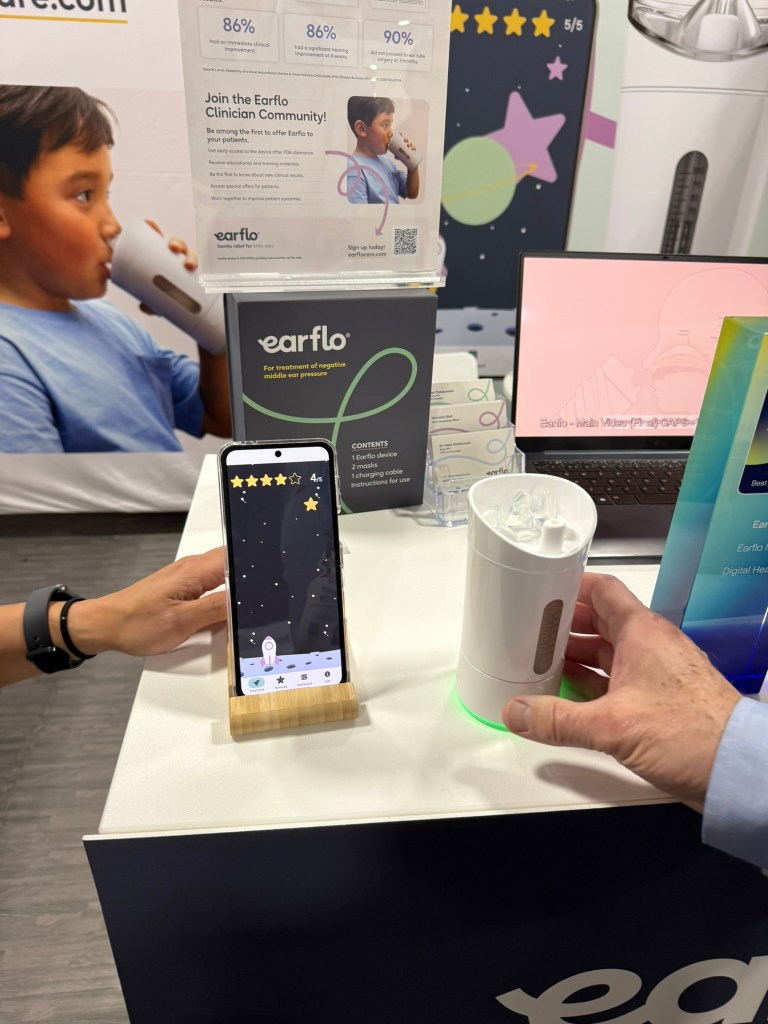
While we have recommended products such as the Apple Watch, the Oura ring, and wearables from Galaxy & Garmin, this may have been the breakout year for rings, headbands, and a wide variety of other monitoring products. One final product of note in healthcare was the earflo (appears on right). This device uses a cup and a video game to adjust inner ear pressure in kids (think: airplane takeoff/landing, ear infections, etc.) with a sippy-cup-style tool.
TCL was the most improved vendor year over year. They are acting as innovatively as LG or Samsung did in the past. For example, the TCL – auto-scaling TV based on how far away you sit. Also, in 2025, we recommended the first-generation TCL Note AI NXTPAPER. The second-generation product was a delight to use. The 2nd-generation NXTPAPER will be available in late February in North America, or through their Kickstarter campaign. We used this product, and the screen was amazing (color e-ink) and very responsive to pen, touch, etc. The specifications are:
- 11.5‑inch matte NXTPAPER LCD (2200×1440, 3:2), full‑color, 120 Hz, designed to look and feel more like paper while reducing glare and eye strain.
- Active stylus (T‑Pen Pro) with 8,192 pressure levels, low‑latency ink, higher‑friction surface, and dual tips aimed at handwriting and sketching.
- AI note suite: handwriting‑to‑text, meeting transcription, translation, summaries, rewriting/expanding text, and handwriting “beautify” plus math/formula recognition,
- Android tablet under the hood (MediaTek SoC, 8 GB RAM, ~256 GB storage, microSD on some models), so it runs standard apps as well as TCL’s note‑centric interface.
- Cloud and workflow focus: PDF markup, notebook organization, sync/sharing to services like Google Drive/OneDrive, pitched as a faster, more versatile alternative to e‑ink e‑notes.
- Positioned in the mid‑premium price band (around mid‑$500 at launch), targeting students, professionals, and creators who want a paper‑like writing device without e‑ink’s latency.

Amazon had its own private room for display space and showcased many products, including the new Kindle, which is still a more personal device for notes/reading, with limited browser memory and pen input. However, the fountain pen setting is impressive. We also looked at the Echo, Show, and Ring, Fire TV, and many other Amazon devices, including the LEO products above.
I am very anxious to try the DeepCare ergonomic device (appears on left) for offices that measure air quality, temperature, fluid intake, noise, movements, and more. If it works as the vendor claims, you can anticipate a podcast and an endorsement of this product.
So, What Should You Do in 2026?
The pace of technological change in AI will accelerate. New generation hardware to support AI and productivity will arrive. What would I ask you to do?
- Realistically consider your needs. Determine a technology stack that fits your needs
- Delay most hardware purchases until the second quarter to get a new generation product
- Schedule demonstrations of new AI offerings from your primary vendors
- Consider new vendors to satisfy unmet needs
Throughout this year and beyond, you can look to this column and our Accounting Technology Lab podcasts to get genuine, honest, real, authentic, and frank

Thanks for reading CPA Practice Advisor!
Subscribe Already registered? Log In
Need more information? Read the FAQs