


By Mike Cason
al.com
(TNS)
The chairman of the Alabama Senate’s General Fund committee has filed bills in response to cities who are challenging the state’s online sales tax in a lawsuit.
Sen. Greg Albritton, R-Atmore, said the lawsuit against the Simplified Sellers Use Tax, or SSUT, jeopardizes a critical source of revenue for the state, counties, cities, and schools.
“(The SSUT) is a novel approach that we took 10 years ago to correct a change in the economy and is working great, is working fantastic,“ Albritton said.
”And for these cities to make what I think are false claims endangers this revenue. And I think it’s foolish.”
Albritton said cities are benefitting from the SSUT, a growing source of tax dollars with the consumer shift to online shopping.
The SSUT generated $851.2 million in 2024, up 34% in two years.
The state receives 50% of the revenue, while 30% goes to cities, allocated by population, and 20% to counties, also distributed by population.
Tuscaloosa, Tuscaloosa City Schools, and Mountain Brook filed the lawsuit in August.
Mobile, Hoover, Montgomery, Madison, Pelham, and Gulf Shores have joined them, as well as some city school systems.
The Alabama Education Association also sued to challenge the SSUT, and its case was combined with the one filed by the cities.
The plaintiffs say the SSUT, a flat 8% tax on online sales that the state began collecting in 2016, is no longer valid because of a U.S. Supreme Court ruling in 2018—South Dakota vs. Wayfair—which they say authorizes Alabama to collect its traditional state and local sales taxes on online sales.
They say the Alabama Department of Revenue no longer has the option to allow online sellers to collect the SSUT in lieu of regular sales taxes.
The cities say the SSUT shortchanges them because the state is now legally obligated to collect traditional state and local taxes—a 10% total rate in Tuscaloosa, for example—on online purchases.
Alabama’s annual legislative session starts Tuesday. Albritton has filed two bills related to the dispute.
One bill would allow shoppers who pay city sales taxes other than where they live to receive a refund.
The other bill would make shoppers exempt from city sales taxes other than where they live.
Tuscaloosa Mayor Walt Maddox said Albritton’s bills are misguided.
“Senator Albritton’s two bills would defund police departments, bankrupt school systems and freeze economic development in every municipality in Alabama,” Maddox said in an email.
“Senator Albritton publicly threatened retribution and appears to be delivering with this proposed legislation. For nearly a decade, multiple cities have engaged the Alabama Department of Revenue and the Legislature to fix the legal issues with Simplified Sellers Use Tax.
“These issues are valid—ADOR is exceeding its authority granted by the Legislature. While Senator Albritton’s frustrations are understandable, they are misplaced.”
Albritton said his bills are based on what he said is the same reasoning the cities are making in their lawsuit—that online sales should be taxed based on where the purchaser lives.
“I’m just taking the philosophy that the (cities) have, and that is that you should have destination taxation,” Albritton said.
“No matter where it’s purchased, they should get their cut.”
“Well, if that’s the case, then we need to do the same thing on regular taxation. That taxation goes to where the purchaser takes the goods or where the purchaser lives. That’s all it does.”
Albritton gave an example of a customer from Washington County who drives to Mobile to buy a chain saw.
“He has to pay Mobile city tax and Mobile County tax,” Albritton said. “This guy has no benefit of those tax dollars. He gets nothing for that.”
Maddox said Albritton’s bills do not reflect the cities’ position.
“The claim that his proposed legislation is in any way comparable to our solutions is preposterous. Frankly, it is apples to oranges,” Maddox said.
“Beyond the impossible implementation of his proposed legislation, taking Senator Albritton at face value, when he travels I-65 like hundreds of thousands of others to Montgomery and stops at Bates House of Turkey, he would not pay any sales taxes to the City of Greenville. Greenville’s schools, police, fire and essential services would suffer.”
The cities’ lawsuit, in Montgomery County Circuit Court, asks the court to declare the SSUT invalid and to compel the ADOR to collect traditional state and local sales tax from online sellers collecting the SSUT, including big ones such as Amazon, Wal-Mart, and Target.
Montgomery County Circuit Judge Tiffany McCord has scheduled a hearing for March 4.
Alabama’s 67 counties and 140 mostly smaller cities have joined the lawsuit in defense of the SSUT.
Sonny Brasfield, executive director of the Association of County Commissions of Alabama, said invalidating the SSUT with the expectation that the state can collect traditional sales taxes from online sellers based in other states would be a mistake.
Brasfield said there are legal and practical reasons that would not work, including Alabama’s patchwork of sales tax rates and exemptions.
“The association is against dismantling SSUT or making changes that bring it into constitutional question,” Brasfield said.
“If there’s some way to make it better, I wouldn’t be doing my job if I said we were against that. But what’s proposed in the lawsuit and what’s been proposed by the rhetoric, those two things put SSUT in peril, and we’re against those things.”
The lawsuit and Albritton’s legislation follow years of debate about the SSUT and efforts to revise the tax.
Brasfield said counties did not oppose legislation approved in 2018 that changed the distribution of the SSUT in favor of cities because they thought it was reasonable. Before that change, cities and counties got equal shares.
“That change last year cost Alabama counties $40 million,” Brasfield said. “So in some ways, we’ve already conceded to the arguments of the big cities.”
Rep. Chris England, D-Tuscaloosa, sponsored bills in 2024 and 2025 that would have increased the SSUT rate from 8% to 9.25%, with the increase allocated to public schools.
The AEA lawsuit notes that the Education Trust Fund receives almost all of the revenue from Alabama’s 4% sales tax, but only one-eighth of the revenue from the SSUT.
Of the portion of the SSUT that goes to the state, the General Fund gets 75% and the ETF 25%.
England’s bills did not pass.
Albritton said its appropriate for the Legislature to debate changes to the SSUT but said the issue does not belong in the courts.
“No one minds dropping legislation and trying to change things,” Albritton said. “That’s the nature of the work. That’s what happens. That leads us to find solutions.
“A lawsuit does nothing in this regard except throw chaos into the system.”
“If this lawsuit gets legs or if there’s a injunction issued by any court, that will be devastating for every city, every county and the state. And that’s a major concern I have,” Albritton said.
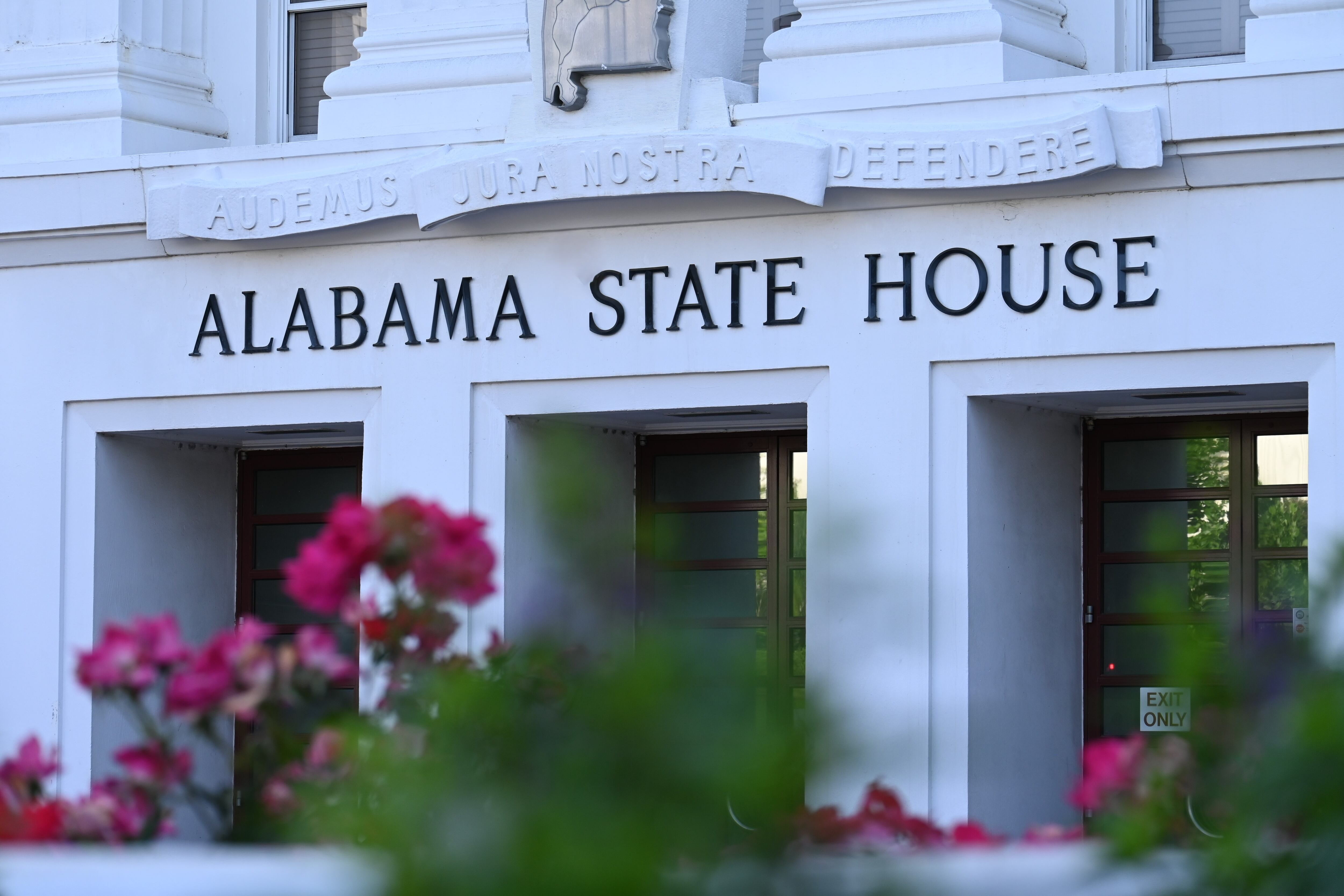
Photo caption: The front entrance to the Alabama State House as pictured on May 2, 2024, in downtown Montgomery, AL. (John Sharp/TNS)
_______
©2026 Advance Local Media LLC. Visit al.com. Distributed by Tribune Content Agency LLC.

Thanks for reading CPA Practice Advisor!
Subscribe Already registered? Log In
Need more information? Read the FAQs