



The International Consumer Electronics Show (CES) kicked off this week showcasing the latest technologies, trends, and gadgets coming to your home and your office. We were once again privileged to walk the halls to peruse everything from the practical to the extreme which we are sharing below in the categories of workstations, displays, wearable AI, and physical AI.
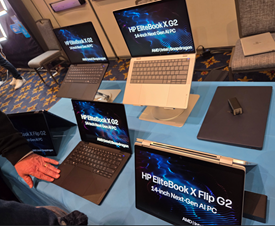
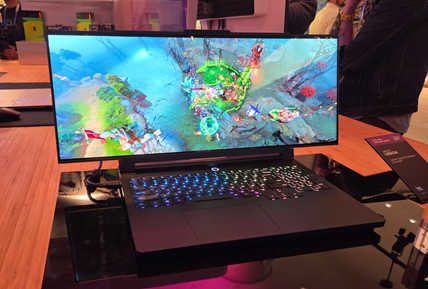
Workstations: HP earned an Innovation award for their 14” EliteBook X G2 laptop series, which simply stated had it all. Dell surprised us by bringing back the highly regarded XPS brand name (after flailing last year with the “Pro” names) and fixed some obvious ergonomic trips by bringing back the function keys and distinguishable touchpad. However, with Dell promoting a $2,049 starting price, we would definitely compare capabilities to the EliteBook and Microsoft Surface. For this year’s “bleeding edge” laptops we saw the ASUS ROG Zephyrus laptop with dual 14” screens as a cool design but with an approximately 3-hour battery life, we’ll have to wait another year. However, for our favorite “gadget” laptop, Lenovo was our clear favorite with their Legion laptops that had rollable “180 degree Corning Gorilla Glass” displays that could extend upwards on one model and on both sides on another providing more display space without any visible seam; you have to watch the video to really appreciate the expansion.
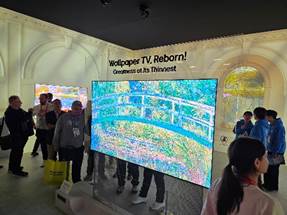
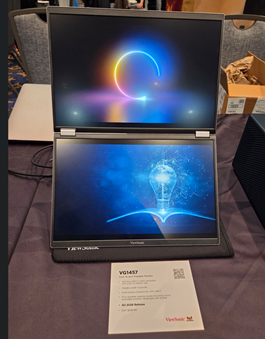
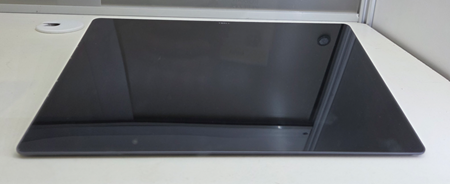
Displays: CES is known for introducing televisions and while every tech magazine talked about Samsung’s 130” MicroRGB display, it was LG’s Wallpaper TV that wowed us. On a more practical scale, ViewSonic rolled out their dual portable monitors at Pepcom’s Digital Experience and at a price point of $349 would compete with firms wanting to have triple monitors in the field instead of buying two standalone portable monitors. From a gadget perspective, Haining Toall Tech showed off an Android tablet that was 2mm thin which also won an Innovation award and showed us how miniaturized components can get!
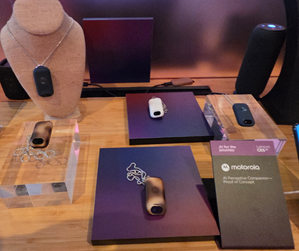
Wearable AI: No one is surprised that AI has permeated every workstation, phone, tablet, and smart eyeglass configuration, but this year we saw a push to expand AI “wearable” devices. During Lenovo’s Tech Keynote rolling out their Qira (AI everywhere) platform they demonstrated an “AI Perceptive Companion” that you would wear around your neck (…and with your permission) it would capture interactions in the world around you, including from your phone, your PC, your tablet, etc. This information, which Lenovo tabbed as “personal ambient intelligence” could then be accessed to complete the picture of your day including reminders as to what you were committed to doing and recapping your activity. And this was not a “one-off” tech, we also saw Switchbots AI Mind Clip, Razr’s Project AVA Motoko audio headsets with cameras, and improvements in the Bee (acquired by Amazon last year).

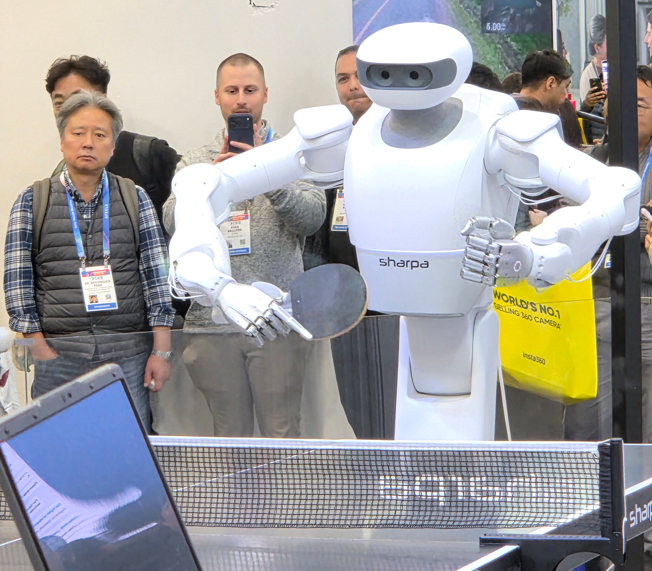
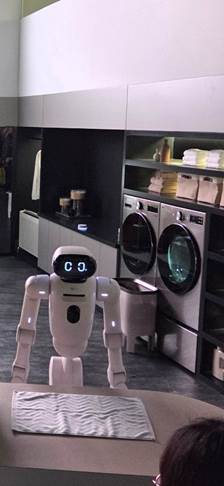
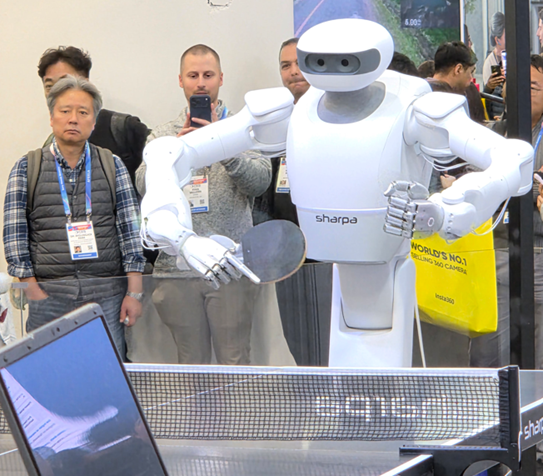
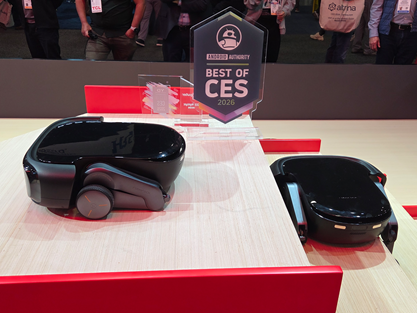
Physical AI: This was the term thrown about to describe how AI is being built into anything with robotic automation. While “humanoid” robots were prancing about everywhere, including some that could play ping pong, tennis and LG’s CLOID that could fold your laundry, the more practical automated lawn mowers, pool cleaners, and “Roomba-like” vacuum cleaners abounded. One interesting variation of last year’s Roborock vacuum (that had a mechanical arm to pick up socks off the floor) was their Saros Rover that had articulated legs that allowed it to go up a staircase and vacuum each step!
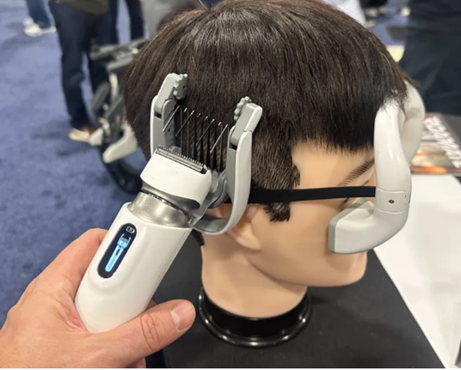
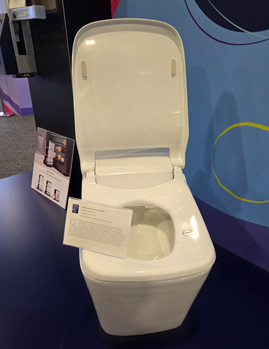
Hmmmmm: No CES is complete without experiencing those gadgets that make you pause and ask yourself if that is really “a thing.” My first entry in this category is the Glyde Smart Clipper which is an AI optimized hair trimming system app with a medieval looking headband which I honestly would be hesitant to risk even my limited hair on, but would be fun to watch. There was also the Lollipop Star, bone-conducting confectionary that apparently vibrated one of three songs though your skeletal structure while you are eating the candy. And finally, no CES is complete without an AI toilet, and YES, the VOVO Smart Toilet won an innovation award for their submission!

Roman H. Kepczyk, CPA.CITP, CGMA is director of Firm Technology Strategy for Rightworks and partners exclusively with accounting firms on production automation, application optimization and practice transformation. He has been consistently listed as one of INSIDE Public Accounting’s Most Recommended Consultants, Accounting Today’s Top 100 Most Influential People, and CPA Practice Advisor’s Top Thought Leaders.

Thanks for reading CPA Practice Advisor!
Subscribe Already registered? Log In
Need more information? Read the FAQs