



Many small business owners have chosen to run their operations as S corporations because of the favorable tax treatment. However, as shown in a new case, Mitchell, TC Memo 2025-109, 10/21/25, it’s not a free ride. You still must pay tax on the attributable share of S corporation income, even if you don’t receive any distributions.
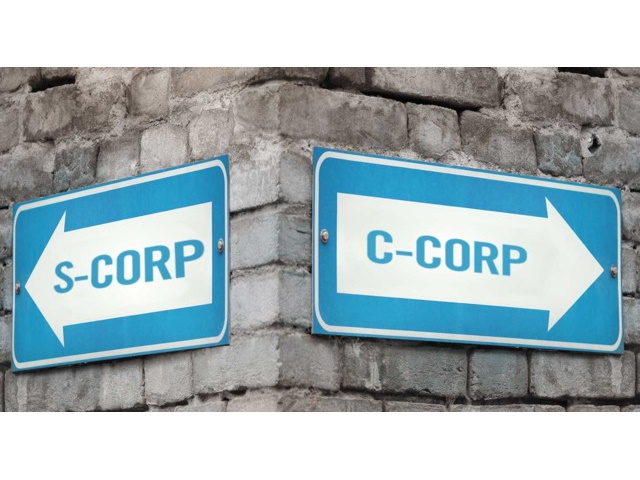
Basic premise: With an S corporation, the owners are of the business essentially taxed like partners in a partnership. In contrast, C corporation owners must cope with “double taxation” where income is first taxable to the corporation and then distributions are taxed to the owners. Distributions may take the form of compensation or dividends.
In other words, an S corporation pays no tax itself, but individual shareholders owe tax personally. All items of income and loss are passed through to the S corporation shareholders based on their ownership shares. The tax information is reported to both the shareholders and the IRS on Schedule K-1.
A corporation must elect to be treated as an S corporation, but S corporation tax treatment isn’t automatic. The following requirements must be met.
- The S corporation must be a domestic corporation.
- It can only have allowable shareholders such as individuals, certain trusts and estates.
- The S corporation can have no more than 100 shareholders.
- It must have only one class of stock.
- The S corporation can’t be an ineligible corporation (i.e. certain financial institutions, insurance companies and domestic international sales corporations).
The deadline for electing S corporation status is 2½ months after the start of the tax year. Thus, a corporation has until March 16, 2026, to make the election for the 2026 tax year. (March 15 is a Sunday.)
New case: The taxpayer and his father each owned 50% of a construction business operating as an S corporation in California. The S corp built and remodeled homes.
During 2016, the tax year in question, the S corporation received about $77,000 of income from its construction activities and properly reported this amount on the Schedule K-1 sent to the taxpayer in a timely fashion. But the taxpayer didn’t report any income from the business on his 2016 return.
The IRS assessed a deficiency against the taxpayer. Eventually, the parties wound up before the Tax Court.
The taxpayer’s main argument was that he wasn’t responsible for paying any tax on any share of S corporation income because (1) he was removed from being an officer of the S corp during the year and (2) he never received any distributions from the corporation. But the Tax Court said those two reasons are irrelevant. When all was said and done, regardless of his official position, the taxpayer owned 50% of the S corp stock and therefore is responsible for half the tax liability on the corporate income.
Bottom line: Make sure your clients understand all the tax ramifications of S corporation ownership. It’s not a one-way street.

Thanks for reading CPA Practice Advisor!
Subscribe Already registered? Log In
Need more information? Read the FAQs