


By Kurt Erickson
St. Louis Post-Dispatch
(TNS)
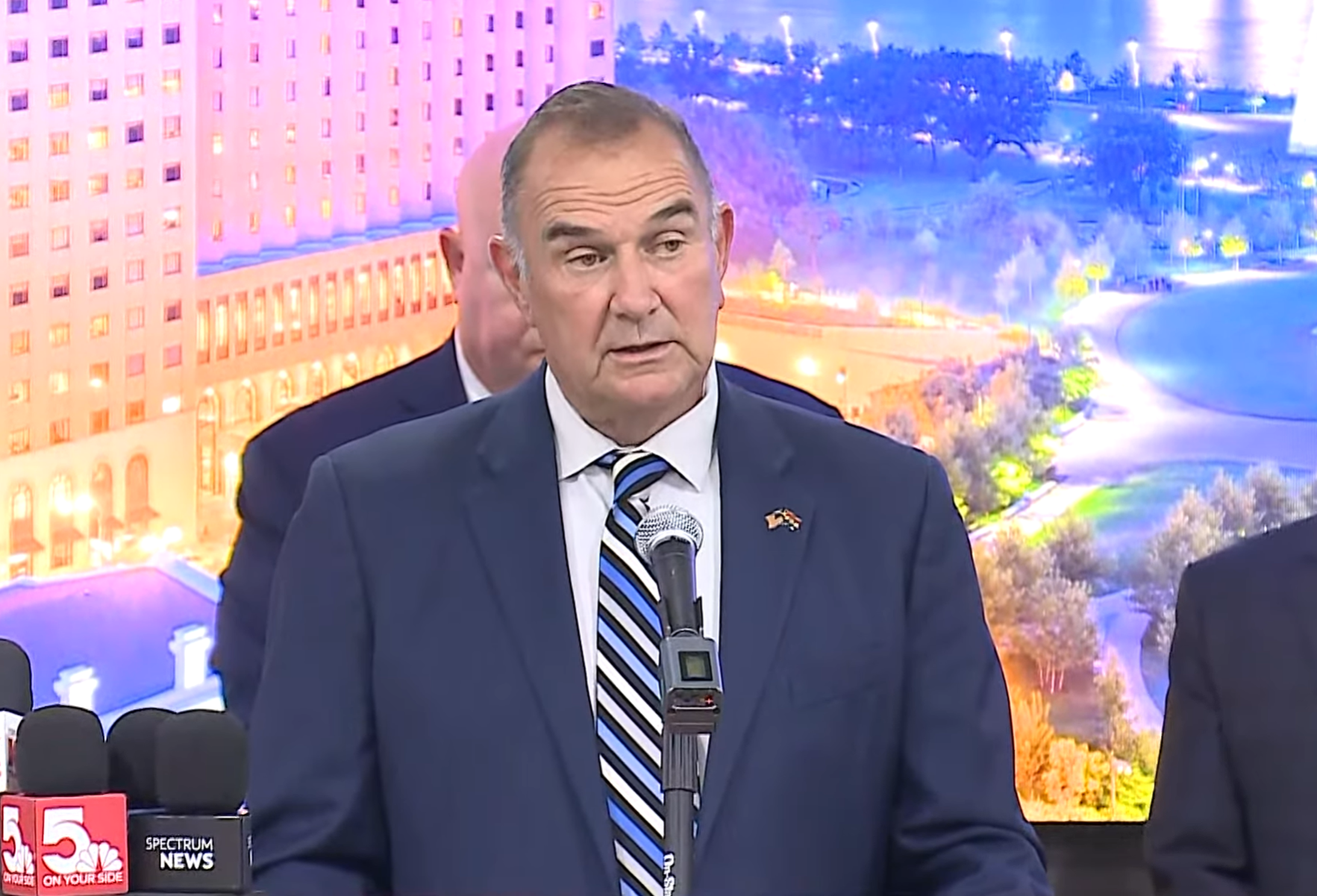
(Nov. 11) — Gov. Mike Kehoe said Tuesday he is laying the groundwork to ask Missouri voters to begin phasing out the state’s individual income tax next year.
One year after winning the race for governor on a campaign pledge to slash taxes, the Republican told the Post-Dispatch his latest plan will be unveiled when lawmakers begin filing new legislation next month in anticipation of the start of the legislative session in January.
“Missourians will have to decide if they think it is right for them and their families. All we want to do is give people a chance to take a look at that,” the governor said following a Veterans Day ceremony at the Capitol.
The governor offered no specifics about his plan but said it revolves around offsetting the $10 billion generated by the state’s 4.7% income tax rate, which represents about 63% of the state’s general revenue.
“We’re looking at what other revenue streams we can use that make sense, that is not burdensome on Missourians, but ends up putting more money in their pocket by letting them keep their income tax,” Kehoe said. “When we do, it will make sense to everybody.”
Sales and use taxes currently comprise about 24% of the state’s revenue, while corporate taxes bring in another 6.6%. A range of other taxes tally up another 6%.
Recommended Articles

Income Tax November 10, 2025
If Georgia Drops Income Tax, Will Sales Taxes Rise?


Taxes November 18, 2025
Lawmakers Debate Eliminating Georgia’s Income Tax
Kehoe’s comments align with other top Republicans heading into the start of the legislative session.
Speaking to former House Speaker Elijah Haahr on Springfield radio station KWTO Monday, House Majority Leader Alex Riley said an income tax cut plan under development will be phased in within a decade and will not send the state over a fiscal cliff.
“Everything is starting to come together. There’s a lot of energy behind it,” said Riley, R-Springfield. “I think that momentum is going to reach a real critical level.”
A GOP-led initiative to phase out the state’s income tax has been discussed for years, but has not moved forward because of concerns it could result in severe cuts to state programs.
Democrats last year pointed to the possibility of lower funding for schools, roads and public safety as a reason not to support the plan. They added that low salaries in state government have left thousands of positions unfilled.
Previous plans to cut the income tax have relied on increases in service taxes, such as real estate transactions or haircuts, running into opposition from businesses that provide those services.
Lawmakers enacted an income tax cut in 2014, over the veto of then-Gov. Jay Nixon, allowing the tax rate to fall from 6% to its current level. Two additional tax cuts, to a 4.5% rate, will take effect if general revenue growth hits targets.
In his first budget speech last January, Kehoe touted an income tax cut plan, but the measure did not advance in the Republican-controlled General Assembly.
Instead, lawmakers sent Kehoe a $420 million plan to eliminate the state’s capital gains tax, which is a levy on profits made from selling assets, such as stocks and real estate.
The loss of that revenue already is being felt across state government after Kehoe withheld more than $500 million in spending in July to account for a possible reduction of funds. Combined with a dwindling budget surplus and a massive drop in federal aid under President Donald Trump, budget watchers are predicting lean times ahead.
Kehoe on Tuesday acknowledged the effort could demand much of the Legislature’s attention next year.
“We will spend a lot of time talking about that,” the governor said.
Riley said he believes the GOP-controlled House will sign off on a tax cut. He is not sure how it will fare in the more deliberative 34-member Senate, which is controlled by 24 Republicans. Eighteen “yes” votes in the Senate would be needed to place a tax cut on the ballot in November 2026, if the measure wins House approval.
“I’m always worried about the Senate. I don’t just want to get it through the House. I want something that actually becomes the law of the land,” Riley said. “It’s not something that’s going to have universal support over there. But I do think there is a path.”
If approved by lawmakers, the measure would go before voters as part of a constitutional requirement regarding citizen input on tax issues.
The legislative session begins Jan. 8. The filing of bills begins Dec. 1.
Missouri gives ‘one of the biggest millionaire tax cuts’ this year, report says
Eliminating the capital gains tax will overwhelmingly benefit millionaires, according to a new report from the Institute on Taxation and Economic Policy, a left-leaning economic think tank.
As budget pressures loom, Missouri House approves massive tax cut
The Missouri House votes to send a capital gains tax cut to the governor even as lawmakers are hashing out the final details of the state budget.
_______
© 2025 the St. Louis Post-Dispatch. Visit www.stltoday.com. Distributed by Tribune Content Agency LLC.

Thanks for reading CPA Practice Advisor!
Subscribe Already registered? Log In
Need more information? Read the FAQs