



By Megan Guza
Pittsburgh Post-Gazette
(TNS)
Sept. 25 — The state’s highest court on Thursday ruled that Pittsburgh’s so-called “jock tax”—a 3% charge on the income of out-of-state athletes and performers who use the city’s three major sports venues—is unconstitutional, a ruling that could deliver a massive blow to the city’s already-precarious financial future.
The ruling puts at stake the more than $6 million the city anticipated bringing in from the tax in 2025 alone, and the implications could be even wider: Players and performers could seek reimbursement for the fees they’ve previously paid. All told, according to city Controller Rachael Heisler, the city has collected some $79 million in fee since the tax’s inception in 2005.
The constitutionality of the tax has been in question for more than six years: In 2019, three professional athletes—former Pittsburgh Penguin Scott Wilson, New York Islander Kyle Palmieri, and Jeff Francoeur, a Major League Baseball outfielder—sued the city, saying they had paid more than $25,000 under the fee.
The players associations for the NFL, NHL and MLB later joined the lawsuit, alleging the tax discriminated against nonresident athletes who play in Pittsburgh.
Recommended Articles

The city, though, has argued that local athletes pay a 2% school tax and 1% income tax, and so it all evens out in a “rough uniformity.” A provision in the state constitution, the Uniformity Clause, dictates that all taxpayers in the same category must be treated equally.
And that’s what the Supreme Court case focused on: Whether residents and nonresidents needed to be treated the same or if that “rough uniformity” was enough.
In his 14-page opinion, Justice David Wecht said the jock tax does violate the state Uniformity Clause. He said the city failed to “provide concrete reasons that would justify taxing nonresident athletes and entertainers more than resident athletes and entertainers.”
Nonresident athletes and performers will now be subject only to the city’s 1% income tax.
Ms. Heisler said in a statement that the city knew the ruling “was a real possibility,” and chastised city leaders for not heeding warnings last year to build a more flexible buffer into the budget.
She said the city had looked to collect $3.2 million from the tax in 2026 and $16.8 million over the next five years. While that represents “a minimal dent” in the city’s annual revenue, “the savings will need to come from somewhere.”
In April arguments, city attorney Yazan Ashrawi said that the facility-usage fee equalizes the earned income tax burden.
But the attorney representing the players associations and individual athletes, Ryan McManus, pushed back on that notion, pointing to state law that prohibits school district tax from being applied to nonresidents.
“The city tries to manufacture uniformity by pointing to the 2% tax for school districts that residents pay,” he said, arguing that it wasn’t a uniform tax because legally nonresidents don’t have to pay a school district tax.
The fee also doesn’t apply to everyone uniformly, Mr. McManus argued. It “singles out professions and treats them differently,” he said.
During the Commonwealth Court’s review of the case, the city conceded that it was indeed a tax and not a fee, which have different legal definitions. Mr. Ashrawi also said that because it is indeed a tax, athletes and performers can claim a tax credit on their filings so that they are not taxed twice on their earned income.
But athletes and entertainers haven’t been able to apply for a credit because they didn’t believe there was legal standing, Mr. McManus argued.
Further, the city’s instructions still state that the fee should not be listed on the athletes’ or entertainers’ W-2 forms. Mr. McManus said that should have been changed when the city conceded that the 3% was a tax and not a fee.
Mr. Ashrawi confirmed that “to the best of [his] knowledge” no regulations have been changed by the city because the city was waiting to see what action the courts took.
“The city was waiting on some finality on what this law may or may not look like at the end of the day,” he said.
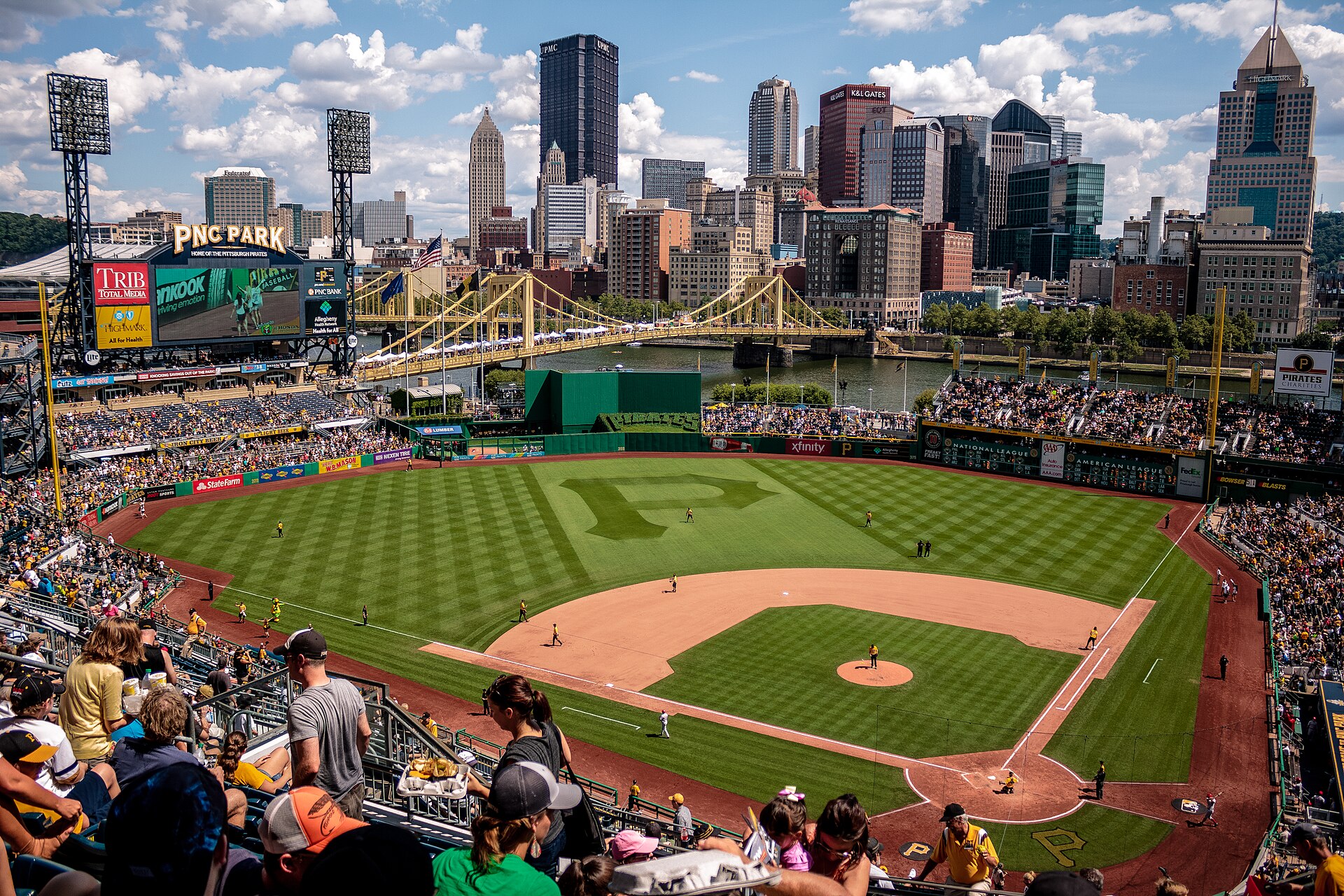
Photo caption: PNC Park, home of the Pittsburgh Pirates. (Joshua Peacock)
_______
© 2025 the Pittsburgh Post-Gazette. Visit www.post-gazette.com. Distributed by Tribune Content Agency LLC.

Thanks for reading CPA Practice Advisor!
Subscribe Already registered? Log In
Need more information? Read the FAQs
Tags: athletes, Income Taxes, jock tax, Pennsylvania, Pittsburgh, sports, Taxes