



Nearly three weeks after Axios published in a report which jobs would qualify for the so-called “no tax on tips” provision in the One Big Beautiful Bill Act, the Treasury Department and the IRS on Friday issued proposed regulations that confirm the occupations eligible for the deduction.
The guidance, however, explicitly states that “any amount received for illegal activity, prostitution services, or pornographic activity is not a qualified tip,” which could be bad news for adult content creators operating online through platforms such as OnlyFans, who rely heavily on tips from subscribers. Digital content creators do qualify under the guidance released this morning.
Recommended Articles


Under the tax-and-spending plan President Donald Trump signed into law on July 4, workers and self-employed individuals can deduct up to $25,000 they receive in qualified tips for any taxable year. The tips deduction phases out for taxpayers with modified adjusted gross income over $150,000 ($300,000 for joint filers). The provision remains in effect through tax year 2028.
Qualified tips are allowed to be deducted if they’re included on Form W-2, Wage and Tax Statement; Form 1099-NEC, Nonemployee Compensation; Form 1099-K, Payment Card and Third Party Network Transactions; Form 1099-MISC, Miscellaneous Information; or Form 4137, Social Security and Medicare Tax on Unreported Tip Income.
To claim the tips deduction, a taxpayer must include their Social Security number on the tax return.
The taxpayer also must be employed in a job that’s included on the list of qualifying occupations and receive qualified tips. The proposed regulations provide a definition of qualified and not-qualified tips, which includes the following factors:
- Qualified tips must be paid in cash or an equivalent medium, such as check, credit card, debit card, gift card, tangible or intangible tokens that are readily exchangeable for a fixed amount in cash (such as casino chips), or another form of electronic settlement or mobile payment application (excluding most digital assets) denominated in cash.
- Qualified tips must be received from customers or, in the case of an employee, through a mandatory or voluntary tip-sharing arrangement, such as a tip pool.
- Qualified tips must be paid voluntarily by the customer and not be subject to negotiation. Qualified tips don’t include some service charges. For instance, in the case of a restaurant that imposes an automatic 18% service charge for large parties and distributes that amount to waiters, bussers, and kitchen staff; if the charge is added with no option for the customer to disregard or modify it, the amounts distributed to the workers from it aren’t considered qualified tips.
- Any amount received for illegal activity, prostitution services, or pornographic activity isn’t a qualified tip.
List of qualifying jobs that receive tips
The Treasury provided a three-digit code and descriptions for the occupations listed within the proposed regulations. The proposed regulations group the occupations into eight categories:
100s: Beverage and Food Service
- 101: Bartenders
- 102: Wait staff
- 103: Food servers (non-restaurant)
- 104: Dining room and cafeteria attendants and bartender helpers
- 105: Chefs and cooks
- 106: Food preparation workers
- 107: Fast food and counter workers
- 108: Dishwashers
- 109: Host staff (restaurant, lounge, and coffee shops)
- 110: Bakers
200s: Entertainment and Events
- 201: Gambling dealers
- 202: Gambling change persons and booth cashiers
- 203: Gambling cage workers
- 204: Gambling and sports book writers and runners
- 205: Dancers
- 206: Musicians and singers
- 207: Disc jockeys (except radio)
- 208: Entertainers and performers
- 209: Digital content creators
- 210: Ushers, lobby attendants, and ticket takers
- 211: Locker room, coatroom, and dressing room attendants
300s: Hospitality and Guest Services
- 301: Baggage porters and bellhops
- 302: Concierges
- 303: Hotel, motel, and resort desk clerks
- 304: Maids and housekeeping cleaners
400s: Home Services
- 401: Home maintenance and repair workers
- 402: Home landscaping and groundskeeping workers
- 403: Home electricians
- 404: Home plumbers
- 405: Home heating and air conditioning mechanics and installers
- 406: Home appliance installers and repairers
- 407: Home cleaning service workers
- 408: Locksmiths
- 409: Roadside assistance workers
500s: Personal Services
- 501: Personal care and service workers
- 502: Private event planners
- 503: Private event and portrait photographers
- 504: Private event videographers
- 505: Event officiants
- 506: Pet caretakers
- 507: Tutors
- 508: Nannies and babysitters
600s: Personal Appearance and Wellness
- 601: Skincare specialists
- 602: Massage therapists
- 603: Barbers, hairdressers, hairstylists, and cosmetologists
- 604: Shampooers
- 605: Manicurists and pedicurists
- 606: Makeup artists
- 607: Exercise trainers and group fitness instructors
- 608: Tattoo artists and piercers
- 609: Tailors
- 610: Shoe and leather workers and repairers
- 611: Eyebrow threading and waxing technicians
700s: Recreation and Instruction
- 701: Golf caddies
- 702: Self-enrichment teachers
- 703: Sports and recreation instructors
- 704: Tour guides and escorts
- 705: Travel guides
- 706: Recreational and tour pilots
800s: Transportation and Delivery
- 801: Parking and valet attendants
- 802: Taxi and rideshare drivers and chauffeurs
- 803: Shuttle drivers
- 804: Goods delivery people
- 805: Personal vehicle and equipment cleaners
- 806: Private and charter bus drivers
- 807: Water taxi operators and charter boat workers
- 808: Rickshaw, pedicab, and carriage drivers
- 809: Home movers
Special rules for a specified service trade or business
The proposed regulations state that “an amount received by an individual in the course of a specified service trade or business (as defined in section 199A(d)(2) of the Internal Revenue Code) is not a qualified tip. If the individual performs services as an employee, the relevant trade or business is the trade or business of the employer in the course of which the employee is performing services. Thus, an amount received by an employee performing services for the employee’s employer in the course of a specified service trade or business operated by the employee’s employer is not a qualified tip, regardless of whether the trade or business or an owner of the trade or business is eligible for a deduction under section 199A, and regardless of whether the employee is performing services in an occupation listed [above] or whether that occupation is a specified service trade or business.”
According to Drake Software, a specified service trade or business is defined as “any trade or business providing services in the fields of health, law, accounting, actuarial science, performing arts, consulting, athletics, financial services, brokerage services, or any other trade or business where the taxpayer receives fees, compensation, or other income for endorsing products or services, for the use of the taxpayer’s image, likeness, name, signature, voice, trademark, or any other symbols associated with the taxpayer’s identity, or for appearing at an event or on radio, television, or another media format. In addition, the trades or businesses of investing and investment management, trading or dealing in securities, partnership interests, or commodities are specified trades or businesses.”
Still confused? The IRS provided a few examples that may (or may not) help clarify the rules:
Example 1: Self-employed Comedian C performs a stand-up comedy routine at Performance Venue V. The audience members at Performance Venue V give Comedian C cash tips after the performance. The cash tips received by Comedian C are not qualified tips because the tips are received in the course of Comedian C’s trade or business in the performing arts, which is a specified service trade or business. Such cash tips are not qualified tips notwithstanding the fact that Comedian C’s occupation (comedian) is included in the Treasury Tipped Occupation Code (TTOC) category of “Entertainers and performers,” on the list of occupations that customarily and regularly received tips on or before December 31, 2024.
Example 2: Pianist P is an employee of Hotel H. Hotel H does not operate a trade or business that is a specified service trade or business. Pianist P plays the piano in the lobby of Hotel H. Hotel H’s patrons often leave cash tips in a jar on the piano for Pianist P. The cash tips received by Pianist P are qualified tips, even though the tips are received for services in the performing arts, which is a specified service trade or business, because Pianist P is performing services as an employee, the employer (Hotel H) is not operating a specified service trade or business, and Pianist P’s occupation (piano player) is included in the TTOC category of “Musicians and singers,” on the list of occupations that customarily and regularly received tips on or before December 31, 2024.
Example 3: Bartender B is an employee of Company R. Company R does not operate a trade or business that is a specified service trade or business. Theater T enters into a contract with Company R to provide bartending services during the intermission of certain live performances occurring at Theater T. During the intermissions, Bartender B receives cash tips from patrons at Theater T. The cash tips are qualified tips because Bartender B is performing services as an employee, the employer (Company R) is not engaged in a specified service trade or business, and the employee’s occupation (bartender) is included in the TTOC category of “Bartenders” on the list of occupations that customarily and regularly received tips on or before December 31, 2024.
Treasury and the IRS are requesting comments from the public within 30 days to be made through Regulations.gov. Complete instructions on submitting comments can be found in the proposed regulations. Comments on the proposed regulations are due by Oct. 23, 2025.
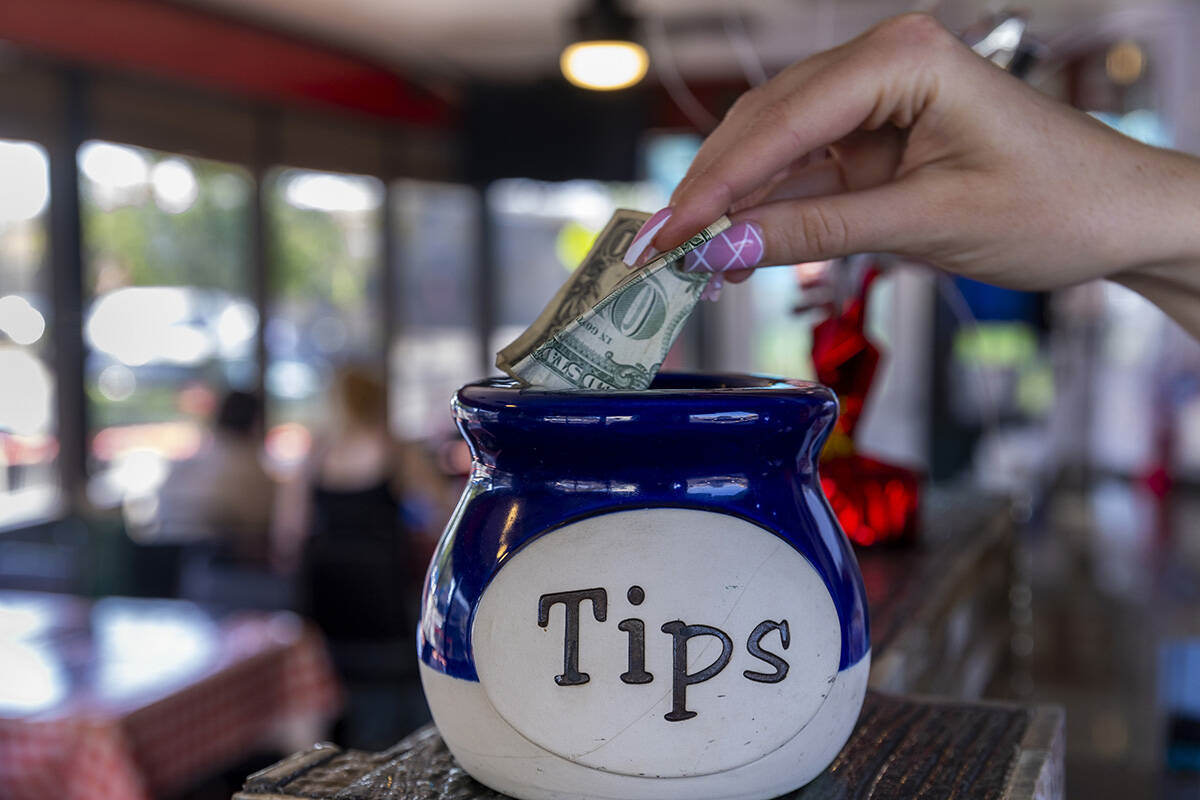
Photo caption: A dollar goes into the jar at the Water Street Pizzeria on Tuesday, May 20, 2025, in Henderson, NV. (L.E. Baskow/Las Vegas Review-Journal/TNS) @Left_Eye_Images

Thanks for reading CPA Practice Advisor!
Subscribe Already registered? Log In
Need more information? Read the FAQs


sheree Radakovich September 22 2025 at 1:54 pm
How can I print an article?? Thanks I am a member