



The accounting profession is undergoing a profound transformation, driven by rapid advancements in technology, particularly artificial intelligence (AI) and automation. The 2025 Intuit QuickBooks Accountant Technology Report, drawing insights from a survey of 700 accounting professionals, paints a clear picture: Firms that embrace these technologies are not just surviving; they’re thriving and evolving from traditional bookkeepers to strategic advisors.
“This is the third year we’ve done the report,” said Jamerlyn Brown, principal communications manager and a member of the Data Communications Team at Intuit. “The results show a clear mindset: If accountants and firms do not continue to adopt new technology, the failure to stay current or on the cutting-edge could actually prevent them from achieving their growth goals.”
Brown was a recent guest of On the Books, a bi-weekly podcast discussing all-things QuickBooks hosted by Intuit’s Ted Callahan, director of partner strategy and engagement, and Jessica McCracken, a member of Ted’s partner strategy and engagement team. Here is what Brown said on the goals and insights of the report.
“We wanted to understand the hurdles to effective integration of new tech in the accounting industry,” said Brown. “Two of the biggest barriers identified by our respondents were actually resistance to change from clients and from within their firms. So while technology is advancing, it’s clear that tackling the human side of change is just as important.”
AI and Automation: The New Pillars of Productivity
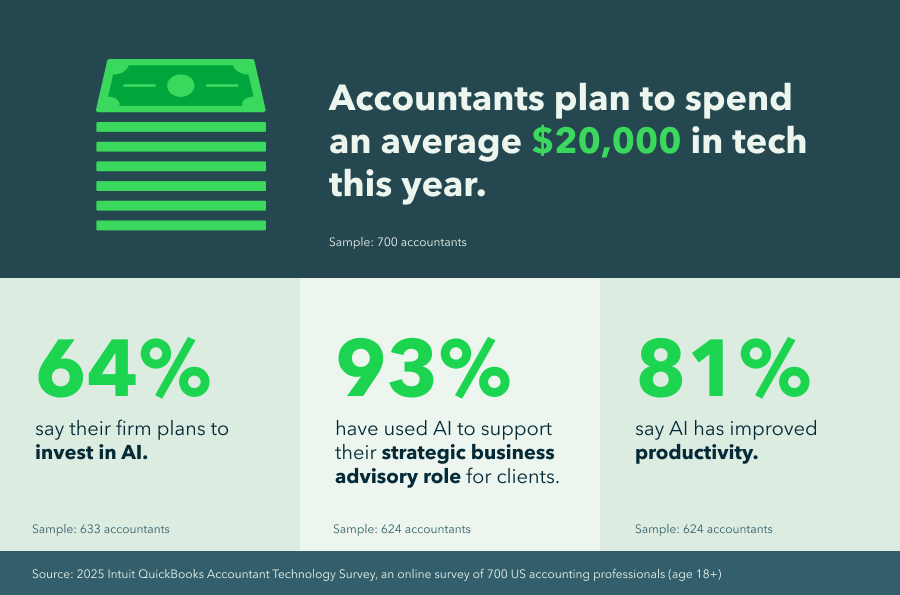
One of the most noteworthy findings from the report is the widespread adoption and overwhelmingly positive impact of AI and automation. Nearly half of all accountants (46%) are now using AI on a daily basis, and more than 8 in 10 report that AI boosts their productivity and eases mental load.
“While AI is definitely helping to alleviate some of the mental load that accountants face doing day-to-day work, two out of three respondents still reported that they struggle with the amount or complexity of the technology required to do their job at least weekly,” said Brown.
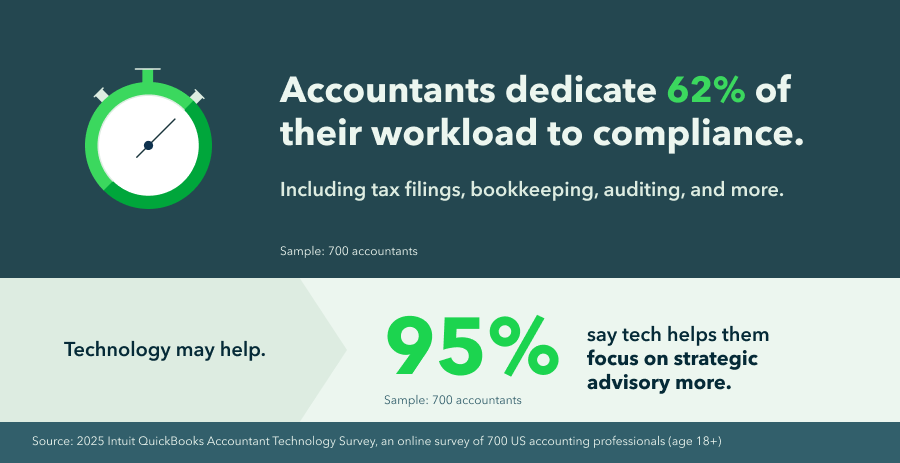
Automation, in particular, has become a near-universal practice, with 95% of accountants leveraging it. The benefits for firms and their clients are tangible and far-reaching, including improved data accuracy, enhanced workflow efficiency, and substantial time savings.
AI is being strategically used to elevate both client services—from streamlined data entry to sophisticated financial forecasting—and internal operations, such as efficient invoicing and proactive client portfolio management. Based on the report, a staggering 93% of professionals are now harnessing AI to deliver higher-value strategic business advisory services, moving beyond mere compliance.
Investing in Innovation: The Path to Growth
Firms are not just passively observing this technological shift; they are actively investing in it as well. On average, firms plan to allocate a significant $20,000 toward technology in the coming year. The focus of this investment is clear: 64% intend to invest in AI and 45% are prioritizing further automation. This approach underscores a strong belief within the profession that neglecting new technology will inevitably hinder growth.
Despite the clear benefits, the journey isn’t without its hurdles. Accountants face several challenges, including managing a growing array of digital tools, navigating high subscription costs, and ensuring their staff possesses the necessary tech skills. However, the report highlights a strong desire for better integration of existing solutions, with 89% of respondents believing integration could be improved to keep growth goals on track. As a result, standardizing tech stacks is emerging as a critical strategy, with 98% recognizing its benefits.
“A majority of respondents said that their firm has a set of preferred digital apps, but they still have some room for flexibility to meet different clients’ needs,” said Brown. “On the other hand, about 1 in 3 reported that they actually stick to a really strict set of apps.
“Standardization is what we’re talking about,” she continued. “Nearly all of our respondents saw some benefit to standardizing, which could span from greater consistency and accuracy in reporting, easier client onboarding, increased client satisfaction, and even a better chance of meeting the demands of growing client needs. What’s really fascinating is that respondents believe that adhering to standardized tech solutions is so crucial that 6 in 10 respondents support the idea of standardized firms severing ties with clients who resist adopting those preferred digital platforms.”
The Rise of Strategic Advisory and Talent
The report indicates a significant shift in client demand; for example, 79% anticipate growth in strategic advisory services. Technology is the enabler of this evolution, empowering firms to reduce the time spent on routine compliance tasks and, in turn, create the capacity to offer more insightful, higher-value advisory services.
The increasing tech adoption among clients is also a key driver, pushing accountants to deepen their expertise. High-value clients, in particular, are often tech-forward, expecting their accounting partners to be equally adept.
Addressing a persistent talent shortage and a growing tech skills gap remains a top priority. In fact, 75% of firms are intensifying their focus on technology skills when evaluating new hires. Outsourcing also continues to be a vital strategy for 81% of firms, helping them streamline operations and concentrate on delivering those high-value services that clients increasingly demand.
Bringing it all together
The 2025 Accountant Technology Report makes it clear: The future of accounting is inextricably linked to technology. AI and automation are not just tools; they enable accounting professionals to enhance productivity, expand strategic advisory services, and drive greater client success. While challenges exist, the commitment to technological advancement and a forward-thinking approach will be very important for successful firms.

Thanks for reading CPA Practice Advisor!
Subscribe Already registered? Log In
Need more information? Read the FAQs