



By Juliet Schulman-Hall
masslive.com
(TNS)
As President Donald Trump signed into law his “One Big Beautiful Bill” on July 4, higher education leaders raised alarm about the law’s effects on students and educational institutions.
While the bill has gained news attention for its cuts to Medicare and steep increase to the national debt, the bill also encompasses considerable changes to student loans and tax increases on certain college and university endowments.
The bill comes at a time when the Trump administration has waged a war with institutions like Harvard University, cutting back federal funding and research grants and even going after its international students.
While Harvard and the federal government are still in talks about a deal, the impact of the newly signed bill will only continue to hurt the institution.
Here are the five things that are part of the bill that affect higher education.
Decreased access to federal student loans
Graduate students are especially impacted by changes to loans under the bill, according to Dr. Emmanual Guillory, senior director of government relations at the American Council on Education.
As part of the bill, the federal Graduate PLUS loan program was eliminated, which helps graduate or professional students fund their education.
The bill also sets a new $100,000 limit for how much a graduate students can borrow. Law and medical students now have a cap of $200,000 they are able to borrow.
The limits will particularly hurt medical schools where the federal government largely provides subsidies so that students are able to attend the institution and become doctors.
Without the subsidization, it will create a pain point for the medical profession that is already experiencing a shortage of doctors, said Jeremy Young, senior advisor for strategic initiatives at the American Association of Colleges and Universities
“It’s going to be hard for some of these areas, particularly medical schools, to fill all of their student positions without additional federal support,” Young said.
Loan limits have also changed depending on whether someone is a first-time or second-time graduate student or a professional degree student, Guillory said.
A separate program, the Parent PLUS loan program, which allows parents of undergraduate students to take out loans for educational expenses, is being capped at $65,000. Families previously could borrow up to the cost of attendance.
Cost increases for borrowers
Popular income-driven student loan repayment options—including ICR, PAYE and SAVE—are eliminated in the new law. The law only allows for two repayment plans: a standard plan for repayment in 10 to 25 years and a repayment assistance plan that allows for student loan forgiveness after 30 years of payments—far longer than the 20 to 25 years of most current plans, according to Forbes.
Forbes also reports that advocates believe current borrowers will experience higher monthly payments after the transition.
“Having to pay longer means that students have to pay more,” Guillory said.
The cap and other limits to loan programs set forth in the bill will likely force students to seek loans from the private market, where there are higher interest rates, he said.
While the intended impact of Congress is to create “downward pressure” to have institutions reduce their cost of attendance and to bring down the federal student loan debt, it may not have that effect, according to Guillory.
Unless institutions actually change their pricing, what will likely happen is that people will have to substitute federal loans with private loans, he said.
“In a lot of ways, this makes higher education costlier,” Guillory said.
“How else will they get what they need if you reduce the amount of federal loans?” he said.
A jump in taxing endowments
The wealthiest private institutions, like Harvard and the Massachusetts Institute of Technology, are going to have to pay more due to the size of their endowment under the new bill.
Beginning in 2017, there was a federal excise tax established on the endowments of private colleges and universities with a flat rate of 1.4% for those with endowments of $500,000 or more per student.
For the wealthiest institutions, like Harvard, the 1.4% will jump to 8%.
The ceiling of 8% is applied to universities with endowments of more than $2 million per student. It is significantly less than what was initially proposed by the House, which was 21%.
Harvard has an endowment of over $53 billion, according to the institution. Institutions like Harvard use endowments each year to help pay for financial aid and other expenses.
In the tiered system, other institutions could only see a 4% increase if their endowment is between $750,000 and $2,000,000 per student.
Institutions with endowments between $500,000 and $750,000 will only see a 1.4% tax.
Some schools escape the tax increase
Even if some colleges or universities have higher endowments for their size, some will be exempt from the increase if they have fewer than 3,000 tuition-paying students and more than 50% of those students are from the U.S.
That includes the Massachusetts institutions of Amherst College and Williams College.
It also includes a number of religious colleges, according to Young from the American Association of Colleges and Universities.
Among them is Hillsdale College in Michigan, a conservative religious institution with ties to the Trump administration and a large endowment that has fewer than 3,000 students, Young said.
Expanding Pell grant use—with continued underfunding
Students will now be able to use Pell grants to pay for non-degree, short-term job-training programs, which must be accredited.
Pell grants—which don’t have to be repaid like federal loans—were generally available for students seeking two- or four-year degrees. Now accredited certificate and non-degree programs are included
For leaders at community colleges, offering certificates and non-degree programs is a positive action.
“It is a good bipartisan development. The funding will offset the opportunity cost and give students a leg up in training for new jobs,” Pam Eddinger, president of Bunker Hill Community College, said in a statement to MassLive.
She said community colleges know how to provide “rigorous and accelerated training to fill a need” and to launch students into a degree and career advancement.
While Young also said the expansion is a largely positive move, Congress didn’t appropriate enough long-term funds to go along with it, making the “funding crisis in the Pell system worse,” he said.
“That was already present before the bill was passed. It’s just they made it worse by expanding eligibility without appropriating long term additional funds. But by appropriating short term additional funds, they kick the can down the road,” Young said.
“There’s going to need to be another conversation about funding Pell next year if they want this to actually work,” he said.
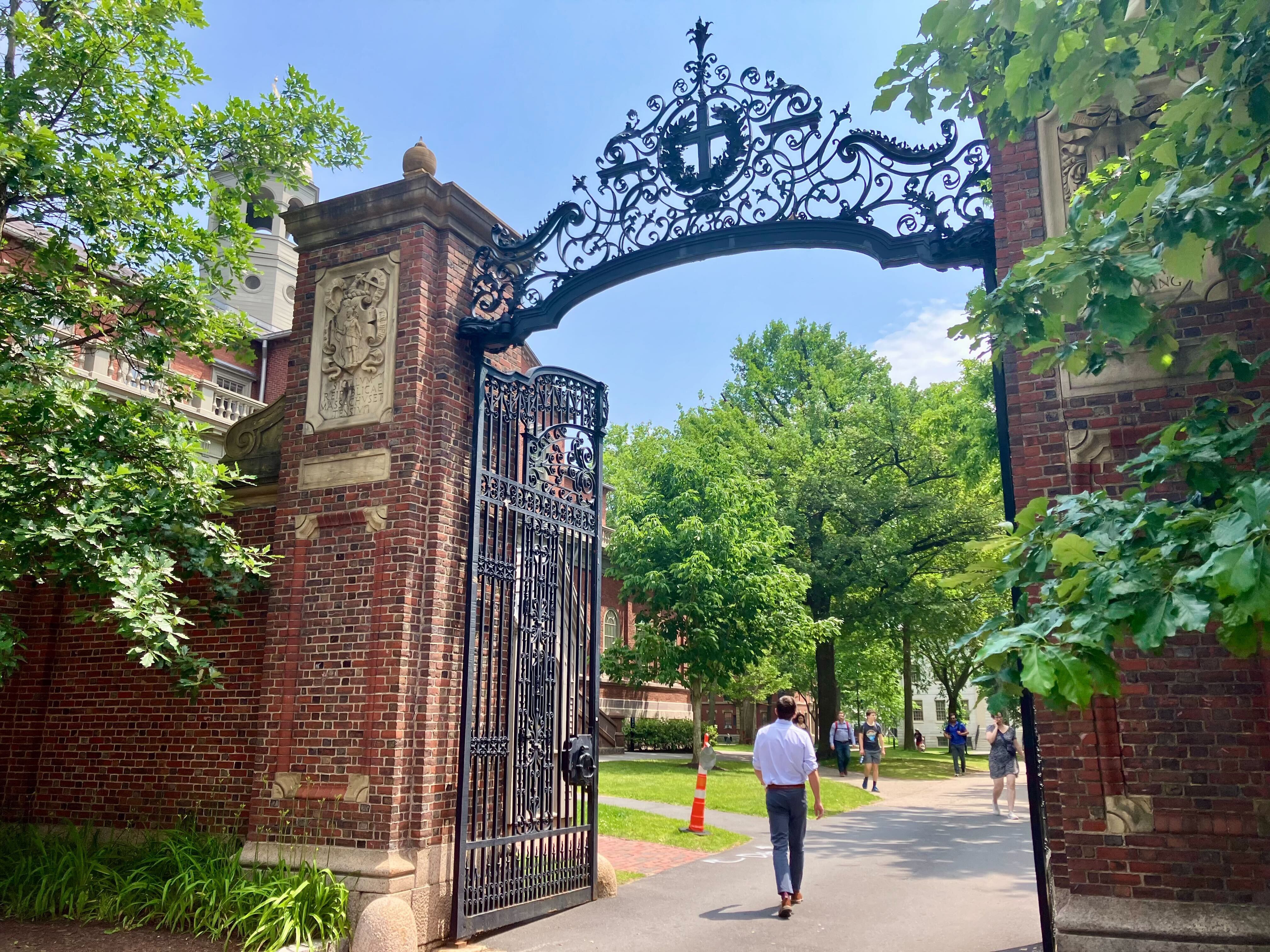
Photo caption: A gate entrance to Harvard Yard at Harvard University. (Hadley Barndollar/TNS)
©2025 Advance Local Media LLC. Visit masslive.com. Distributed by Tribune Content Agency LLC.

Thanks for reading CPA Practice Advisor!
Subscribe Already registered? Log In
Need more information? Read the FAQs