
Technology
Merchant Account Options for Small Businesses
Over the past several decades, credit card usage has grown steadily, both in the number of transactions and the dollar volume.
Mar. 03, 2012
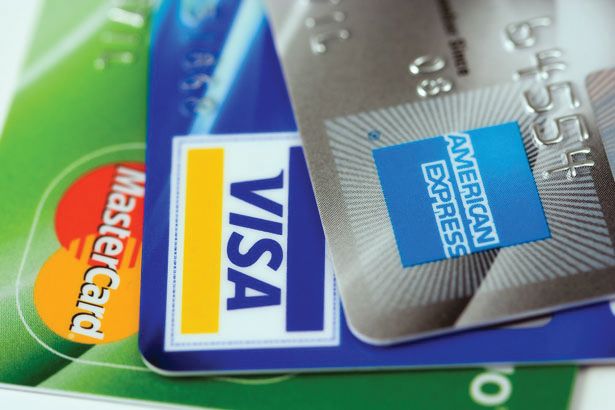
Over the past several decades, credit card usage has grown steadily, both in the number of transactions and the dollar volume. According to the GAO (GAO-10-45, Nov 19, 2009), between 1993 and 2007, Credit Card usage grew from 11 Billion transactions, representing $620 Billion dollars to 29 Billion transactions, representing $1.9 trillion. The following data collected by www.creditcards.com shows the dollar volumes by card issuer during 2010, totaling nearly $2.9 trillion.
[Insert Table 1]
In addition to the growth in volume of credit card transactions, we’re seeing an explosion of new technologies that businesses can choose from to allow their customers pay for goods and services.
It wasn’t long ago that debit cards, prepaid credit cards, rewards/gift cards, were unheard of, and the pace of adoption of these new payment methods is mind boggling. So with new customer expectations and new technology platforms, small business owners have several options for how they will collect money from their customers.
Merchant Accounts
A merchant account is relationship a business creates with a bank that underwrites the risks and provides transaction services to merchants. When you set up a merchant account, you often don’t talk directly with a bank, but instead to an independent reseller or merchant processing company such as First Data, or to an Internet gateway such as Authorize.net. However, there is always a bank behind a merchant account. Banks are always involved with merchant accounts because credit card transactions always involve an EFT transfer of funds between banks.
How Credit Card Transactions are Processed
If the purchaser uses a credit card, the transaction creates a transfer from the purchaser’s credit card account at their issuing bank, to the merchant’s bank, resulting in a higher balance due from the customer to their bank. Similarly, if the purchaser uses a debit card, the transaction creates a transfer from the purchaser’s checking account at their issuing bank, to the merchant’s bank, resulting in a lower balance in their checking account.
Of course there are fees involved, and there are other parties involved such as card associations (Visa, American Express, MasterCard, Discover, and others), the processors (First Data, Payment Tech, and others), and the internet gateways (Authorize.net, PayPal, and others), all of whom provide services to authorize and process transactions. So to expand on the example above, when a purchaser uses a credit card, the transaction is swiped on a POS terminal or entered into an eCommerce shopping cart. That initiates a secure communication with an internet gateway and/or a processor, which, if the transaction is approved will initiate the transfer from the purchaser’s credit card account at their issuing bank to the merchant’s bank. And the gateway and/or processor charges a fee for their services, usually a monthly fee, possibly combined with transaction fees.
[Figure 1 How Credit Cards Work]
How to Obtain a Merchant Account
There are several options for obtaining a merchant account. The best place to start is to talk with your bank because you will probably get the best discount rate (a fee you pay for each transaction, varying from 2%-4% or so) by working directly with the bank who knows your business account history. Assuming that’s an impressive story, your bank will probably bend over backwards to help you obtain a merchant account. However, if that doesn’t work, you should contact one of the many merchant processors or gateway companies that I’ve listed below. Or, you can search the Internet for Merchant Gateways and you’ll find several options.
Note that you’ll be asked for several items to qualify for an account. You’ll need to provide your expected average credit card sale amount, the total expected revenue from credit card sales, and information about whether you’ll directly swipe cards (card present transactions), or if you’ll be accepting credit cards over the phone or on your Web site (card not present transactions). This information is used to determine the “risk” for your account, and in turn it determines the rates and fees you’ll be required to pay for credit card transactions.
Once you’re set up, you should be able to start accepting credit cards within a week or so from your application date.
If your business is unable to qualify for a merchant account, or if you just don’t want to, there are still several ways of accepting credit cards without a merchant account. The fees are higher, but if only a small number of sales are by credit card, you might not really need to set up your own merchant account. In that case, there are several options including Google Checkout (www.google.com), PayPal (www.paypal.com), or Square (www.squareup.com).
Handling Credit Card Transactions in the Accounting System
In my January 2012 column (www.CPAPracticeAdvisor.com/10452665), I introduced the concept of “Lego Mastery.” The process of integrating eCommerce shopping carts and merchant accounts into the accounting system is a perfect example of why accountants and consultants need to develop Lego mastery skills that prepare us to identify the right pieces of the (“chunkified”) business processes and connect them together to make a cohesive, efficient system for the business.
Dealing with credit card payments from customers requires additional setup, workflows, and reconciliation steps for the bookkeeper. Depending on which merchant account you select, you’ll add different steps to the bookkeeping work flow. For example, if you use QuickBooks, and you use the Intuit Merchant Service for QuickBooks, you’ll experience a fairly streamlined process for the bookkeeper that is well-integrated from the Sales Receipts or Payment transactions all the way through to the bank deposits and bank reconciliation. However, if you have a Web Store shopping cart that is not compatible with Intuit’s gateway, you may have separate workflows for phone orders and Web store orders.
Similarly, if you use Peachtree and Sage Payment Solutions, you’ll experience streamlined processing of credit cards and deposits in Peachtree. And of course, integrating non-Sage Payment gateways may also present workflow challenges for the bookkeeper.
The issue of separate workflows for phone vs. Web store orders, and the use of gateways not directly integrated with the accounting software could cause a significant challenge for your staff, so by all means, look deeply at this issue before selecting your Web Store shopping cart solution and your payment gateway.
No matter which merchant solution you decide to go with, adding credit card payment options for your customers should result in a dramatic increase in customer satisfaction, reduced accounts receivable balances, and increased revenues. Even if you don’t get your own merchant account, it’s worth finding the right solution that makes it possible for customers to pay you by credit card.
If you’re concerned about the costs of a merchant account, note that it is a very competitive marketplace so check out the merchant account providers’ websites. Each business has different needs and by researching carefully, you should be able to find a great solution at a reasonable cost.
Here is a short list of Payment Gateways and Merchant Processors to help you begin your research:
CCBill (www.ccbill.com)
CCNow (www.ccnow.com)
Google Checkout (http://checkout.google.com)
Intuit Payment Solutions (http://payments.intuit.com)
Kagi (www.kagi.com)
PayPal (www.paypal.com)
ProPay (www.propay.com)
RegNow (www.regnow.com)
Sage Payment Solutions (www.sagepayments.com)