
Technology
The Rise of Ultrabooks: Top Technology Initiatives
Back in 2007, the EEE series from ASUS, the netbook line, was released. It was exactly what people needed at the moment: something small, portable, light, and it could run Windows or Linux. Even if it was slow, all they wanted to do were basic computing tasks. After the release of the EEE series netbook, people instantly wanted more performance out of this new line of laptops.
Feb. 08, 2012
Back in 2007, the EEE series from ASUS, the netbook line, was released. It was exactly what people needed at the moment: something small, portable, light, and it could run Windows or Linux. Even if it was slow, all they wanted to do were basic computing tasks. After the release of the EEE series netbook, people instantly wanted more performance out of this new line of laptops.
To handle the need for performance, the processor for the netbooks would just keep getting a small performance boost each release before finally get a second processing core. This helped, if you wanted to run Windows XP on one of the devices, but with the release of Windows 7, XP was to be no more. If there is any indication that netbooks had an impact on the computer world, the release of Windows 7 Starter edition was a good show of that. This version of Windows was built to limit how many open applications a user could have. To get around this, the computer industry would have to redesign the compact laptop industry again. Thus, the entry of Ultrabooks. Ultrabooks typically have a lighter weight of less than three pounds, a solid state drive (SSD), and have the ability for an instant on.
Before jumping into Ultrabooks too far, one other computing revolution needs to be mentioned: the rise of the tablet. Whether you consider the market leader Apple with their iPad and iPad 2, other notable business competitors like the Samsung Galaxy, Rim Playbook, the Motorola Xoom, or the personal tablet offerings like the Amazon Kindle Fire, each tablet has features that make them useful tools. Instant on, touch screen navigation, web browsing, and the ability to answer email, take a few notes and consume content of all kinds have made the category of tablets a notable force. In preparing this article for you, research did not produce reliable numbers of tablets delivered from different providers, but Apple has sold well over 50 million units, Samsung has sold over 10 million units and Amazon has sold over 5 million units.
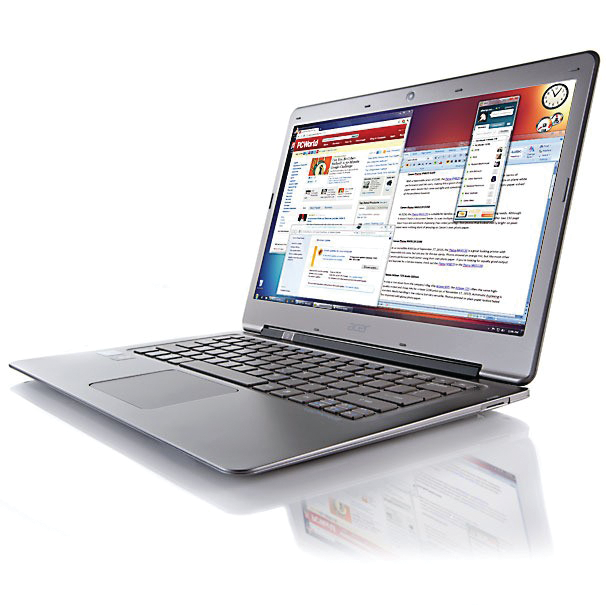
What type of computers are Ultrabooks, and why are they important? At the 2012 International CES show, over 25 new Ultrabooks were shown. Older laptops that fit in the Ultrabook format and type are the MacBook Air and Samsung Series 9 type of laptops. They are very light, very thin, and most important they have a full processor, not an Intel Atom. With the advances in processor technology, companies can now have extremely thin laptops without giving up on performance.
Steve Jobs made sure everyone knew you could get a compact laptop without losing the performance with the 2011 MacBook Air 2 model refresh. Samsung jumped on the boat with Apple when they released their Series 9 laptop in March 2011 which had a thinner thickest point but weighed in at a half of a pound heavier. ASUS revealed at Computex their entrance into the market with their yet to be released UX21 model, which is now the smaller unit in their Zenbook line released in October 2011. The hands-on performance with the ASUS Zenbook is on par with everything the MacBook Air has to offer with its thinness or form factor as well as with its speed. ASUS goes on to say that with the specs on the model, you should be able to jam a Core i7 in the form factor.
What company offerings were available before and after CES?
1) Models introduced before CES
a) Acer Aspire S3
CPU:2nd generation Intel® Core™ i5, i7 processor
Screen Size:13.3”, 1366 x 768
Weight:3.0 lbs.
Responsiveness:Instant On*, Instant Connect
Graphics:Intel HD Graphics 3000
Battery Life:Up to 6 hours
Operating System:Windows® 7
b) ASUS Zenbook (the old UX21/31)
CPU:2nd generation Intel® Core™ i3, i5, i7 processor
Screen Size:11.6”, 1366 x 768
Weight:2.42 lbs.
Responsiveness:S4®KBD (< 7 seconds)
Graphics:Intel HD Graphics 3000
Battery Life:Up to 5 hours
Operating System:Windows® 7
c) Lenovo IdeaPad u300s
CPU:2nd generation Intel® Core™ i3, i5, i7 processor
Screen Size:13.3”, 1366 x 768
Weight:2.9 lbs.
Responsiveness:S4®KBD (< 7 seconds)
Graphics:Intel HD Graphics 3000
Battery Life:Up to 8 hours
Operating System:Windows® 7
d) Toshiba Portege Z830 – the world’s lightest ultrabook as of this writing
CPU:2nd generation Intel® Core™ i3, i5, i7 processor
Screen Size:13.3”, 1366 x 768
Weight:2.45 lbs.
Responsiveness:S4®KBD (< 7 seconds)
Graphics:Intel HD Graphics 3000
Battery Life:Up to 8 hours
Operating System:Windows® 7
e) HP Folio
2) Ultrabooks – Good designs to consider introduced at CES
a) Sony Vaio Z series –8 Gb ram. DVD multi monitors. High graphics in separate but included box. Can have dual ssd drives 64 128 or 256 for max disk of 500gb. Includes true lightpeak, not thunderbolt . Weighs less than the Mac Air at about same price at high end.
b) Samsung Series 9 – 13.3 inch Ultralight, USB 3.0, SD, Micro HDMI, 128SSD, $1300
c) Lenovo YOGA, folds over and doubles as a tablet
d) HP Envy 14 SPECTRE – Gorilla glass 2.0 – $1400
With this background, consider the following computer classifications:
1) Ultrabook
2) Netbook
3) Tablet
4) Notebook
Note that the Ultrabook can do most things that a notebook can do. It operates at a similar speed because of the SSD and processors used, has only a slightly smaller screen, and can do pretty much do everything a notebook can do. As a firm strategy, consider how long notebooks will make sense to purchase, particularly if an Ultrabook is used in conjunction with some of the new portable monitors such as the Samsung LD220G, Toshiba Mobile Monitor and the MMT Field Monitor Pro or Monitor2Go.
Some Ultrabook models have been demonstrated that have touch screens that can fold over to become a tablet. Consider the size and weight of a tablet plus a mechanical keyboard when compared to an Ultrabook. Tablets will have approximately the same weight, operate much slower and not have nearly as much flexibility as an Ultrabook. In today’s market, they will have similar price. It is safe to say, in my eyes, netbooks should be counting down their days soon. The only life lines for netbooks are their price point. If you want the best performing netbook, it will still cost you $400-500, although I’m enjoying my $300 Google Chromebook immensely. To users considering netbooks I would say: save up the extra money and buy the cheapest Ultrabook. Ultrabook computer prices will have to come down once other companies start entering the market and that will happen sooner than you think.