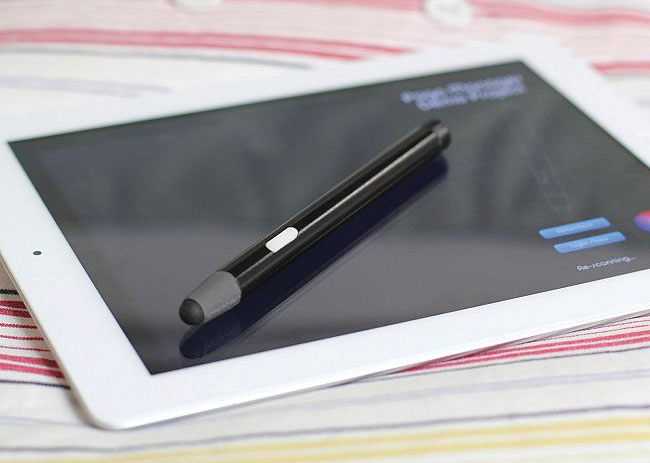




Technology tools enable us to serve our clients better, work fewer hours to accomplish the same task, net more revenue to our firm and shareholders, and help with world peace. OK, maybe not that last part, but pretty much everything else can be accomplished if technology is managed right. In most columns, a single focus is chosen, but for this article, we are going to surf the technology to watch or that is coming soon. 2012 is a notable hardware year, setting us up for software gains in the coming years.
Low level changes
The following items will not have an immediate impact on your use of technology, but taken together, will make for notable changes in the speed and usability of hardware produced by all vendors. The fundamental building blocks of hardware are taken together to construct a whole solution.
Items to watch include:
- Unified Extensible Firmware Interface (UEFI) – The Basic Input Output System (BIOS) specification has been with us for more than three decades. Windows 8 will see BIOS, as we know it, go away and the emergence of UEFI. UEFI is essentially the next generation of BIOS. It’s a system that potentially offers new and more advanced control of the boot-up process.
If your PC is less than two or three years old, chances are that it already has UEFI capabilities. Chances are very good that you didn’t know that, because the hardware manufacturers have been carefully keeping the old BIOS interface as your default boot system. The Unified Extensible Firmware Interface (UEFI) is a specification that defines a software interface between an operating system and platform firmware. UEFI is a more secure replacement for the older BIOS firmware interface, present in all IBM PC-compatible personal computers, which is vulnerable to bootkit malware.
The original EFI (Extensible Firmware Interface) specification was developed by Intel. In 2005, development of the EFI specification ceased in favor of UEFI, which had evolved from EFI 1.10. The UEFI specification is being developed by the industry-wide organization Unified EFI Forum. UEFI is not restricted to any specific processor architecture and can run on top of, or instead of, older BIOS implementations. But that will change with Windows 8 when UEFI becomes the default boot system. - Intel’s Ivy Bridge Technology – the third generation of iCore Generation of Hardware has been released. Ivy Bridge is the codename for Intel‘s 22 nm die shrink of the Sandy Bridge microarchitecture based on tri-gate (“3D”) transistors. Ivy Bridge processors will be backwards-compatible with the Sandy Bridge platform, but might require a firmware update (vendor specific).
Intel will release new 7-series Panther Point chipsets with integrated USB 3.0 to complement Ivy Bridge. In February 2012, it was reported that Intel would postpone the launch of the dual-core mobile CPUs (not desktop CPUs or quad-core mobile CPUs) to June 2012 to allow more time to sell surplus inventory of Sandy Bridge CPUs, which accumulated due to slower than expected computer sales. This in fact has now happened. - Processors from other companies like ARM or Marvel will appear in more phones, tablets and specialized products. These processors require less power, but can provide ample horsepower to run applications for mobile use.
- Thunderbolt – Thunderbolt is a standard type of connection that might be used by any number of different kinds of devices. Generally, it refers to the types of cables, ports, and connectors used to connect Thunderbolt devices to computers. Thunderbolt is considered a potential replacement for USB, FireWire, PCIe, SCSI, SATA, and other forms of data transfer methods.
Considering the potential applications of Thunderbolt, it could eventually reduce the types of connections available in computer devices. Thunderbolt supports a data rate of 10 Gbit/s in both directions. Visit www.thunderbolttechnology.net. - Bluetooth 4.0 – Bluetooth low energy (BLE) is a feature of Bluetooth 4.0 wireless radio technology, aimed at new, principally low-power and low-latency, applications for wireless devices within a short range of up to 50 meters or 160 feet. This facilitates a wide range of applications and smaller form factor devices in the healthcare, fitness, security and home entertainment industries.
- Solid State Drives (SSD) – SSD and Hybrid Hard Drives (HHD) drives have performance benefits over Hard Disk Drives (HDD), such as boot time and response, but the quality varies as does the life span of the drive depending on the type of work you do. With boot times of under 21 seconds and fast I/O, SSD will pay for itself.
One estimate puts the life expectancy of SSDs at 50 years, another at less than four. No one really knows for sure…yet, so you should still back up frequently. Expect SSDs to last for several years. Since there are unexplained failures, though, test your SSDs with the free utility http://ssd-life.com/. - Gorilla Glass – This Corning product promises to give us more durable tablet and phone screens. Less prone to breakage, and more sensitive to touch.
- Multi-touch mouse pads are just one of the new ways to navigate (Mouse and Keyboard vs. Touch and Motion). When you reflect on touch in phones, tablets and other products like the Microsoft Surface 2 or on motion used in capture, gaming or gestures, we can’t help but reflect on the change in using technology over the last three years or so.
From Kinect for Windows to gestures and the art of being Tap-able, we will all be doing more Pinch, Rotate, Two Hand Pinch, and Spread. (I’m reflecting that my Grandma wouldn’t be happy to see that last sentence in print!). See http://en.wikipedia.org/wiki/Multi-touch_gestures for more gestures. - 3D Printing or Solid Materials Printers – 3D printing is a phrase used to describe the process of creating three dimensional objects from digital file using a materials printer, in a manner similar to printing images on paper. “Physibles” are the files that drive Additive Manufacturing or the ability to print 3D solids. Though the group who made the physible file format popular had its share of troubles – its four founders were recently sentenced to fines and jail time due to copyright infringement – The Pirate Bay continuously manages to reinvent itself.
The Pirate Bay service recently tickled our imagination by announcing a new category of files, which let you “download” physical objects or physibles; more accurately, files meant for 3D printers. Can you imagine? Consider the ability to scan a person’s mouth, send the 3D image to a third party and have the dentures cut from a 3D printer and have the denture mold printed from a 3D printer. Or how about taking an MRI image of a knee joint and printing a new knee. Recently a heart value was printed on a 3D printer. We are just entering the third wave of manufacturing.
Some of these technologies are already being used in new computers and supporting hardware, including:
- Ultrabooks – An Ultrabook is a higher-end type of subnotebook defined by Intel. Intel invented (and trademarked) the term “Ultrabook”. Ultrabooks are designed to feature reduced size and weight and long battery life while retaining strong performance. Any thin-design laptop that uses Intel’s processors and adheres to certain specs is an Ultrabook.
The thickness must be no more than 0.71 inches (18 millimeters) at its thickest point. The weight must be less than 3.1 pounds. It must have a long battery life, offering more than five hours of general use. It must have flash-based drive for storage. It must use Intel’s Rapid start technology for fast boot times.
They use low-power Intel CULV processors with integrated graphics, solid-state drives for fast loading times, and unibody chassis to fit larger batteries into smaller cases. Because of their minimal size, the ability to have many ports (USB, HDMI, VGA, Ethernet, etc.) is limited. Ideally, Ultrabooks should also have a “mainstream” price in the neighborhood of $1,000. - Tablets – from the new iPad to the Galaxy Tab 2 to the Kindle Fire, we are seeing more tablets used for personal pleasure. Additionally, they are being configured for business use. So much has been written about tablets, I’m not sure what practical guidance can be added in this overview of technology, except that Microsoft’s new Surface tablet that runs Microsoft Office natively could be an interesting add to this mix. We also need to monitor developments in the tablet market.
- SmartPhones – Android phones are dominating the world and U.S. market even with the iPhone popularity. The key thing to watch here is the addition of four core processors for more speed, and the virtualization on mobile trend. Mobile phones are no longer stand-alone devices – increasingly, they play the role of enterprise application endpoints. Today’s mobile phones boast computing capabilities once found in mainframe computers and workstations. Mobile CPU clocks run hundreds of MHz, and mobile 32 bit processors access gigabytes of memory.
Software is changing, too
As we have covered in a previous column, the software platforms continue to evolve, but we also see convergence from computer to tablet to phone in all of the major players.
Platforms to watch include:
- iOS 6 – This Apple iPhone and iPad operating system is due in the fall. We can expect Apple’s new desktop OS, Mountain Lion, to have features that emphasize convergence with iOS 6.
- Android 4.0 (Ice Cream Sandwich), the current Android operating system is roughly comparable to iOS 3 in functionality. Android developers got into a habit of codenaming new versions for desserts. With such a “sweet” habit, they are expected to stay with it. They started with 1.5 Cupcake, 1.6 Donut, 2.0 Éclair, 2.2 Froyo, 2.3 Gingerbread, 3.0 Honeycomb (active today), 4.0 Ice Cream Sandwich (current version), and rumor of good things to come, 5.0 Jelly Bean (expected to be released late 2012), and 6.0 Key Lime Pie (after Jelly Bean is fully deployed).
- Windows 8 – Microsoft will be supporting system-on-a-chip (SoC) and mobile ARM processors in its next version of the Windows operating system. So in the history of Windows, what’s next? There are still lots of speculation and rumors, and there is a lot of pressure from manufacturers to “get it out.” The Office 15 Release could be holding up Windows 8. We expect two versions of Windows plus the new tablet Surface version or RT. First, we’ll have the traditional Intel/AMD OS that supports the three traditional form factors related to “lap PCs” and tablets, workhorse PCs, and family hub PCs. The lap PC will have tablet features, the workhorse PC is the traditional desktop or laptop system, and the family hub PC is your next evolution of Windows Media Center. Second, we’ll have the ARM version for tablets and smart devices that will not run traditional code. Windows 8 Metro features include:
- Support for both x86 PCs and ARM devices
- Gestures, Touch-centric, Tiles-based User Interface (UI)
- Charms
- Snap Multi-tasking
- Windows 8 Control Panel
- Web Navigation by Touch
- Two Touch Keyboards
- Enhanced Copy Experience
- Native USB 3.0 Support
- Better Support for Multiple Monitors
These platforms will be supported by HTML 5 software and virtualization. Developers will innovate broadly as soon as these platforms are stable.
Things to Come
Over the coming months, hardware built on the technologies above will arrive. Software vendors will begin to take advantage of the new capabilities. Software to watch in the near term:
- Office 15 – We’ll write much about this over the next few months as more facts become known.
- Hadoop – This is software to process “Big Data”. Big Data consists of data sets that grow so large that they become awkward to work with using on-hand database management tools. Data demands today include non-traditional data types beyond words, such as images, audio, and other non-structured data types. Difficulties include capture, storage, search, sharing, analytics, and visualizing. This trend continues because of the benefits of working with larger and larger data sets allowing analysts to “spot business trends, prevent diseases, combat crime.”
Big Data is the next frontier for innovation, competition, and productivity. McKinsey Global Institute studied big data in five domains—healthcare in the United States, the public sector in Europe, retail in the United States, and manufacturing and personal-location data globally. Big Data can generate value in each of these five domains. For example, a retailer using big data to the fullest could increase its operating margin by more than 60%. Google or Bing on Big Data to learn more.
So, what is Hadoop? Hadoop is an open-source project administered by the Apache Software Foundation. Hadoop’s contributors work for some of the world’s biggest technology companies. That diverse, motivated community has produced a genuinely innovative platform for consolidating, combining, and understanding large-scale data in order to better comprehend the data deluge. Hadoop is set to be the next big database type, Hadoop File System or HDFS. And yes, companies like CCH are already looking at Big Data.
This short look at our evolving technology future will set the stage for our on-going recommendations of practical selections of the right computer technology to deploy. We’ll continue to evaluate Cloud, on-premise and Hybrid strategies to serve client’s needs best. No hardware or software stone will be left unturned IF we believe it can help you serve clients better and give you a competitive advantage.
Sign in to get access to this free resource, and all of our whitepapers and reports.

Download this content today!
Register Now Already registered? Click here to Log In
Tags: Technology