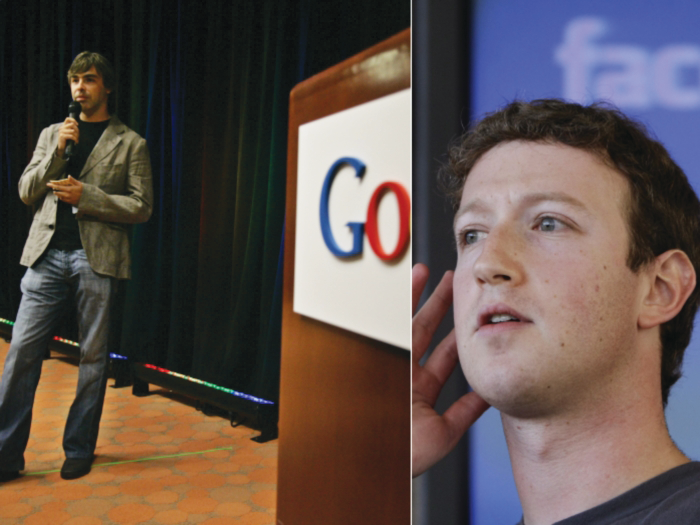




Some of the greatest luminaries in the tech world have never had a book written about them. Never had a film made of their life. Got little or no public notice at all. But today, leaders of tech companies are accorded the same status as movie stars.
Call it the bling of tech. The state in which style has become more important than substance. Consumer preferences outweigh the business applications of new technologies. A world in which the color of a device’s shell is more important than what it can do.
This isn’t about dumbing down the devices. From a technical standpoint, technology is providing today the same or better levels of improvement. Smaller, more powerful processors. Sharper screens. New and better formats. In fact, the problem doesn’t seem to lie in the research and development departments at all but in the marketing and PR departments.
And this trend of style over substance will have serious ramifications for people who depend on technology for their livelihoods. Including most accountants and tech consultants. Consider just a few:
- It is getting harder to separate reality from hype. A good example is the Blackberry Playbook, which was (and still is) touted as a “business” tablet, but which launched with no way to manage contacts, calendars or notes on its own. No telephone applications. No text editing capabilities. No PDF manager. Better yet, consider that the launch of a new version of an application or operating system is celebrated with the same hoopla as a Hollywood premier. But, of course, without a news release noting the changes made in the new version. Welcome to the party, but figure out the technology on your own.
- We’re the beta testers. For the first two decades of my tech career, I was a beta tester for most of the major hardware and software vendors. Beta testing was an arduous process used to ensure that the products that shipped were, from Day One, ready for use. But today, new operating systems, new applications, and even new devices are thrown into the marketplace with virtually no pre-testing, so that the end user becomes an unpaid testing crew. Think that is okay? Wait until that new operating system decides to go belly-up in the last weeks of tax season.
- Useful life has been compressed. We have transitioned from personal computers that had a useful life of three to five years to a newer, cellular model in which all devices become obsolete in 18 months. This was a pattern we almost adopted for software (to the detriment of users, who could not afford such frequent updates), but avoided by shifting to the online, Software-as-a-Service model.
- The technology becomes more proprietary. With an ever more rapid pace of product introduction, success often becomes a matter of emphasizing trivial features over technology depth. A cell phone is sold for its ability to watch television, not for making effective phone calls. The speed of the browser becomes more important than the speed of connecting. This is necessary because core technologies are often leased and thus offer no proprietary features. Consider having to sell a device merely on the fact that it uses the Android operating system?
- IT Departments become more powerful. With the dawn of the desktop computer, the power of the IT department to control devices and software began to wane. Rather than gatekeepers, the IT staff began to be perceived as the people you had to work around to get new tech into the company. That’s turning back, as companies realize that individuals may not be prepared to make tough buying decisions about technology.
The list could go on. We could discuss how computers are sold in an array of case colors. How cell phones have interchangeable “skins” so that you can match them to your outfit for the evening. How the next operating system from Microsoft is cleverly disguised as a cell phone interface. Bling!
Today, few users of computing devices can tell you why a quad-core processor is better than a dual-core processor, or what going from dual to quad can offer you. Fewer still understand why the freshly introduced HTML Version 5 is going to revolutionize the internet, and what it will bring to the web experience.
I’ve spent enough time on the online forums to try to avoid the harsh rhetoric of the “fanboys” and “trolls.” I haven’t insinuated that tech today is being marketed to the 12-15 year old demographic, or that the marketing departments of most tech firms seem to be populated by people who know very little about presenting facts, and a lot about hosting parties to celebrate whatever new thing has come along.
I will quietly note that there is an adjustment coming, as the companies who comprise the business markets and pay for most of the new technology begin to demand more substance in what they buy. As people begin to realize that Google may not be worth $600 per share, and that FaceBook is not the sum total of our lives.
It has happened before. It will happen again. But in the meantime, companies still need to adopt effective technologies that enhance their corporate missions.
This means that accounting firms must, both for themselves and for the clients they serve, develop better procedures for the introduction of new technologies. You can’t believe the marketing hype. You can’t leave the decisions to individuals, not even to executives who are fairly tech-savvy. In a day when technology is sold on cable TV shopping networks, we have to fight a little harder to get the right technology for the job.
This means that someone within the firm must be designated to evaluate new technologies. Someone must be tasked with creating a list of technical capabilities the company needs but does not presently have. As new technologies emerge, this is the list that is checked against the features of each new technology. If there is a match, the new technology is adopted.
And the function must go beyond just list-matching, to accommodate emerging technologies that haven’t fit any list in the past but which rapidly become indispensable. Actually, smart phones fall into this category. So do the new information eyeglasses being developed by Google. And the ability to control a computing or mechanical device by thoughts alone.
The era of bling and hype has ushered in a new reality for technology companies, in which they pay for the status of being mainstream consumer products by sacrificing facts and features for pretty colors. But that doesn’t mean that accounting firms have to participate in that process, or that they are not capable of sorting through the bluster to find the right technologies at the right price for what they and their clients need.
Reality Check
A compendium of ideas, products, rants and raves from the viewpoint of the author. Not that the author has no financial interests in any of the products mentioned. Feel free to disagree, or to share your ideas by sending them to davemcclure@cpata.com.
Internet Site of the Month. The 10 Most Idiotic iPhone Apps (www.pcworld.com/article/170157/the_10_most_idiotic_iphone_apps.html). Bless PC World for saving me the trouble of compiling this list. I can quibble about whether there are other apps that are even more idiotic, but this is a good starting point.
[Thumbs Up] – Tablet PC Comparison (www.tabletpccomparison.net). Now that tax season is behind us, you may be looking for a tablet PC to acquire. The first stop should be this site, with loads of information, updated often.
[Thumbs Down] – “Free” cloud services. In the rush to the cloud, new services are popping up almost everywhere that offer “free” file storage and backup space on their servers. That’s nice of them, but as economist Milton Friedman often noted, “There’s no such thing as a free lunch.” Hosting and maintaining servers costs money. And if you can’t determine where your cloud service is making their money, chances are good you don’t want your data there.
[Thumbs Sideways] – Cyber Security Legislation. New legislation would give the government sweeping new powers over the Internet in the US. Privacy advocates are alarmed. Tech companies like the draft proposal, because if gives them protection from lawsuits. But the real question is whether this legislation – currently is four different versions — can get any traction in an election year.
[Thumbs Down] – Blackberry’s Revival. If ever a cat has had nine lives, it is Research in Motion’s Blackberry product line. In the past year the company has survived the resignation of many of its senior managers, including the two co-presidents; the disastrous introduction of its Playbook tablet; the switch to a new operating system for its phones; a stock slide into oblivion; and sharply declining sales. Blackberry has a chance to turn around its US performance, but that will require some powerful announcements at May’s Blackberry World conference. I am not optimistic.
[Thumbs Up] – Terrafugia Plane (www.terrafugia.com). Some ideas are just too good to die, and the autogyro of the 1930’s is one of them. Half airplane, half automobile, the device was supposed to allow commuters to spend most of their time in the air, to and from work. It didn’t catch on, seventy years ago, but neither is it dead. A new version was the toast of the 2012 New York Automobile Show this spring.
Sign in to get access to this free resource, and all of our whitepapers and reports.

Download this content today!
Register Now Already registered? Click here to Log In
Tags: Firm Management