



The Portal Value Proposition
I think it’s fair to say that just about every accounting and tax practice in the country has given consideration to deploying a client portal in recent years. In fact, current estimates are that the number of firms that have a client portal in place is somewhere in the range of 20% to 40%. However, many of those firms are only leveraging the tip of the iceberg of portal technology’s potential, and I’d like to take this opportunity to articulate the depth of portal potential that could be realized.
As you think about the concept of portals, keep two industries in mind: airlines and banks. Think about how your relationship with both of these entities has evolved over the past 15 years. For the overwhelming majority of you, your analysis will remind you of the obvious: The nature of your interaction and exchange of information with these institutions has approached 100% online. I contend that these two industries have achieved three key business objectives with this transformative business model: increased profitability, increased staff productivity and, most importantly, increased quality of customer service. We are on the beginning of a similar evolution in accounting and tax practices, and the benefits will be as significant. The bottom line is that developing and implementing an effective client portal strategy is likely to impact your firm more profoundly over the next 10 years than any other initiative you pursue.
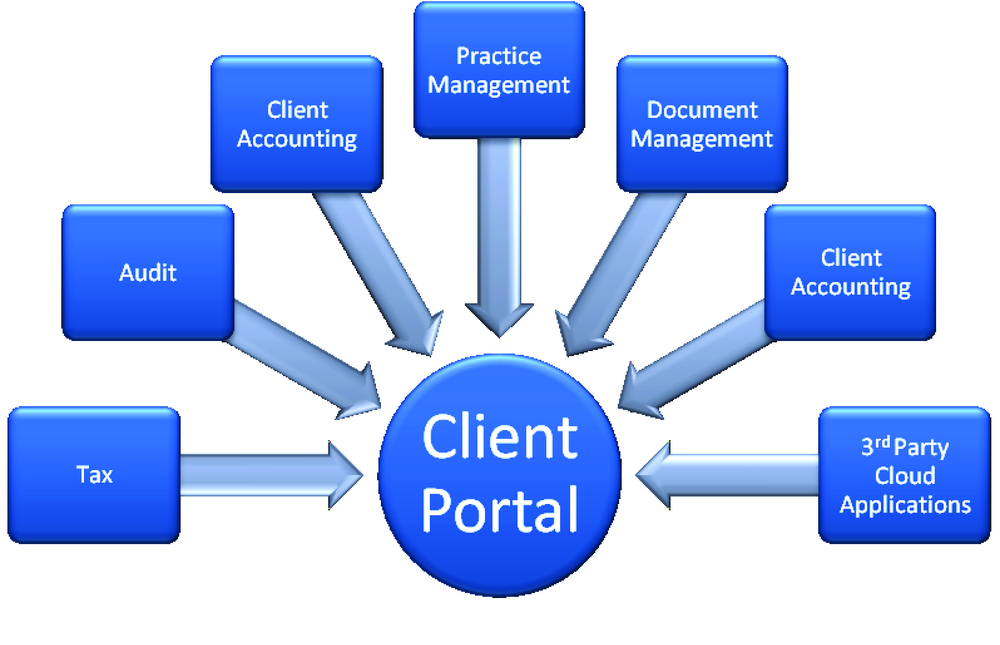
Portal Touch Points
As you develop your long-term portal strategy, think about all the possible opportunities to exchange information with your clients online. Sharing information online is the essence of the portal concept. This allows you to increase the security of client information being exchanged, automate manual tasks involved in exchanging information, provide more innovative client services and ultimately transform the nature of the practitioner/client relationship.
Stages of Portal Development
Rome wasn’t built in a day and neither will your portal be. An effective strategy calls for an evolutionary, not revolutionary, portal deployment. I have outlined a four-stage strategy below.
Stage 1: Document/File Exchange
The initial focus of your portal should be on capturing and disseminating client information online. This helps you transform to a paperless practice model and increases the security of your information exchanges.
Stage 2: Workflow Integration
The second phase of an effective portal evolution is to think about all of your workflows, both client related services and administrative, and think about how the portal can facilitate automating those workflows where they touch your clients. Examples include establishing an online tax organizer, posting client invoices, accepting credit card payments, and publishing engagement status updates for clients. Think about the flight status board at the airport. The potential link between workflow software and your client portal opens up a new frontier in how you relate with your clients.
Stage 3: Aggregation/Single Sign-on
Think about the airline and banking industries again. Consider all of the different online services (portals) that your clients access on a regular basis: bank accounts, brokerage accounts, credit card accounts, insurance policies, tax authorities and more. The opportunity for tax and accounting professionals is to be the “base of operations” for all of your clients’ online activity by allowing your clients to flow to all of these services through your secure portal. The benefit to your clients is the simplification of how they access information online. The benefit to your firm is that the client is walking through your virtual office lobby on a daily basis. That has a lot of potential value. The technology to facilitate this aggregation of online services and access through a single login is readily available today.
Stage 4: Cloud Applications
This is essentially an extension of stage three. I suppose we could refer to this as the cloud computing stage. What I am referring to here is the ability to design your client portal as a pass through to online applications such as QuickBooks, Microsoft Exchange Server and Office, web conferencing software, document management, and the list goes on. Virtually any application your client requires to run their business has the potential to be accessible through your portal. Many of these examples offer the potential for revenue sharing, which can transform your portal into a substantial profit center that is based more on technology and less on labor. You just have to decide whether or not you want to go there strategically.
Developing Your Strategy
I have outlined a lot of potential for your client portal, and hopefully you can appreciate the importance of developing a comprehensive strategy that addresses your short-term and long-term portal model. It is important to realize that this strategy will evolve as new portal technologies and applications are introduced to the market, but the more strategic you are in your approach, the more successful your portal will be as you transition through the stages outlined above.
We don’t have the space here to get into the nitty-gritty details of all the recommended procedures for developing your strategy, but the graphic below illustrates the different aspects of your portal strategy that need to be addressed. Perhaps in a future article we can drill down into each of these in more detail to provide some further guidance.
Here are six key steps you should work through to develop your initial portal strategy:
- Determine your strategic objectives for the portal: workflow efficiency, revenue generation, client service, etc.
- Establish your content profile. What information and services do you want to provide through the portal and at what stage?
- Select your portal technology platform. Focus on the scope of features available and the depth of integration with your core software applications (tax, accounting and practice management).
- Define your policies and procedures. It’s not as simple as deploying the technology and flipping a switch. You are going to have to dedicate staff resources to this initiative and define how the portal gets integrated into your business processes. Keep in mind this is much different than most technology you deploy in your firm, for the simple reason that your clients will be interfacing with it directly and you won’t have the personal judgment buffer that you rely on when interacting with your clients face to face.
- Develop your marketing and communications plan. Just because you build it, doesn’t mean they will come. You have to have a specific plan of action to get the message out to your clients about the features and benefits of the client portal. This is an excellent opportunity to demonstrate your commitment to improving the quality and efficiency of your client services.
- Deploy a pilot. Avoid the temptation to get your site set up and immediately deploy it to all of your clients. Remember, you never get a second chance to make a first impression. Therefore, you should identify a small set of clients that you can work closely with to pilot the initial rollout, including publishing of content, administering client accounts and login credentials, managing security permissions, and providing client training and support. Your rollout will be a lot less stressful and embarrassing if you stumble in your deployment with this small group of clients instead of your entire client base.
I hope you find this information helpful in getting your firm started on the right track with client portals. The potential is virtually limitless, and you should approach your portal deployment as a journey, not a destination. Good luck!

Thanks for reading CPA Practice Advisor!
Subscribe Already registered? Log In
Need more information? Read the FAQs
Tags: Cloud Technology