
Home
Featured….
Minnesota Accounting Firm Joins CLA Global
Avalara Gives Update on Online Marketplace and Tax Changes in 2024
More CAS Firms Adding 1099 and W-9 Services
Forbes Unveils Its Top 200 CPAs in the U.S.
Contributors….

Becky Livingston

Garrett Wagner
Richard D. Alaniz

Randy Johnston
Webinars and CPE….
Webinar: Effortless Tax Prep and Workflow: Say Goodbye to Client Frustrations
CPE Webcast Apr. 2, 2024: The Future of Media & Entertainment: Leveraging Data and Finance
Events….

Accounting
Xerocon 2024 Nashville: Aug. 14-15, 2024
The event will be hosted at the Music City Center, allowing Xero’s community of accountants and bookkeepers from across the U.S., Canada and beyond the chance to connect, as well as options for earning CPE credit.

Accounting
RightNOW Conference 2024
Top influencer keynotes, transformative tech insights and AI innovators converge to elevate the accounting profession at RightNOW 2024. May 14-16, 2024 | Austin, TX.

IRS Touts Strong, More Efficient 2024 Tax Season
It’s Tax Day, so there’s no better time for the IRS to pat itself on the back for a job well done as filing season ends for most Americans.

Cast Your Vote for 2024 Readers’ Choice Awards!
The CPA Practice Advisor Readers’ Choice Awards give readers the opportunity to spotlight the technologies they most rely on and trust to manage their firms.

IRS
IRS Provides Sneak Peek of Form 1099-DA for Digital Assets
The IRS Friday posted on its website the highly anticipated draft Form 1099-DA, which brokers will use to report digital asset transactions.

Firm Management
Minnesota Accounting Firm Joins CLA Global
Christianson PLLP provides audit, tax and outsourcing services across a range of industries including agriculture, renewable energy and natural resources, financial services, real estate and construction and technology.

Small Business
Avalara Gives Update on Online Marketplace and Tax Changes in 2024
Online marketplace sales are expected to exceed $603 billion in the United States in 2027, or nearly 35% of all U.S. ecommerce.
Advisory
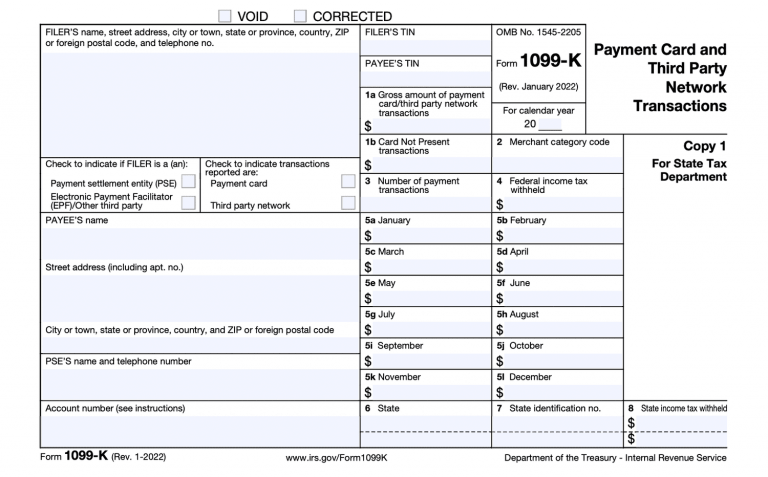
More CAS Firms Adding 1099 and W-9 Services
There’s a high demand for 1099 services, according to the 2022 CPA.com and AICPA PCPS Client Advisory Services (CAS) Benchmark Survey.

Accounting
Forbes Unveils Its Top 200 CPAs in the U.S.
The 200 finalists were selected through a review of over 1,000 CPAs from a variety of backgrounds, locations, and specializations.

Taxes
Georgians Claimed Over $109 Million in Tax Deductions For ‘Unborn Dependents’
Georgia’s 2019 abortion law allows expectant parents to claim an embryo or fetus as a dependent on their taxes.

Accounting
Virginia Accountant Admits to Stealing Over $1 Million From Client
Maria Reich, former president of On Call Accountants, pleaded guilty to eight counts of wire fraud as part of a plea agreement.

Accounting
Decisions 2024 – So, What’s Next?
Embracing adaptability and continuous learning will equip us to thrive in an environment of economic uncertainty and rising costs.

Technology
The Accounting Technology Lab Podcast – Review of Aiwyn – April 2024
Hosts Randy Johnston and Brian Tankersley, CPA, look at the practice management, billing and collections platform Aiwyn.

Payroll
What the DOL’s Proposed Overtime Rule Means For Small Businesses
The White House just approved a Labor Department proposal to raise the minimum salary exemption to $55,068 per year.

Benefits
Employers Start Offering Emergency Savings Fund Benefit Option
A growing number of companies are making it easier for workers to set aside funds that will help them weather a financial crisis.

Firm Management
RSM Appoints Ernest Nedder, CPA, as CEO
Over his career, Nedder has developed extensive experience in leading substantial business and digital transformation initiatives, aligning separate service lines, industry verticals and…
![natural_disasters_list_1_.56117a5e5df03[1]](https://www.cpapracticeadvisor.com/wp-content/uploads/sites/2/2021/12/natural_disasters_list_1_.56117a5e5df03_1_.61c1db14bf0ea-768x538.png)
Accounting
AICPA Endorses Bipartisan Legislation to Provide Additional Tax Relief to Victims of Natural Disasters
Under current law, taxpayers affected by a major disaster often have less time to make a refund or credit claim than those who are not affected.
Taxes
Boston IRS Agent Charged With Tax Fraud
Ndeye Amy Thioub was indicted on three counts each of filing false tax returns and filing false tax returns as an employee of the U.S.

Taxes
IRS Raids Home of Rapper Tekashi 6ix9ine, Seizes Cars and Other Items
The rapper, whose legal name is Daniel Hernández, had his property seized for “nonpayment of internal revenue taxes.”

Nonprofit
Only 36% of Not-for-Profits Have Seen an Increase in Funding Following 2022-23 Financial Upheaval
This is a slight improvement over 2023 where only 24 percent of organizations saw an increase in funding while 35 percent saw a decrease.

PCAOB
The PCAOB is Hitting the Road This Year
Board members will host a series of five in-person forums for small audit firms in Chicago, Los Angeles, Denver, Miami, and Jersey City.

Taxes
When Rogue Brokers Switch People’s ACA Policies, Tax Surprises Can Follow
Some tax returns are being rejected because filers failed to provide information about ACA coverage they didn’t know they had.

With Stock Sliding, Tesla Asks Investors to Pay Musk $56 Million
Tesla will ask shareholders to vote on the same $56 billion compensation package for CEO Elon Musk that was voided by a Delaware court early this year.

Auditing
AuditBoard Expands Executive Team to Support Continued Rapid Growth
AuditBoard has brought on public SaaS company veteran Jeff Harper as Chief Human Resources Officer (CHRO) to help scale the organization and infrastructure

Congress Acts on TikTok and Russian Assets
Johnson late on Wednesday unveiled a modified version of the previously House-passed legislation targeting TikTok that would give Chinese owner ByteDance up to a year to divest the app.

Technology
75% of Mid-Market Companies to Invest in AI Over Next Five Years, According to Wipfli Survey
The survey sheds light on the evolving landscape of technology investments and workforce dynamics among these businesses, providing valuable insights into their strategies and challenges.
Taxes
IRS Extends RMD Tax Relief for Inherited IRAs
This relief was provided to certain RMDs in 2021, 2022, and 2023, and is being extended in Notice 2024-35 to 2024.
Taxes
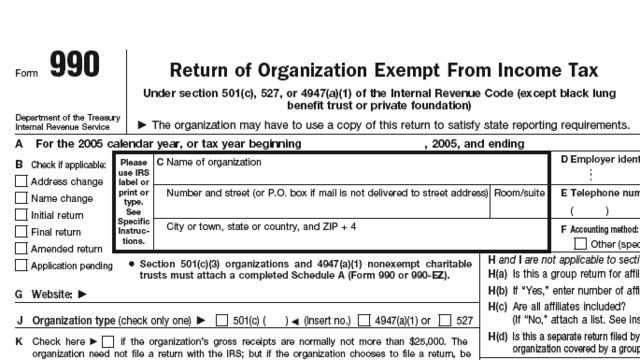
AICPA: Clarification Is Needed for Form 990 Series
The AICPA’s comments also include a matrix for the Form 990 series which focuses on specific sections and the recommendations for those sections.

Marcum Launches AskMarcum.ai
AskMarcum.ai was initially developed for internal use by Marcum Labs, a technology incubator within Marcum LLP, the 13th largest accounting firm in the U.S.

CAS
Attracting and Retaining Clients Starts with Tech Expertise
SMBs rely on their accounting firms for a variety of needs, but one particular area they feel strongly about is having an understanding of the technology they use.

Technology
Thomson Reuters Plans AI Functions for All Professional Users
CoCounsel will unify the entire customer experience and give customers a new way to access Thomson Reuters product capabilities through a single GenAI assistant with applications across Legal, Tax, Risk & Fraud, and Media.

Taxes
Canada Set to Start Taxing Tech Giants This Year Despite U.S. Complaints
The digital services tax currently before Canada’s Parliament would impact U.S.-based companies like Alphabet and Meta Platforms.

Biden Pitches Tax Plan in Pennsylvania While Trump Stuck in Court
Donald Trump’s recent Truth Social videos and Joe Biden’s message in his hometown of Scranton, PA, showed their vast divide on taxes.
Accounting
AICPA Gives FinCEN Recommendations on RIA Regs
The AICPA has asked FinCEN to reassess the proposed regulations to ensure that there is an appropriate balance between regulatory objectives and practical realities faced by RIAs.

Taxes
Point-of-Sale EV Tax Rebates Are a Hit, Treasury Department Says
Treasury says the federal government has reimbursed more than $580 million to the dealers who offered the tax credit.

Taxes
IRS Updates FAQs on Electric Vehicle Tax Credits
The revised FAQs pertain to the new, previously owned, and qualified commercial clean vehicle credits.