
Technology Versus Dirty Power
Digital devices have always had a love-hate relationship with the power needed to operate them. In addition to low battery life and power failures, there is the insidious “power spike” that seemingly can be caused by anything from a passing storm to a cat rubbing up against your leg.
Jul. 27, 2012
Digital devices have always had a love-hate relationship with the power needed to operate them. In addition to low battery life and power failures, there is the insidious “power spike” that seemingly can be caused by anything from a passing storm to a cat rubbing up against your leg. A tiny whisp of white smoke you don’t even see, and the device is gone forever.
And then there is the whole issue of “Dirty Power.”
The power in your house or office is delivered by the power company to your electrical outlets at a standard 125-volts. Plus or minus, that is, ten percent. So the actual power delivered to a device could be as little as 112.5 volts, or as much as 137.5 volts. Which may be all fine and good for a hair dryer, but plays hell with your computers and printers. That is one of the reasons that very sensitive devices like laptops and tablets run off of DC rather than AC power, so that the battery acts as a kind of power filter. Kind of. Not bullet-proof.
Still, most computing equipment today comes with a power supply that is built to handle the every-day problems of dirty power and routine fluctuations from low to high. What they are not equipped to handle is the random lightning strike on the power pole outside your house, or when your ancient refrigerator in the kitchen and the old freezer in the garage decide to kick on their compressors at the same instant.
And it isn’t just your computer that you have to worry about any more. Those big-screen television sets with the fancy high-def cables that are gold plated for a perfect signal? Even a power surge that does nothing else can take out the HDMI circuits, leaving you with a problem that costs more to fix than the TV did in the first place. Cell-phones? These are sometimes known as “fry-babies.” USB devices like printers? The printer is fine…but the USB port is fried.
So how do you provide protection for a small office or home? The question is more complicated than you might expect.
- Forget power strips. This is the worst form of false confidence, even with the big units costing a hundred dollars or more. They simply don’t work. Or if they do, they work only for a small number of power spikes. Often, these have failed within days of being installed, but give no indication they are no longer providing protection.
- Whole-house or whole-building power protection is expensive. If you are able to build it into the electrical system, that’s fine. Retrofitting it into your home or small office is likely not feasible, particularly given the cost of maintenance and upkeep.
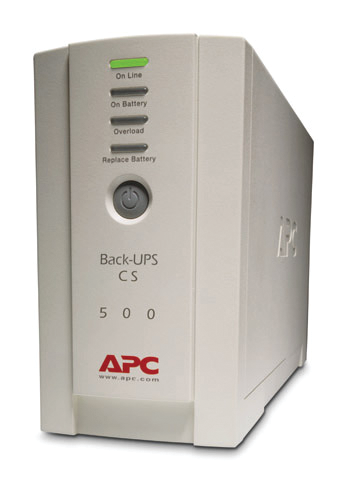
- The best solution is the hard one. This involves a zone-defense strategy, covered by Uninterruptible Power Supply units with maintenance twice a year.
The third option works this way: Whether in the home or in the small office, cluster electronic devices into a minimal number of hubs. For the home, this would mean one hub for entertainment in the living area and another for computers in the home office. You can also protect outlying computers in kids rooms, but these are less difficult to replace as long as you have a backup schedule in place.
For each “electronics hub,” purchase a UPS unit that also filters the power. Now here is the tricky part – you must replace the UPS, or at least the battery, at least two times per year. This will cost you, with shipping, about $125 per year per hub. But the alternative is to lose one or more devices, with a replacement cost that is likely just under the deductible on your replacement insurance policy.
Actually, you may find, if you watch the sales, that it is cheaper just to replace the whole unit than to replace the battery. Also, note that you must properly dispose of the battery or the unit – you can’t just take it to the dump.
The love-hate relationship between our devices and our power supply continue, exacerbated by a new generation of cheap-parts electronics that are not built to withstand even common power surges and spikes. That’s not going to change anytime soon, putting accountants at risk for the loss of thousands of dollars in electronics – and potentially, client data as well – at any time.
Reality Check
A compendium of ideas, products, rants and raves from the viewpoint of the author. Not that the author has no financial interests in any of the products mentioned. Feel free to disagree, or to share your ideas by sending them to davemcclure@cpata.com.
Internet Site of the Month: APC Uninterruptible Power Supplies (www.APC.com).
Arguably the top manufacturer of UPS systems for small offices and homes, APC provides a range of options and information to help accountants make selections for their electronics hubs.
– Samsung’s Galaxy S3 cell phone. Newly available from all of the cellular companies for about $200, this world-class Android phone is fast, has global roaming capabilities on GSM and LTE networks, and a host of advanced features. The S3 is no iPhone, but it may be the best cell phone for those who don’t want to be locked into the Apple empire.
– Internet streaming services. I briefly subscribed to the Netflix streaming service for TV shows and movies, but rapidly grew bored with the lack of interesting content. Never knew there were so many vapid zombie movies. Ditto the twenty or so competitors being fired up by just about everyone who thinks they can dominate this market. Two notes for these companies: I ride the airplanes and the trains and I sit in the coffee shops, and almost no one is watching TV on their smart phones. And if they were, it is something they recorded for free, not something they are willing to shell out big bucks for.
– Microsoft’s “Surface” tablets. Microsoft has jumped into the tablet market with not one but two different models under the “Surface” brand, both based on the new Windows 8 operating system. But are they serious about this market, given their poor performance in previous hardware ventures? Most likely not. A better strategy is to use the smart, sleek units to push their vendors into taking Windows 8 more seriously for their own tablets. Only time will tell.
–The deadline on July 9. As this issue goes to press, the world waits to see how many of the 300,000 Internet users (and maybe four times that many!) who are infected by the DNSChanger virus will see their machines stop working. If they do fall prey to the virus, it will be because they ignored months of warnings from security companies and the FBI. It’s a hard road for those who ignore their basic PC security.
– Windows Office 2013. Everyone is focused on the new Windows 8 operating system and its “Metro” interface, but the real winner this fall is more likely to be the newest version of the de-facto standard for office productivity. The beta version is out, and while the feature set may still change it offers a tantalizing look at things that may be. A weather forecast app in the calendar? Tres cool!